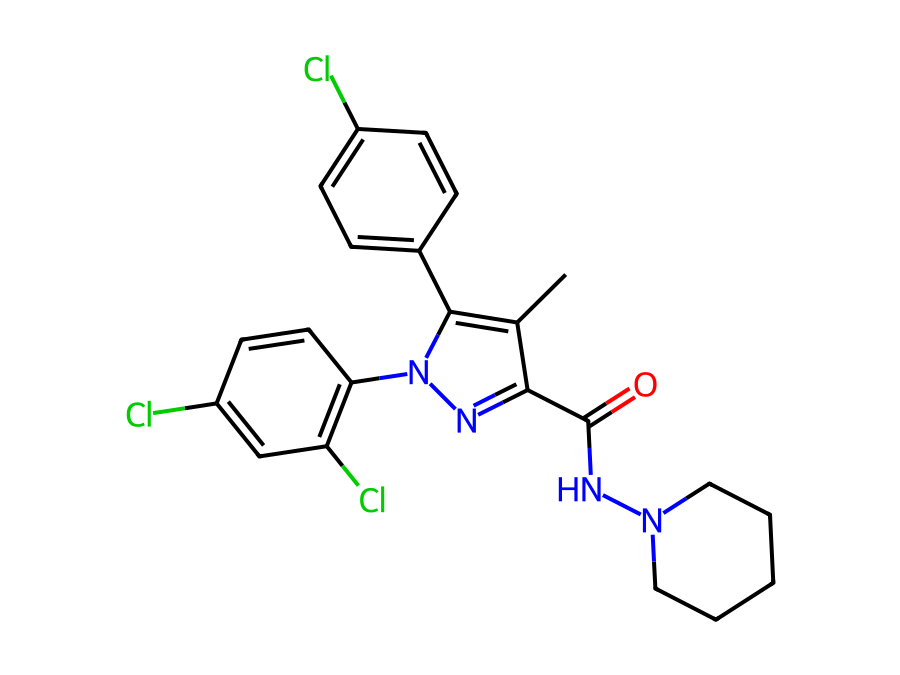
Rimonabant
Acomplia, Zimulti, SR141716, licensed 2006, withdrawn 2009
Rimonabant blocked the CB1 receptor in the brain’s intake and reward circuits and produced about 4.7 kilograms more weight loss than placebo over a year, across four trials and four thousand people. The European Union authorised it in June 2006 and it was marketed in eighteen member states, the United Kingdom among them.
Rimonabant held a European marketing authorisation for two and a half years and no longer holds one in any jurisdiction checked. It is not a controlled drug: it is a medicine a regulator withdrew. It is a documented example of a weight-loss drug whose effect was real and whose principal harm was psychiatric.
- Withdrawn by the EMA, as of 10 Nov 2026
- Psychiatric risk about doubled
- Outcomes trial stopped early
- Compounds
- Other investigational and specialist drugs
- Cannabinoid receptor modulators
- CB1 antagonist
- Rimonabant
Overview
In October 2008 the European regulator concluded that the benefits no longer outweighed the risks, because the risk of psychiatric side effects was about double that of placebo and no subgroup at lower risk could be identified. The cardiovascular outcomes trial was stopped early over the same signal and its primary endpoint was flat. The marketing authorisation was withdrawn in January 2009.
Weight loss replicated across four randomised trials in about four thousand people, with improvements in HDL cholesterol and triglycerides. The European Commission authorised it and NICE recommended it
Psychiatric side effects at roughly twice the placebo rate, confirmed by two regulators. Anxiety, insomnia, depressed mood and irritability all rose with dose, half the depressive events landed in the first three months, and discontinuations for adverse events roughly doubled
Whether the suicidality signal specifically was real. The counts were small, the US odds ratio in obesity alone crossed one, and a 2024 reanalysis disputes it. The depression and anxiety findings, which carried the European decision, are not in dispute
A drug that treated obesity by blocking the receptor that cannabis activates.
Rimonabant is a small molecule of 464 daltons, described in 1994 by a group at Sanofi as “a potent and selective antagonist of the brain cannabinoid receptor”.10 The rationale was that cannabis increases appetite by activating the CB1 receptor, so blocking CB1 should have the opposite effect.
For researchers
The European Commission granted a marketing authorisation on 19 June 2006 under the name Acomplia, as an adjunct to diet and exercise for obesity, or for overweight with a risk factor such as type 2 diabetes or dyslipidaemia.3 By October 2008 it was marketed in eighteen member states, the United Kingdom among them. A second authorisation existed under the name Zimulti and was never marketed.1
It was never approved in the United States. The company told its investors in June 2007 that rimonabant was approved in 37 countries and marketed in 18, on a development programme of “59 completed clinical studies enrolling more than 15,000 patients”, with more than 110,000 people having taken it outside the United States.7
Compound data
| Class | Pyrazole carboxamide; CB1 antagonist and inverse agonist1011 |
| Formula | C22H21Cl3N4O, 463.823 |
| InChIKey | JZCPYUJPEARBJL-UHFFFAOYSA-N23 |
| CAS | 168273-06-123 |
| UNII | RML78EN3XE23 |
| Stereochemistry | Achiral, so one record and no isomer question23 |
| Target | Cannabinoid CB1, pKi 8.44 |
| Crosses into the brain | Yes4 |
| Protein binding | 99.94%4 |
| Half-life | About 10 days lean, 16 days obese4 |
| EU authorisation | 19 Jun 20063 |
| Marketed in | 18 member states, UK included1 |
| US approval | Never. Committee voted 0 to 14, twice5 |
| Suspended | 13 Nov 20083 |
| Authorisation withdrawn | 16 Jan 20093 |
| Weight effect, 1 year | 4.7 kg over placebo, n=4,10513 |
| Psychiatric risk | About doubled; RR 1.9 (1.5 to 2.3)16 |
| Outcome trial | 18,695 people, HR 0.97, stopped early15 |
| Authorisation | By country, with sources |
Evidence
About five kilograms over placebo in a year, with about half of participants leaving before the year ended in the largest trial.
The four pivotal trials were called RIO. Pooled by the European regulator, rimonabant beat placebo by 4.7 kg in the two largest trials, 5.4 kg in the dyslipidaemia trial and 3.9 kg in the diabetes trial.4 An independent meta-analysis of four trials and 4,105 participants put it at “4.7 kg (95% CI 4.1 to 5.3 kg; p<0.0001) greater weight reduction after 1 year”.13
For researchers
| RIO trial | Weight, rimonabant vs placebo, 1 year | Completed the year |
|---|---|---|
| RIO-Europe, n=1,507 | −6.6 kg vs −1.8 kg12 | 60.8%4 |
| RIO-North America, n=3,045 | 4.7 kg better than placebo4 | 52.5%4 |
| RIO-Lipids, n=1,036 | 5.4 kg better than placebo4 | 62.1%4 |
| RIO-Diabetes, n=1,047 | 3.9 kg better than placebo4 | 66.1%4 |
Two features of the table: the first is the completion column. In the largest trial, roughly half of participants left before the year ended, in both arms, and the regulator noted the drop-out rate as a limitation of the evidence itself.4 The second is what the regulator concluded about the size of the benefit, in its own words: “moderate but probably of clinical relevance for 20-30 % of the treated patients”.2
⚠ Four of the papers behind this section carry a published erratum whose content could not be retrieved here, RIO-Europe, RIO-North America, RIO-Diabetes and the meta-analysis. The figures above are quoted from the abstracts as indexed. Specific decimals are pending a check against the corrected text.1213
Roughly double, confirmed independently by two regulators.
The European committee’s finding, verbatim: the risk of psychiatric side effects, “including depression, sleep disorders, anxiety and aggression, is approximately doubled in patients taking Acomplia, compared to obese or overweight patients taking placebo”.1 The American regulator’s pooled analysis of the same programme put the psychiatric adverse-event relative risk at 1.9 (1.5 to 2.3).6 Two agencies, using two datasets, reported the same result.
For researchers
| Year 1, four placebo-controlled weight trials | Rimonabant, n=2,503 | Placebo, n=1,602 |
|---|---|---|
| Anxiety | 5.6% | 2.4%4 |
| Insomnia | 5.4% | 3.2%4 |
| Mood alterations with depressive symptoms | 4.8% | 3.1%4 |
| Depressive disorders | 3.2% | 1.6%4 |
| Irritability | 1.9% | 0.6%4 |
| Nausea | 11.9% | 4.9%4 |
| Stopped for any adverse event | 13.8% | 7.2%4 |
The independent meta-analysis found people on rimonabant were “2.5 times more likely to discontinue the treatment because of depressive mood disorders”, number needed to harm 49, and three times more likely to stop for anxiety. Its conclusion notes that the risk rose “despite depressed mood being an exclusion criterion in these trials”. The participants were screened to exclude it.13
Half of the depressive events were reported in the first three months, “when weight loss was maximum”, and the later European report adds that depressive reactions “may occur in patients who have no obvious risk factors, apart from obesity itself”. The harm arrived at the same time as the benefit, in people with no marker identifying them in advance.42
Suicide reports. Between June and August 2008 five suicides were reported in people taking the drug in ongoing studies against one on placebo, in around 36,000 patients.1 The American adjudicated analysis found a suicidality odds ratio of 1.9 (1.1 to 3.1) across thirteen studies, which narrowed to 1.8 (0.8 to 3.8) and crossed one when restricted to the obesity trials.6 Five against one is not a rate, and no rate is calculated here. The reviewer’s caveat is that people who stopped the drug were not systematically followed while a two-week half-life was still clearing, so the reviewer described the numbers as incomplete at best and possibly an underestimate.6
18,695 participants: no cardiovascular benefit, and more psychiatric adverse events.
CRESCENDO was the trial that could have settled it: does the weight loss prevent heart attacks and strokes. It randomised 18,695 people across 974 hospitals in 42 countries. It was stopped at a mean of 13.8 months “because of concerns by health regulatory authorities in three countries about suicide in individuals receiving rimonabant”.15
For researchers
| CRESCENDO | Rimonabant, n=9,381 | Placebo, n=9,314 |
|---|---|---|
| Cardiovascular death, heart attack or stroke | 364 (3.9%) | 375 (4.0%)15 |
| Hazard ratio | 0.97 (0.84 to 1.12), p=0.6815 | |
| Gastrointestinal side effects | 3,038 (33%) | 2,084 (22%)15 |
| Neuropsychiatric side effects | 3,028 (32%) | 1,989 (21%)15 |
| Serious psychiatric side effects | 232 (2.5%) | 120 (1.3%)15 |
| Suicides | 4 | 115 |
The cardiovascular benefit the trial was designed to test did not appear: the event curves overlapped. Psychiatric and gastrointestinal adverse events were more frequent on rimonabant. The trial was stopped early.15
The other outcome trial had already pointed the same way. STRADIVARIUS measured whether coronary plaque progressed more slowly, in 839 people with abdominal obesity and coronary disease. Its primary endpoint missed: plaque volume rose 0.25% on the drug against 0.51% on placebo, p=0.22.14 In the regulator’s reading of the same trial, psychiatric adverse events ran 43.4% against 28.4%.2
Authorisation, NICE recommendation and suspension within thirty-one months.
| Date | What happened |
|---|---|
| Feb 2006 | The US regulator asks for more data on psychiatric events, suicidality, neurological signs and seizures before approving6 |
| 19 Jun 2006 | European marketing authorisation granted3 |
| 13 Jun 2007 | US advisory committee votes 0 in favour, 14 against on whether the safety profile was adequately characterised, and 0 to 14 again on favourable risk-benefit5 |
| Jun 2007 | The company withdraws its US application before the decision date7 |
| Jul 2007 | Europe adds a contraindication in ongoing major depression or antidepressant use1 |
| Mar 2008 | Safety reporting rate for depressive disorders rises from 13 to 24 cases per 10,000 treated2 |
| 23 Jun 2008 | NICE recommends it for England and Wales, for adults who had an inadequate response to, could not tolerate, or could not take the two existing drugs89 |
| 23 Oct 2008 | Europe recommends suspension: the benefits no longer outweigh the risks1 |
| 6 Nov 2008 | CRESCENDO closes, stopped early15 |
| 13 Nov 2008 | Authorisation suspended in every member state3 |
| 16 Jan 2009 | The marketing authorisation is withdrawn3 |
For researchers
Four months separated the NICE recommendation from the European suspension, and NICE withdrew its guidance afterwards, stating the reason as the withdrawal of the authorisation.8
The grounds for the suspension had three limbs. The benefit-risk balance was negative; the psychiatric risks “translate into high absolute risks in real life situations”; and “patients at an elevated risk of developing psychiatric disorders could not be identified”.2 Identifying and excluding susceptible patients was therefore not feasible.
Three CB1 programmes stopped; peripherally restricted blockers are in trials.
Rimonabant did not fall alone. Merck’s taranabant was tested to two years in 2,502 people; the highest dose arm was halted in the first year and the next in the second, and the published conclusion is that “the overall safety and efficacy profile of taranabant did not support its further development for the treatment of obesity”.16 Pfizer’s otenabant programme was terminated on 3 November 2008, nine days after the European recommendation, and the registry entry is unusually candid: “changing regulatory perspectives on the risk/benefit profile of the CB1 class... No safety issues were involved in the termination decision”.17
For researchers
Peripherally restricted CB1 blockers were developed on the argument that receptors in fat tissue would deliver the metabolic benefit without the mood effects. The results so far are mixed. The furthest advanced, monlunabant, lost 6.4 to 8.0 kg against placebo in a 16-week trial of 243 people, and the withdrawals for adverse events ran 13%, 27% and 42% across the three ascending doses against none on placebo, driven partly by anxiety and irritability.18
In that trial the appetite effect persisted in a brain-sparing design, and so, at least partly, did the adverse psychiatric events.18
The European review of GLP-1 agonists and suicidal thoughts.
In 2023 the European regulator reviewed the GLP-1 class for suicidal thoughts. The review was not opened because of rimonabant. It was triggered by the Icelandic medicines agency after reports of suicidal thoughts and self-injury in people using liraglutide and semaglutide: about 150 possible cases against an exposure of over 20 million patient-years.19
For researchers
The conclusion, reached in April 2024, verbatim: “the available evidence does not support a causal association between the Glucagon-Like Peptide-1 receptor agonists (GLP-1)... and suicidal and self-injurious thoughts and actions”, with no update to the product information warranted.20
The two signals differed in form. Rimonabant’s signal appeared inside randomised arms, early, with a dose-response, on an endpoint the trials had screened people to be free of. The GLP-1 question arrived as spontaneous reports against an enormous denominator, and the studies run to test it did not reproduce it. 120
This library has pages for semaglutide and tirzepatide, both authorised medicines with outcome data. Those pages describe the outcome data that rimonabant never produced.
Mechanism
CB1 is also present in brain regions that regulate mood.
The European assessment describes the cannabinoid system as one that “has been shown to be involved in the central regulation of food intake and the central nervous system (CNS) reward system. CB1 receptors were first found in the brain, and later in several human tissues, including adipocytes”.2
For researchers
Appetite is a brain function, and the circuit that controls food intake overlaps with reward circuits. A drug that reaches the intake circuit therefore also reaches circuits involved in mood and motivation.
⚠ No source retrieved demonstrates the psychiatric mechanism directly. The record establishes: the drug blocks CB1 in the central nervous system, and the regulator found “a dose-response relation between the frequency of certain psychiatric adverse events and the dose of rimonabant”. The brain is the likely route, but this is not proven.4
Regulatory status
Status by country
Where regulators list this compound, country by country. Each line names who listed it, the date it was read and the source. A country with no line has not been checked yet.
Europe 1 of 10 checked
| Country | Status | Detail |
|---|---|---|
| European Union (central authorisation) | Listed as withdrawn by the EMA, as of 10 Nov 2026. Source: EMA medicines table source dated 19 Jun 2006 | Products on the EMA table: Acomplia (withdrawn); Zimulti (withdrawn) |
Not yet checked. North America: Canada, Mexico, United States. South America: Argentina, Brazil. Europe: Belgium, France, Germany, Italy, Netherlands, Russia, Spain, Switzerland, United Kingdom. Africa: Egypt, Nigeria, South Africa. Asia: China, India, Japan, South Korea, Thailand, United Arab Emirates. Oceania: Australia, New Zealand.
Sport (WADA) applies worldwide, not a country
| WADA Prohibited List 2026 | Not yet checked |
|---|
Information only, not legal advice. Not verified for any individual situation. Status changes; check the date and the source.
The same records as data: JSON and CSV, with a version and a change log.
Checked and missing
What this page does not carry, and why.
The axes compare compounds on a common scale. Cost and hassle cannot be answered for a product withdrawn from the market, and a partial score would not be comparable with other pages.
One strand of the case, the suicidality finding, is contested.
A 2024 reanalysis in Obesity argues that “the publicly available data do not support the FDA’s conclusion that the use of rimonabant was associated with an increase in the risk of suicidality”.21 The three authors are employees of a company developing a CB1-targeting drug.
For researchers
The suicidality limb was the weakest part of the case: the counts were small, and the American odds ratio in the obesity trials alone crossed one. The depression and anxiety limb was not weak at all, and it is what the European decision actually rested on, alongside the finding that no safe subgroup could be identified and the absence of any cardiovascular benefit.26 A challenge to the suicide numbers would not change the basis of the withdrawal.
What could not be retrieved, including items quoted above.
Every trial number on this page comes from a published abstract or from a regulator’s own assessment document. No journal paper was read in full. Where a figure appears in both, the regulator’s version is the one quoted.4
For researchers
Four of the papers cited carry a published erratum whose content could not be retrieved: RIO-Europe, RIO-North America, RIO-Diabetes and the meta-analysis. The corrections are visible as linked records, but their text is not. Individual decimals from those four are pending a check against the corrected article.1213
The British regulator’s own statement was not retrieved, nor the authorisation number or classification it held in the United Kingdom. The European documents confirm the United Kingdom was one of the eighteen countries where it was marketed, and nothing further is stated about what the MHRA said or when.1
The anti-doping position is a reading, not a citation. Rimonabant is not named anywhere in the 2026 prohibited list. It would be caught by the class covering substances with no current approval for human therapeutic use, which depends on the assumption that no authority anywhere still holds a licence for it. That assumption was not verified.22
Not checked in this pass: whether any non-European country still approves it, the court and settlement history, and the current status of the brain-sparing successors beyond their most recent published trials. These are recorded as unchecked rather than as clear.18
Sources23
This page cites 23 sources, numbered to match the small numbers in the text above. Each one links to the paper or record. Where a source states its design, a tag says so (a human trial, an animal study, a cell study, a review); the tag names the design and is not a grade. Each source also links back to where it is cited above.
- 01European Medicines Agency. Questions and answers on the recommendation to suspend the marketing authorisation of Acomplia (rimonabant). Doc. Ref.read 6 Nov 2026Cited 9 times, back to the text12345678and 1 moreEuropean Medicines Agency. Questions and answers on the recommendation to suspend the marketing authorisation of Acomplia (rimonabant). Doc. Ref. EMEA/537153/2008, London, 23 October 2008. Read in full from the agency PDF on 6 November 2026. Supports, verbatim: the Committee for Medicinal Products for Human Use "has concluded that the benefits of Acomplia no longer outweigh its risks, and that its marketing authorisation should be suspended across the European Union"; that the risk of psychiatric side effects "including depression, sleep disorders, anxiety and aggression, is approximately doubled in patients taking Acomplia, compared to obese or overweight patients taking placebo"; that "between June and August 2008, five cases of suicide were reported in patients taking Acomplia in ongoing studies, compared with one case in patients taking placebo. These were seen in a total of around 36,000 patients"; that the medicine "is marketed in 18 EU Member States", a footnote listing them and ending "and the United Kingdom"; and that "Rimonabant is also authorised as Zimulti, but this product is not marketed in the EU". Also the July 2007 contraindication in ongoing major depression or antidepressant use, and the Committee’s concern that patients on antidepressants were still being prescribed it.
- 02European Medicines Agency. Assessment report for Acomplia, Article 20 procedure EMEA/H/C/000666/A20/0012, document EMEA/65105/2009, 16 January 2009, scientific conclusions and grounds for suspension. Supports: "the benefit/risk balance for…no read date recordedCited 7 times, back to the text1234567
Full text
European Medicines Agency. Assessment report for Acomplia, Article 20 procedure EMEA/H/C/000666/A20/0012, document EMEA/65105/2009, 16 January 2009, scientific conclusions and grounds for suspension. Supports: "the benefit/risk balance for rimonabant is considered as negative"; a psychiatric risk stated as 1.5 to 2 fold; the efficacy summary "moderate but probably of clinical relevance for 20-30 % of the treated patients"; that the psychiatric risks "translate into high absolute risks in real life situations" and that "patients at an elevated risk of developing psychiatric disorders could not be identified"; that there was no evidence of the medicine preventing cardiovascular disease; the periodic safety report finding that the reporting rate for depressive disorders rose from 13 to 24 cases per 10,000 treated patients; that "About 50% of the depressions occurred during the first 3 months" and that depressive reactions "may occur in patients who have no obvious risk factors, apart from obesity itself"; and the STRADIVARIUS psychiatric adverse-event rates of 43.4% against 28.4%. - 03European Medicines Agency. Acomplia: European public assessment report, status Withdrawn. Marketing authorisation granted 19 June 2006; marketing suspended in all member states 13 November 2008; the marketing-authorisation holder notified…no read date recordedCited 7 times, back to the text1234567
Full text
European Medicines Agency. Acomplia: European public assessment report, status Withdrawn. Marketing authorisation granted 19 June 2006; marketing suspended in all member states 13 November 2008; the marketing-authorisation holder notified voluntary withdrawal on 5 December 2008 after discontinuing the rimonabant clinical development programme in all indications; European Commission decision withdrawing the authorisation 16 January 2009. Supports the regulatory dates and the licensed indication, which the agency states as an adjunct to diet and exercise in obesity, or in overweight with an associated risk factor such as type 2 diabetes or dyslipidaemia. Note: the agency’s own documents state the body-mass-index thresholds slightly differently from one another, so this page says "around 27" rather than quoting a boundary. - 04European Medicines Agency. Acomplia: EPAR scientific discussion, 2006, 41 pages.no read date recordedCited 27 times, back to the text12345678and 19 more
Full text
European Medicines Agency. Acomplia: EPAR scientific discussion, 2006, 41 pages. Supports the pharmacology (a "potent (pKi 8.4) and selective ligand for CB1 receptors", with antagonist activity at pA2 7.98 to 8.85); that the drug "passes the blood-brain barrier and placenta"; protein binding 99.94%; a mean terminal half-life of about 10 days in healthy normal-weight subjects and 16 days in obese subjects; the 20 mg once-daily strength taken with breakfast; the statement that the cannabinoid system "has been shown to be involved in the central regulation of food intake and the central nervous system (CNS) reward system. CB1 receptors were first found in the brain, and later in several human tissues, including adipocytes"; the pooled RIO weight differences against placebo of 4.7 kg in RIO-North America and RIO-Europe, 5.4 kg in RIO-Lipids and 3.9 kg in RIO-Diabetes; one-year completion rates of 52.5%, 60.8%, 62.1% and 66.1% respectively; the year-one adverse-event table for rimonabant 20 mg (n=2,503) against placebo (n=1,602) quoted in the body; discontinuation for any adverse event at 13.8% against 7.2%; the finding that "there was a dose-response relation between the frequency of certain psychiatric adverse events and the dose of rimonabant"; and that "half of depressive disorders were reported during the first 3 months of the studies, when weight loss was maximum". - 05US Food and Drug Administration, Center for Drug Evaluation and Research. Summary minutes of the Endocrinologic and Metabolic Drugs Advisory Committee, 13 June 2007, new drug application 21-888 (Zimulti, rimonabant 20 mg). Supports the two…no read date recordedCited 2 times, back to the text12
Full text
US Food and Drug Administration, Center for Drug Evaluation and Research. Summary minutes of the Endocrinologic and Metabolic Drugs Advisory Committee, 13 June 2007, new drug application 21-888 (Zimulti, rimonabant 20 mg). Supports the two votes, 0 in favour and 14 against on whether the safety profile had been sufficiently characterised and 0 in favour and 14 against on whether the risk-benefit profile was favourable, and the recorded committee concern that the data "showed a doubling of risk of depression in the subgroup of patients who did not even have a history of psychiatric illness". Read through a web archive copy of the agency document. - 06US Food and Drug Administration. Briefing document, new drug application 21-888, Zimulti (rimonabant) 20 mg, prepared for the Endocrinologic and Metabolic Drugs Advisory Committee of 13 June 2007, 88 pages. Supports the February 2006…no read date recordedCited 6 times, back to the text123456
Full text
US Food and Drug Administration. Briefing document, new drug application 21-888, Zimulti (rimonabant) 20 mg, prepared for the Endocrinologic and Metabolic Drugs Advisory Committee of 13 June 2007, 88 pages. Supports the February 2006 approvable letter requesting further data on psychiatric adverse events including suicidality, neurological signs and seizures; a psychiatric adverse-event relative risk for 20 mg against placebo aggregating to 1.9 (1.5, 2.3); the adjudicated suicidality analysis across thirteen completed studies with 74 cases and an overall odds ratio of 1.9 (1.1, 3.1), falling to 1.8 (0.8, 3.8) when restricted to the seven obesity studies; and the reviewer’s caveat that "given the lack of systematic follow-up of these subjects and rimonabant’s long half-life (~16 days on average), the results of the above analyses should be viewed as incomplete at best and at worse as an underestimate of rimonabant’s risk for suicidality". Read through a web archive copy of the agency document. - 07sanofi-aventis. FDA Advisory Committee did not recommend approval of rimonabant (Zimulti). Report on Form 6-K, exhibit 99.1, filed with the US Securities and Exchange Commission, 13 June 2007. Cited for corporate and programme facts only…no read date recordedCited 2 times, back to the text12
Full text
sanofi-aventis. FDA Advisory Committee did not recommend approval of rimonabant (Zimulti). Report on Form 6-K, exhibit 99.1, filed with the US Securities and Exchange Commission, 13 June 2007. Cited for corporate and programme facts only: that rimonabant was at that date "approved in 37 countries and is marketed in 18", that the programme comprised "59 completed clinical studies enrolling more than 15,000 patients", that more than 110,000 individuals in Europe and other countries had taken it, and the prescription-drug user-fee action date of 26 July 2007. The withdrawal of the US application followed in June 2007; the company’s own release announcing it was not retrieved, so this page gives the month rather than a date. - 08National Institute for Health and Care Excellence. Rimonabant for the treatment of overweight and obese adults. Technology appraisal guidance TA144, published 23 June 2008. The guidance now carries a withdrawal notice stating that it was…no read date recordedCited 2 times, back to the text12
Full text
National Institute for Health and Care Excellence. Rimonabant for the treatment of overweight and obese adults. Technology appraisal guidance TA144, published 23 June 2008. The guidance now carries a withdrawal notice stating that it was withdrawn because the marketing authorisation for rimonabant was withdrawn on 16 January 2009. Supports the British recommendation date and the reason for its withdrawal. - 09National Institute for Health and Care Excellence. TA144 quick reference guide, June 2008, read through a web archive copy. Supports the wording of the recommendation, that rimonabant was recommended within its licensed indication for…no read date recordedBack to the text1
Full text
National Institute for Health and Care Excellence. TA144 quick reference guide, June 2008, read through a web archive copy. Supports the wording of the recommendation, that rimonabant was recommended within its licensed indication for adults who had "an inadequate response to, are intolerant of or are contraindicated to orlistat and sibutramine", together with the continuation rule and the instruction to consult the institute’s depression and anxiety guidance when assessing current or previous depressive disorders or mood alterations. - 10Rinaldi-Carmona M, Barth F, Heaulme M, et al. SR141716A, a potent and selective antagonist of the brain cannabinoid receptor. FEBS Letters 1994. PMID 8070571AnimalPMID 8070571DOI 10.1016/0014-5793(94)00773-xno read date recordedCited 2 times, back to the text12
Full text
Rinaldi-Carmona M, Barth F, Heaulme M, et al. SR141716A, a potent and selective antagonist of the brain cannabinoid receptor. FEBS Letters 1994. PMID 8070571, DOI 10.1016/0014-5793(94)00773-x. Supports the first description of the molecule as a potent, selective and orally active CB1 antagonist, from the abstract. - 11Landsman RS, Burkey TH, Consroe P, Roeske WR, Yamamura HI. SR141716A is an inverse agonist at the human cannabinoid CB1 receptor. European Journal of Pharmacology 1997. PMID 9346339PMID 9346339DOI 10.1016/s0014-2999(97)01160-6no read date recordedCited 2 times, back to the text12
Full text
Landsman RS, Burkey TH, Consroe P, Roeske WR, Yamamura HI. SR141716A is an inverse agonist at the human cannabinoid CB1 receptor. European Journal of Pharmacology 1997. PMID 9346339, DOI 10.1016/s0014-2999(97)01160-6. Supports the inverse-agonist finding, a 22.3% decrease in basal GTP-gamma-S binding in membranes expressing the human receptor, from the abstract. This is in vitro work on a transfected cell line. - 12Van Gaal LF, Rissanen AM, Scheen AJ, Ziegler O, Rössner S. Effects of the cannabinoid-1 receptor blocker rimonabant on weight reduction and cardiovascular risk factors in overweight patients: 1-year experience from the RIO-Europe study.…Human RCTPMID 15836887DOI 10.1016/s0140-6736(05)66374-xno read date recordedCited 3 times, back to the text123
Full text
Van Gaal LF, Rissanen AM, Scheen AJ, Ziegler O, Rössner S. Effects of the cannabinoid-1 receptor blocker rimonabant on weight reduction and cardiovascular risk factors in overweight patients: 1-year experience from the RIO-Europe study. The Lancet 2005. PMID 15836887, DOI 10.1016/s0140-6736(05)66374-x. Quoted from the abstract: weight loss at one year of "-6.6 kg [7.2]; p<0.001" on 20 mg against "-1.8 kg [6.4]" on placebo, in 1,507 patients randomised, with a 600 kcal per day dietary deficit in every arm. Correction check, both methods, 6 November 2026: Crossref carries no update relation; the Europe PMC record lists "Erratum in: Lancet. 2005 Jul 30-Aug 5;366(9483):370" together with five comments. A separate title search for retraction, erratum, correction and expression-of-concern notices returned nothing relevant. - 13Christensen R, Kristensen PK, Bartels EM, Bliddal H, Astrup A. Efficacy and safety of the weight-loss drug rimonabant: a meta-analysis of randomised trials. The Lancet 2007;370:1706-13.Review or meta-analysisPMID 18022033DOI 10.1016/s0140-6736(07)61721-8no read date recordedCited 5 times, back to the text12345
Full text
Christensen R, Kristensen PK, Bartels EM, Bliddal H, Astrup A. Efficacy and safety of the weight-loss drug rimonabant: a meta-analysis of randomised trials. The Lancet 2007;370:1706-13. PMID 18022033, DOI 10.1016/s0140-6736(07)61721-8. An independent meta-analysis of four double-blind randomised trials including 4,105 participants, searched to July 2007. Quoted from the abstract: "a 4.7 kg (95% CI 4.1-5.3 kg; p<0.0001) greater weight reduction after 1 year"; patients given rimonabant were "2.5 times more likely to discontinue the treatment because of depressive mood disorders than were those given placebo (OR=2.5; p=0.01; number needed to harm=49 [19-316])"; anxiety likewise (OR=3.0; p=0.03; number needed to harm=166); any adverse event odds ratio 1.4 and serious adverse event odds ratio 1.4; and the conclusion that 20 mg "increases the risk of psychiatric adverse events--ie, depressed mood disorders and anxiety-despite depressed mood being an exclusion criterion in these trials". Correction check, both methods: Crossref carries no update relation; Europe PMC lists "Erratum in: Lancet. 2008 Feb 16;371(9612):558" plus two letters with an author reply. - 14Nissen SE, Nicholls SJ, Wolski K, et al. Effect of rimonabant on progression of atherosclerosis in patients with abdominal obesity and coronary artery disease: the STRADIVARIUS randomized controlled trial. JAMA 2008;299:1547.Human RCTPMID 18387931DOI 10.1001/jama.299.13.1547no read date recordedBack to the text1
Full text
Nissen SE, Nicholls SJ, Wolski K, et al. Effect of rimonabant on progression of atherosclerosis in patients with abdominal obesity and coronary artery disease: the STRADIVARIUS randomized controlled trial. JAMA 2008;299:1547. PMID 18387931, DOI 10.1001/jama.299.13.1547. ClinicalTrials.gov NCT00124332. Quoted from the abstract: 839 patients randomised at 112 centres with imaging at baseline and in 676 at completion; percent atheroma volume "increased 0.25% (-0.04% to 0.54%) vs 0.51% (0.22% to 0.80%) (P = .22)", with the secondary total atheroma volume endpoint favouring the drug at P = .03; the authors conclude that the study "failed to show an effect for rimonabant on disease progression for the primary end point (PAV) but showed a favorable effect on the secondary end point (TAV)". Correction check, both methods: no update relation in Crossref, comments only in Europe PMC, nothing in a title search. Clean. - 15Topol EJ, Bousser MG, Fox KAA, et al. Rimonabant for prevention of cardiovascular events (CRESCENDO): a randomised, multicentre, placebo-controlled trial. The Lancet 2010;376:517.Human RCTPMID 20709233DOI 10.1016/s0140-6736(10)60935-xno read date recordedCited 10 times, back to the text12345678and 2 more
Full text
Topol EJ, Bousser MG, Fox KAA, et al. Rimonabant for prevention of cardiovascular events (CRESCENDO): a randomised, multicentre, placebo-controlled trial. The Lancet 2010;376:517. PMID 20709233, DOI 10.1016/s0140-6736(10)60935-x. ClinicalTrials.gov NCT00263042. Quoted from the abstract: 974 hospitals in 42 countries; 18,695 patients randomised to rimonabant 20 mg (n=9,381) or placebo (n=9,314); at a mean follow-up of 13.8 months "the trial was prematurely discontinued because of concerns by health regulatory authorities in three countries about suicide in individuals receiving rimonabant"; the composite primary endpoint "occurred in 364 (3.9%) patients assigned to rimonabant and 375 (4.0%) assigned to placebo (hazard ratio 0.97, 95% CI 0.84-1.12, p=0.68)"; gastrointestinal (3038 [33%] vs 2084 [22%]), neuropsychiatric (3028 [32%] vs 1989 [21%]) and serious psychiatric side-effects (232 [2.5%] vs 120 [1.3%]) significantly increased; and "Four patients in the rimonabant group and one in the placebo group committed suicide". Correction check, both methods: no update relation, comments only, nothing in a title search. Clean. Funded by sanofi-aventis. - 16Aronne LJ, Tonstad S, Moreno M, et al. A clinical trial assessing the safety and efficacy of taranabant, a CB1R inverse agonist, in obese and overweight patients: a high-dose study. International Journal of Obesity 2010. PMID 20157323Human RCTPMID 20157323DOI 10.1038/ijo.2010.21no read date recordedBack to the text1
Full text
Aronne LJ, Tonstad S, Moreno M, et al. A clinical trial assessing the safety and efficacy of taranabant, a CB1R inverse agonist, in obese and overweight patients: a high-dose study. International Journal of Obesity 2010. PMID 20157323, DOI 10.1038/ijo.2010.21. Quoted from the abstract: 2,502 patients over 104 weeks, with the highest dose arm discontinued in the first year and the next in the second "on the basis of risk/benefit assessments", and the conclusion that "the overall safety and efficacy profile of taranabant did not support its further development for the treatment of obesity". - 17ClinicalTrials.gov record NCT00375401 (CP-945,598, otenabant), detailed description: the programme was "terminated on November 3, 2008 due to changing regulatory perspectives on the risk/benefit profile of the CB1 class. No safety issues…Human RCTPMID 21293451NCT00375401no read date recordedBack to the text1
Full text
ClinicalTrials.gov record NCT00375401 (CP-945,598, otenabant), detailed description: the programme was "terminated on November 3, 2008 due to changing regulatory perspectives on the risk/benefit profile of the CB1 class... No safety issues were involved in the termination decision". Supports the date and the stated reason for the third programme closing. See also Aronne LJ, et al. Efficacy and safety of CP-945,598, a selective cannabinoid CB1 receptor antagonist, on weight loss and maintenance. Obesity 2011, PMID 21293451, whose abstract states that the two-year trials and the development programme "were terminated before completion due to changing regulatory perspectives of CB1 receptor-related drugs" and that self-reported anxiety and suicidal thoughts were higher on the drug than placebo. - 18Knop FK, et al. Efficacy and safety of monlunabant in adults with obesity and metabolic syndrome: a phase 2a trial. The Lancet Diabetes and Endocrinology 2025. PMID 41038215Human RCTPMID 41038215DOI 10.1016/s2213-8587(25)00216-5no read date recordedCited 3 times, back to the text123
Full text
Knop FK, et al. Efficacy and safety of monlunabant in adults with obesity and metabolic syndrome: a phase 2a trial. The Lancet Diabetes and Endocrinology 2025. PMID 41038215, DOI 10.1016/s2213-8587(25)00216-5. ClinicalTrials.gov NCT05891834. Quoted from the abstract: 243 participants over 16 weeks; weight differences against placebo of 6.4 kg, 6.9 kg and 8.0 kg across ascending doses; and "Withdrawals due to adverse events appeared dose-dependent, occurring in eight (13%)... 16 (27%)... 25 (42%)... and none who received placebo, driven by nausea, anxiety, diarrhoea, irritability, and sleep disorder". Funded by the developer. Monlunabant is a peripherally restricted CB1 blocker, which is the design intended to avoid rimonabant’s problem. Correction check, both methods: clean. - 19European Medicines Agency. EMA statement on ongoing review of GLP-1 receptor agonists, 11 July 2023. Supports that the review "was triggered by the Icelandic medicines agency following reports of suicidal thoughts and self-injury in people…no read date recordedBack to the text1
Full text
European Medicines Agency. EMA statement on ongoing review of GLP-1 receptor agonists, 11 July 2023. Supports that the review "was triggered by the Icelandic medicines agency following reports of suicidal thoughts and self-injury in people using liraglutide and semaglutide medicines", with about 150 reports of possible cases against an exposure of over 20 million patient-years. A string search of this statement for "rimonabant" returns nothing, which is why this page does not claim the review was opened because of rimonabant. - 20European Medicines Agency. Meeting highlights from the Pharmacovigilance Risk Assessment Committee, 8 to 11 April 2024, published 12 April 2024. Quoted verbatim: "The PRAC has concluded that the available evidence does not support a causal…no read date recordedCited 2 times, back to the text12
Full text
European Medicines Agency. Meeting highlights from the Pharmacovigilance Risk Assessment Committee, 8 to 11 April 2024, published 12 April 2024. Quoted verbatim: "The PRAC has concluded that the available evidence does not support a causal association between the Glucagon-Like Peptide-1 receptor agonists (GLP-1) - dulaglutide, exenatide, liraglutide, lixisenatide and semaglutide - and suicidal and self-injurious thoughts and actions", and that "no update to the product information is warranted". Tirzepatide was not among the medicines in that review. A string search of this document for "rimonabant" also returns nothing. - 21Cohen Y, Kolodziej A, Morningstar M. Seventeen years since rimonabant’s downfall: reassessing its suicidality risk profile. Obesity 2024. PMID 38887179Review or meta-analysisPMID 38887179DOI 10.1002/oby.24019no read date recordedBack to the text1
Full text
Cohen Y, Kolodziej A, Morningstar M. Seventeen years since rimonabant’s downfall: reassessing its suicidality risk profile. Obesity 2024. PMID 38887179, DOI 10.1002/oby.24019. Quoted from the abstract: "We conclude that the publicly available data do not support the FDA’s conclusion that the use of rimonabant was associated with an increase in the risk of suicidality". Recorded here with its conflict of interest: the authors are affiliated with a company developing a CB1-targeting biologic. The paper is a reanalysis of public data and does not address the depression and anxiety findings on which the European suspension rested. Abstract only. - 22Legal status. Misuse of Drugs Act 1971 Schedule 2, and the Misuse of Drugs Regulations 2001 Schedules 1 to 5, fetched from legislation.gov.uk and searched case-insensitively for "rimonabant" on 6 November 2026: no hits in any schedule, so…read 6 Nov 2026Back to the text1
Full text
Legal status. Misuse of Drugs Act 1971 Schedule 2, and the Misuse of Drugs Regulations 2001 Schedules 1 to 5, fetched from legislation.gov.uk and searched case-insensitively for "rimonabant" on 6 November 2026: no hits in any schedule, so it is not a controlled drug in the United Kingdom. It is not a cannabinoid receptor agonist, so the generic cannabinoid wording in the Act does not reach it. Whether it falls within the definition of a psychoactive substance under the Psychoactive Substances Act 2016 is a question of legal construction that this page does not answer in either direction. Anti-doping: the 2026 World Anti-Doping Code Prohibited List, as reproduced in full in the Austrian Federal Law Gazette BGBl. III Nr. 219/2025 of 30 December 2025, was searched and does not name rimonabant anywhere; the class covering substances with no current approval by any governmental health authority for human therapeutic use, including drugs whose development has been discontinued, would reach it, which assumes no authority anywhere still holds a licence for it. That assumption was not verified. - 23Identity. PubChem compound record CID 104850, resolved both by name and by CAS registry number 168273-06-1 through the PUG-REST property endpoint on 6 November 2026: molecular formula C22H21Cl3N4O, molecular weight 463.8, InChIKey…no read date recordedCited 5 times, back to the text12345
Full text
Identity. PubChem compound record CID 104850, resolved both by name and by CAS registry number 168273-06-1 through the PUG-REST property endpoint on 6 November 2026: molecular formula C22H21Cl3N4O, molecular weight 463.8, InChIKey JZCPYUJPEARBJL-UHFFFAOYSA-N, IUPAC name 5-(4-chlorophenyl)-1-(2,4-dichlorophenyl)-4-methyl-N-piperidin-1-ylpyrazole-3-carboxamide. CID 104849 is the hydrochloride salt, a separate record. The mass was reconciled independently from the formula: carbon 264.24 plus hydrogen 21.17 plus chlorine 106.35 plus nitrogen 56.03 plus oxygen 16.00 gives 463.79, which agrees. US FDA Global Substance Registration System: unique ingredient identifier RML78EN3XE for the free base and HL0V2LQZ09 for the hydrochloride, World Health Organization anatomical therapeutic chemical code A08AX01, and the substance recorded as achiral, which is why the second block of the InChIKey carries no stereochemistry and no isomer question arises. The structure drawing on this page was generated locally from the PubChem isomeric SMILES and its molecular formula was asserted against C22H21Cl3N4O before it was written.
Where it sits
Related pages
| Semaglutide | Weight loss with a cardiovascular outcome trial that was positive |
| Tirzepatide | Authorised medicine with larger weight-loss effects than rimonabant |
| DNP (2,4-Dinitrophenol) | Another historical weight-loss drug, with acute rather than psychiatric toxicity |
| TGN1412 | A case in which a clean preclinical package preceded serious harm in humans |
| Cardarine (GW-501516) | A compound whose development stopped over a finding in animals |