Thalidomide
Contergan
Distaval
Softenon
Thalomid
Thalidomide is a sedative withdrawn in 1961 after it was linked to severe birth malformations, and later approved as a medicine for leprosy complications and multiple myeloma. The 1960 pharmacology paper reports “no toxic effects when administered orally to animals in massive doses”, and the species used cannot show the hazard, which is now traced to a single amino acid.
Thalidomide is a licensed prescription-only medicine for myeloma and a complication of leprosy, dispensed under pregnancy prevention programmes. It appears in the library as a case study of animal evidence, isomer stability and regulatory review.
- Immunomodulatory
- Oral
- Authorised by the FDA, EMA and Health Canada, as of 10 Nov 2026
- Compounds
- Other investigational and specialist drugs
- Immunomodulatory imide drugs
- Thalidomide
Overview
The two mirror-image forms interconvert in the body within hours. In the United States, a regulator declined to let the application take effect on grounds of insufficient evidence.
As a medicine for its current indications it works: in untreated myeloma in older patients, adding it to two existing drugs raised median overall survival from 33.2 to 51.6 months in an academic randomised trial. It is licensed in the United Kingdom, the European Union and the United States, and its descendants are mainstays of myeloma treatment
More than ten thousand children born with severe malformations, with mortality at or shortly after birth reported in about 40% of affected infants. In adults, venous thromboembolism and peripheral neuropathy are the dose-limiting harms, both in a boxed warning
Exactly how it causes the limb defects. The cereblon and SALL4 mechanism is strong and convergent, and the same group that found it showed that mice carrying human cereblon were still not made teratogenic, so the binding is necessary and not sufficient. A 2015 review counted over thirty competing theories
A small, almost featureless molecule, sold as a mixture of two mirror images.
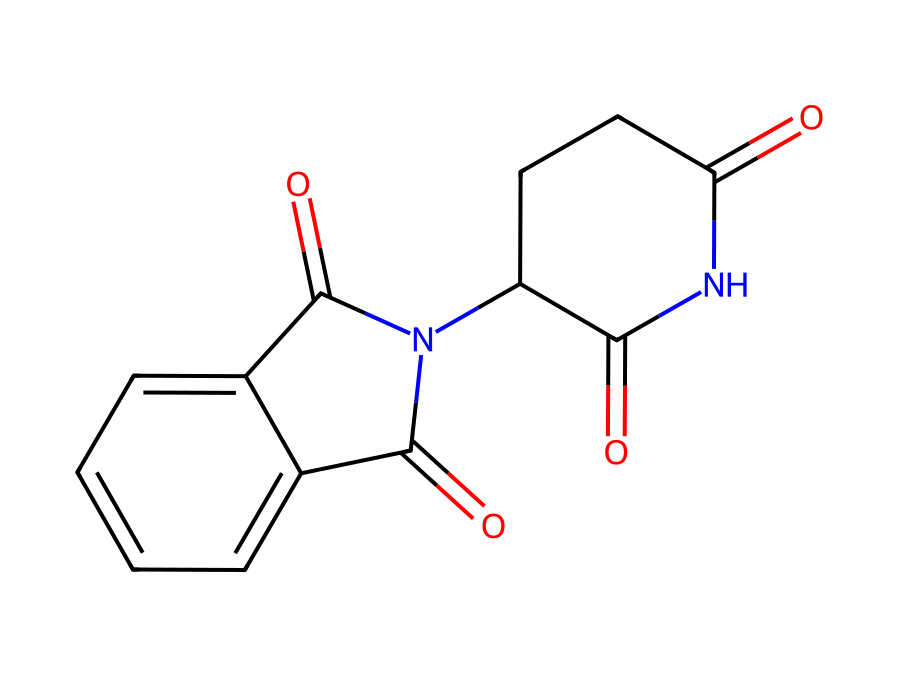
Thalidomide is 258 daltons: a phthalimide ring joined to a glutarimide ring at a single carbon. That carbon is a stereocentre, which means the compound exists as two non-identical mirror images. It was sold, and is still sold, as an equal mixture of the two.19
For researchers
It was synthesised in the mid 1950s and launched in Germany in October 1957 as a sedative, then marketed for morning sickness, which is how it reached pregnant women. It was licensed across Britain and much of the world. It was not licensed in the United States; the reasons are given under regulatory review.4
Its mechanism was unknown for fifty years. It is now understood with unusual precision: the molecule binds a protein called cereblon, which is part of a complex that tags other proteins for destruction. Thalidomide works as a kind of molecular glue, making that complex destroy proteins it would otherwise leave alone.78 Which proteins get destroyed is what decides whether the result is a cancer treatment or a birth defect.
Compound data
| Class | Phthalimido-glutarimide; immunomodulatory, cereblon-binding7 |
| Formula | C13H10N2O4, 258.2319 |
| InChIKey, racemate | UEJJHQNACJXSKW-UHFFFAOYSA-N19 |
| CAS | 50-35-119 |
| UNII | 4Z8R6ORS6L19 |
| Stereochemistry | One stereocentre, sold as a racemate. S is CID 92142, R is CID 7579219 |
| Isomer interconversion | Rapid in vivo, about as fast as elimination11 |
| Which isomer sedates | R, measured in healthy men13 |
| Which binds the target harder | S, about 10-fold10 |
| Molecular target | Cereblon, in a ubiquitin ligase complex78 |
| Teratogenic substrate | SALL456 |
| Species that show it | Humans, primates, rabbits. Not rodents or fish5 |
| The residue | Human valine where rodents carry isoleucine5 |
| One-residue mouse swap | Enough to cause fetal loss9 |
| Half-life | About 5.5 to 7.3 h, absorption-limited24 |
| Launched | Germany, October 19574 |
| US application | Application not allowed to take effect, 1960, insufficient safety data16 |
| Tablets already distributed in the US | Over 2 million, as investigational use16 |
| Withdrawn | Late 1961, then most of the world by 19622 |
| Affected births | More than 10,000, true number unknown2 |
| Mortality at or near birth | About 40% of affected infants20 |
| Law it produced | US Drug Amendments, 10 Oct 196215 |
| Re-approved, US | 16 Jul 1998, then May 20062223 |
| Regulatory status now (GB) | Prescription only, pregnancy prevention programme24 |
| Authorisation | By country, with sources |
| WADA 2026 | Not prohibited, and not named26 |
Evidence
The animal tests were done and were negative; the species used cannot show the hazard.
Thalidomide was tested on animals. The 1960 pharmacology paper in a British journal opens by describing it as “a new sedative hypnotic drug which produces no toxic effects when administered orally to animals in massive doses”, and offers an explanation: “This lack of toxicity may be due to limited absorption.”1
For researchers
The sources disagree on the detail of what was done. No regulator at the time required testing in pregnant animals, and the rodent work that was done found no limb defects. One account says pregnancy testing was not then usual because it was not generally believed that drugs crossed the placenta; another states that the absence of limb deformities after dosing pregnant rodents contributed to the European approvals. Both agree that whatever rodent work existed could not have found this.45
The paper that identified the species difference states that thalidomide “induces degradation of SALL4 exclusively in humans, primates, and rabbits, but not in rodents or fish”.5 SALL4 is a transcription factor, and children born with inherited faults in it have a condition that looks remarkably like thalidomide damage: absent thumbs, shortened limbs, ear and eye defects, congenital heart disease.56
The species difference comes down to single residues. Human cereblon carries a valine where mouse and rat cereblon carry a bulkier isoleucine, and the rabbit and mouse versions of SALL4 itself differ in sequence.56 The experiment that proves the point is the cleanest in this library: make one amino-acid change in a mouse’s own cereblon gene, and “Crbn I391V is sufficient to confer thalidomide-induced fetal loss in mice”.9
The same group that identified the mechanism reported that “thalidomide is not teratogenic in transgenic mice expressing human cereblon, indicating that binding to cereblon is not sufficient to cause birth defects”.6 So the binding is necessary and not sufficient, more than one species difference is doing the work, and a 2015 review counted over thirty separate models and theories of how the malformations arise, concluding that it remained unclear.2 The species difference is well supported; the complete mechanism is not settled.
One mirror image sedates, the other binds the target more strongly, and the body converts each into the other.
A frequently repeated account is that the R form was the sedative and the S form caused the damage, so a pure R product would have been safe. The first half has support; the conclusion is not supported by the interconversion data below.
For researchers
The first half, in humans: in a double-blind study giving healthy men the separated forms, “The (+)-(R)-thalidomide concentrations, but not the (-)-(S)-thalidomide concentrations, exhibited significant positive influences on all sedative effects studied”. R is the sedative.13 And S does bind the target harder: using deuterium-substituted molecules specifically to stop the forms converting, the S form showed “~10-fold stronger binding to CRBN” and caused greater fin damage in zebrafish.10
To compare the two forms in a test tube, chemists had to build versions of the molecule stabilised with deuterium to stop them converting into each other.10
In people, it was measured directly. Healthy male volunteers were given the separate forms and the mixture, with a method that could tell them apart in blood:11
| Rate constant, in people | Value | Half-time, derived here |
|---|---|---|
| Inversion, R becoming S | 0.17 per hour11 | about 4.1 hours |
| Inversion, S becoming R | 0.12 per hour11 | about 5.8 hours |
| Elimination of R | 0.079 per hour11 | about 8.8 hours |
| Elimination of S | 0.24 per hour11 | about 2.9 hours |
The half-times in the right-hand column are derived here from the published rate constants and are not figures the authors state. Interconversion runs about as fast as elimination. The authors wrote: “Putative differences in therapeutic or adverse effects between (+)-(R)- and (-)-(S)-thalidomide would to a large extent be abolished by rapid interconversion in vivo”, with “rapid interconversion in vivo in humans, the (+)-(R)-enantiomer predominating at equilibrium”.11
The forms convert spontaneously at the pH of blood, and serum albumin speeds the flipping up without speeding the breakdown up.12 A pure R preparation would become a mixture within a few hours. Because S also clears faster, R would predominate, which is a weaker claim than “S-free”.
Isomer distinctions can matter. The enclomiphene page covers a single isomer of an older drug, stable enough that the separation defines the product, and where a regulator still ruled it was not a new active substance. An isomer claim is a claim about chemical stability in the body, and is established by measurement.11
Regulatory status
Insufficient evidence in the United States, and two million tablets already distributed.
The application to sell thalidomide in the United States was filed in 1960. The reviewer, Frances Kelsey, refused to let it take effect because the safety data were insufficient, under what the agency’s own history describes as ongoing pressure from the company.1617
For researchers
The agency's account gives insufficient safety data and inadequate evidence as the grounds; one review adds that she was concerned about peripheral neuropathy and about effects in pregnancy. The records opened for this page do not state that she predicted the birth defects.21617
Before approval, under rules that barely governed investigational use, the company “had distributed over two million tablets for investigational use, use which the law and regulations left mostly unchecked”. Doctors handed them out without telling patients the drug was experimental, and more than a dozen affected children were born in the United States as a result.1516
The Drug Amendments signed on 10 October 1962 closed that gap. They required substantial evidence of efficacy, as well as safety, and they required informed consent from research subjects.1516 In Britain the response was a voluntary committee, which parliament recorded as having “been working since the beginning of 1964”, followed by the Medicines Act 1968.18
The requirement for controlled evidence of efficacy in the 1962 statute traces to this episode.15
More than ten thousand, with the true figure unknown.
The number usually given is more than 10,000 children born with severe malformations across 46 countries.24 The author of that figure adds that many affected pregnancies are likely to have ended in miscarriage or stillbirth, so “The true numbers ... will likely never be known”.2
For researchers
The current American label states: “Even a single dose [1 capsule (regardless of strength)] taken by a pregnant woman during her pregnancy can cause severe birth defects”, and mortality at or shortly after birth reported in about 40% of affected infants. The malformations named include absence of limbs, shortened limbs, absent or underdeveloped bones, external ear and eye abnormalities, facial palsy, congenital heart defects, and malformations of the gut, urinary tract and genitals.20
For a sense of what that means now rather than in 1961: the British trust set up in 1973 to support survivors reported 418 beneficiaries at 30 September 2025, down from 427 the year before, with nine deaths in the year. That is a count of people the trust supports, not a count of affected British births, and it was read from the trust’s filed accounts rather than from the trust’s own site.21
The harm also has a present tense. The 2015 review records that “a new generation of thalidomide damaged children has been identified in Brazil”, where the drug is used for leprosy and shared informally.2
Approved in 1998, and its descendants are standard cancer drugs.
Thalidomide was withdrawn in Germany and Britain in late 1961 and from most of the world through 1962.2 No exact British date is given, because the only sources available were secondary.
For researchers
It came back. The American regulator approved it on 16 July 1998 for the skin manifestations of a complication of leprosy, with a restricted distribution programme written into the approval itself. In May 2006 it was granted accelerated approval for newly diagnosed multiple myeloma, with dexamethasone. The European Union authorised it on 16 April 2008.2223
In the United Kingdom it is a prescription-only medicine, with more than one licensed generic product, indicated with melphalan and prednisone as first-line treatment of untreated multiple myeloma in patients aged 65 or over or ineligible for high-dose chemotherapy, and “prescribed and dispensed according to the Thalidomide Pregnancy Prevention Programme”. Its own product information states the reason in one line: “Thalidomide is a powerful human teratogen, inducing a high frequency of severe and life-threatening birth defects”.24
Evidence of efficacy includes an academic trial in untreated myeloma in patients aged 65 to 75, which added thalidomide to two existing drugs: median overall survival 33.2 months without it against 51.6 months with it, hazard ratio 0.59 (95% CI 0.46 to 0.81, p=0.0006).25 The mechanism that does that is the cereblon mechanism, pointed at a different protein: its descendant lenalidomide causes the destruction of two transcription factors that myeloma cells need.14
The boxed warning covers embryo-fetal toxicity and venous thromboembolism, and the British product information lists deep vein thrombosis and pulmonary embolism, peripheral neuropathy, and severe skin reactions among the clinically important risks, with the clotting risk greatest in the first five months.2024
The molecule that prompted the modern approval system is now approved under restrictions that system introduced, for diseases it was not used for in 1961: a known mechanism, a known hazard, a defined population and a restricted-distribution programme.
Status by country
Where regulators list this compound, country by country. Each line names who listed it, the date it was read and the source. A country with no line has not been checked yet.
North America 2 of 3 checked
| Country | Status | Detail |
|---|---|---|
| Canada | Listed as authorised by Health Canada, as of 10 Nov 2026. Source: Health Canada Drug Product Database source dated 1 Nov 2010 | Drug Product Database lists thalidomide as the single active ingredient of Thalomid (database status: marketed) |
| United States | Listed as authorised by the FDA, as of 10 Nov 2026. Source: Drugs@FDA (openFDA) source dated 16 Jul 1998 | Drugs@FDA lists thalidomide as the single active ingredient of Thalidomide, Thalomid (3 applications with a single-ingredient prescription or over-the-counter product) |
Europe 1 of 10 checked
| Country | Status | Detail |
|---|---|---|
| European Union (central authorisation) | Listed as authorised by the EMA, as of 10 Nov 2026. Source: EMA medicines table source dated 16 Apr 2008 | Products on the EMA table: Thalidomide BMS (previously Thalidomide Celgene); Thalidomide Lipomed |
Not yet checked. North America: Mexico. South America: Argentina, Brazil. Europe: Belgium, France, Germany, Italy, Netherlands, Russia, Spain, Switzerland, United Kingdom. Africa: Egypt, Nigeria, South Africa. Asia: China, India, Japan, South Korea, Thailand, United Arab Emirates. Oceania: Australia, New Zealand.
Sport (WADA) applies worldwide, not a country
| WADA Prohibited List 2026 | Not yet checked |
|---|
Information only, not legal advice. Not verified for any individual situation. Status changes; check the date and the source.
The same records as data: JSON and CSV, with a version and a change log.
Checked and missing
Three points of method that the case illustrates.
Species and mechanism. A negative animal result is informative only if the pathway exists in the animal. In thalidomide's case the negative result was correct and uninformative; TGN1412 is a case where it was correct and the human outcome was severe.5
For researchers
Isomer claims. A claim that one form is cleaner is a claim about what the body does to the molecule. Here the interconversion rate was measured in people and was fast.11
Independent review. In the United States a reviewer had the authority to decline the application on grounds of insufficient evidence.16
Animal data can also over-predict harm: Teriparatide carried a black-box warning and a treatment time limit based on a rat finding, removed years later when the human data did not support it. The regulators who approved thalidomide across Europe in 1958 were working to the standard of the day.2
What could not be opened.
The contemporary record of what was tested before 1961 could not be read. The two standard retrospective accounts, both published in 1988, are paywalled and carry no abstract, and the 1962 letter reporting rabbit teratogenicity returned an access error. For that reason the page states only that no regulator then required pregnancy testing and that the rodent work that was done found no limb defects. Two secondary sources conflict on whether pregnant rodents were dosed at all.45
For researchers
No figure from the 1999 single-arm myeloma study appears on this page. Its record carries a published correction and the correction’s content was not retrieved, so it is not cited. The survival figures quoted here come from the later randomised trial, whose correction checks were clean by both methods.25
No British date is given for the 1961 withdrawal. The review cited says November 1961, the commonly repeated date is early December, and no primary document could be opened to settle it, so the page says late 1961. The three contemporary letters that first reported the association, and the 1962 letter reporting the rabbit result, were likewise confirmed only bibliographically: the publisher returned an access error and none is indexed with an abstract, so no claim here rests on their text.23
The rodent picture is a matter of degree and route, not an absolute. A 1979 paper that separated the isomers reported teratogenicity in mice and rats after injection into the abdomen, so “rodents are insensitive” is too strong as stated; the species claim this page makes is the specific one about SALL4 degradation, which is quoted verbatim.5
Whether the isomers interconvert inside an embryo was not established. The measurements quoted are in blood and body fluids, and no primary measurement in human embryonic tissue was found, so no claim is made about it.11
Not checked in this pass: the Medicines Act 1968 text for its licensing commencement, the original leprosy trials behind the American label’s table, and the single enantiomer’s registry number, which could not be pinned. Recorded as unchecked rather than as clear.19
Sources26
This page cites 26 sources, numbered to match the small numbers in the text above. Each one links to the paper or record. Where a source states its design, a tag says so (a human trial, an animal study, a cell study, a review); the tag names the design and is not a grade. Each source also links back to where it is cited above.
- 01Somers GF. Pharmacological properties of thalidomide (alpha-phthalimido glutarimide), a new sedative hypnotic drug. British Journal of Pharmacology and Chemotherapy 1960;15:111-116.AnimalPMID 13832739DOI 10.1111/j.1476-5381.1960.tb01217.xread 6 Nov 2026Back to the text1Somers GF. Pharmacological properties of thalidomide (alpha-phthalimido glutarimide), a new sedative hypnotic drug. British Journal of Pharmacology and Chemotherapy 1960;15:111-116. PMID 13832739, DOI 10.1111/j.1476-5381.1960.tb01217.x. Abstract read in full from the Europe PMC record on 6 November 2026 and quoted verbatim: thalidomide "is a new sedative hypnotic drug which produces no toxic effects when administered orally to animals in massive doses. This lack of toxicity may be due to limited absorption." This is the paper that establishes that animal testing WAS done and was negative, which is the premise of the first lesson on this page. Correction check, both methods: clean. Abstract and scan only; the body of the paper was not read.
- 02Vargesson N. Thalidomide-induced teratogenesis: history and mechanisms. Birth Defects Research Part C, Embryo Today 2015. PMID 26043938Review or meta-analysisPMID 26043938PMC4737249DOI 10.1002/bdrc.21096no read date recordedCited 10 times, back to the text12345678and 2 more
Full text
Vargesson N. Thalidomide-induced teratogenesis: history and mechanisms. Birth Defects Research Part C, Embryo Today 2015. PMID 26043938, DOI 10.1002/bdrc.21096, PMC4737249. Open-access review, full text available. Supports: that "over 10,000 children were born with a range of severe and debilitating malformations" and the author’s own caveat that many affected pregnancies are likely to have ended in miscarriage or stillbirth so that "The true numbers ... will likely never be known"; the count of "over 30 separate models/theories" of the mechanism and the statement that how it works remains unclear, which is why this page does not present the mechanism as closed; that mice are less sensitive than non-human primates and rabbits; the withdrawal in November 1961 in the United Kingdom, which this page reports as "late 1961" because no primary document for an exact date could be opened; that a new generation of thalidomide-damaged children has been identified in Brazil, where the drug is used for leprosy; and the statement that the American reviewer was also concerned about effects during pregnancy, which this page reports as that source’s characterisation rather than as a prediction. NOTE: this review predates the SALL4 papers cited at references 5 and 6. Correction check, both methods: clean. - 03(Reserved.) The 1962 letter reporting rabbit teratogenicity, Somers GF, Thalidomide and congenital abnormalities, The Lancet 1962;279:912-913, PMID 13915092, could not be opened in this pass: the publisher returned an access error and no abstract is indexed.AnimalPMID 13915092DOI 10.1016/s0140-6736(62)91943-8no read date recordedBack to the text1
Full text
(Reserved.) The 1962 letter reporting rabbit teratogenicity, Somers GF, Thalidomide and congenital abnormalities, The Lancet 1962;279:912-913, PMID 13915092, DOI 10.1016/s0140-6736(62)91943-8, could not be opened in this pass: the publisher returned an access error and no abstract is indexed. Only the citation is confirmed, so no claim on this page rests on it and the rabbit result is cited through reference 2 and reference 5 instead. The same applies to the two 1961 and 1962 clinical letters that first reported the association, McBride WG, The Lancet 1961;278:1358, DOI 10.1016/s0140-6736(61)90927-8, and Lenz W, Pfeiffer RA, Kosenow W, Hayman DJ, The Lancet 1962;279:45-46, DOI 10.1016/s0140-6736(62)92665-x: both are confirmed bibliographically through Crossref and neither text was read. - 04Lachmann PJ. The penumbra of thalidomide, the litigation culture and the licensing of pharmaceuticals. QJM 2012. PMID 22908318PMID 22908318PMC3516063DOI 10.1093/qjmed/hcs148no read date recordedCited 5 times, back to the text12345
Full text
Lachmann PJ. The penumbra of thalidomide, the litigation culture and the licensing of pharmaceuticals. QJM 2012. PMID 22908318, DOI 10.1093/qjmed/hcs148, PMC3516063. Full text read. Supports: the 1954 synthesis and the October 1957 German launch as a sedative and anti-emetic for morning sickness; the 1958 licensing in the United Kingdom and much of the world but not the United States; the figure of 46 countries; and the statement that "In the pre-clinical testing, no tests had been performed on pregnant animals to check the effects on the foetus. The page states only what both sources support. - 05Donovan KA, An J, Nowak RP, et al. Thalidomide promotes degradation of SALL4, a transcription factor implicated in Duane Radial Ray syndrome. eLife 2018;7:e38430.PMID 30067223PMC6156078DOI 10.7554/elife.38430no read date recordedCited 10 times, back to the text12345678and 2 more
Full text
Donovan KA, An J, Nowak RP, et al. Thalidomide promotes degradation of SALL4, a transcription factor implicated in Duane Radial Ray syndrome. eLife 2018;7:e38430. PMID 30067223, DOI 10.7554/elife.38430, PMC6156078. The body text supplies the residue difference, a valine at position 388 in human cereblon necessary for the complex to bind, ubiquitinate and degrade zinc-finger substrates, against the bulkier isoleucine in mouse and rat, and the observation about "the absence of defining limb deformities following administration to pregnant rodents, which contributed to the initial approval by regulatory agencies in Europe". Correction check, both methods: no update relation in Crossref, one commentary in the Europe PMC list, nothing in a title search. Clean. - 06Matyskiela ME, Couto S, Zheng X, et al. SALL4 mediates teratogenicity as a thalidomide-dependent cereblon substrate. Nature Chemical Biology 2018. PMID 30190590AnimalPMID 30190590DOI 10.1038/s41589-018-0129-xread 6 Nov 2026Cited 4 times, back to the text1234
Full text
Matyskiela ME, Couto S, Zheng X, et al. SALL4 mediates teratogenicity as a thalidomide-dependent cereblon substrate. Nature Chemical Biology 2018. PMID 30190590, DOI 10.1038/s41589-018-0129-x. Abstract read in full from Europe PMC on 6 November 2026 and quoted verbatim for the two statements this page depends on: that "thalidomide is not teratogenic in transgenic mice expressing human cereblon, indicating that binding to cereblon is not sufficient to cause birth defects", which is why the page states the mechanism is necessary and not sufficient rather than closed; and that "SALL4 is degraded in rabbits but not in resistant organisms such as mice because of SALL4 sequence variations", which is the second species difference alongside the cereblon residue. Models: human cells, transgenic mice and rabbits. Correction check, both methods: no update relation, one commentary, nothing in a title search. Clean. Abstract only. - 07Ito T, Ando H, Suzuki T, et al. Identification of a primary target of thalidomide teratogenicity. Science 2010. PMID 20223979PMID 20223979DOI 10.1126/science.1177319no read date recordedCited 3 times, back to the text123
Full text
Ito T, Ando H, Suzuki T, et al. Identification of a primary target of thalidomide teratogenicity. Science 2010. PMID 20223979, DOI 10.1126/science.1177319. The paper that identified the target, quoted from the abstract: "we identified cereblon (CRBN) as a thalidomide-binding protein. CRBN forms an E3 ubiquitin ligase complex with damaged DNA binding protein 1 (DDB1) and Cul4A that is important for limb outgrowth and expression of the fibroblast growth factor Fgf8 in zebrafish and chicks." Models: zebrafish and chick embryos plus human cell biochemistry. Correction check, both methods: no update relation, no corrections, nothing in a title search. Clean. Abstract only. - 08Fischer ES, Böhm K, Lydeard JR, et al. Structure of the DDB1-CRBN E3 ubiquitin ligase in complex with thalidomide. Nature 2014. PMID 25043012PMID 25043012DOI 10.1038/nature13527no read date recordedCited 2 times, back to the text12
Full text
Fischer ES, Böhm K, Lydeard JR, et al. Structure of the DDB1-CRBN E3 ubiquitin ligase in complex with thalidomide. Nature 2014. PMID 25043012, DOI 10.1038/nature13527. Supports the structural basis, quoted from the abstract: "CRBN is a substrate receptor within CRL4(CRBN) and enantioselectively binds IMiDs". The word enantioselectively is the structural counterpart of the isomer section on this page. Correction check, both methods: clean. Abstract only. - 09Fink EC, McConkey M, Adams DN, et al. Crbn I391V is sufficient to confer in vivo sensitivity to thalidomide and its derivatives in mice. Blood 2018. PMID 30064974AnimalPMID 30064974PMC6172563DOI 10.1182/blood-2018-05-852798read 6 Nov 2026Cited 2 times, back to the text12
Full text
Fink EC, McConkey M, Adams DN, et al. Crbn I391V is sufficient to confer in vivo sensitivity to thalidomide and its derivatives in mice. Blood 2018. PMID 30064974, DOI 10.1182/blood-2018-05-852798, PMC6172563. Abstract read in full from Europe PMC on 6 November 2026 and quoted verbatim: the authors "demonstrate that Crbn I391V is sufficient to confer thalidomide-induced fetal loss in mice, capturing a major toxicity of this class of drugs". Correction check, both methods: no update relation, one commentary in the Europe PMC list, nothing in a title search. Clean. Abstract only. - 10Mori T, Ito T, Liu S, et al. Structural basis of thalidomide enantiomer binding to cereblon. Scientific Reports 2018. PMID 29358579AnimalPMID 29358579PMC5778007DOI 10.1038/s41598-018-19202-7read 6 Nov 2026Cited 3 times, back to the text123
Full text
Mori T, Ito T, Liu S, et al. Structural basis of thalidomide enantiomer binding to cereblon. Scientific Reports 2018. PMID 29358579, DOI 10.1038/s41598-018-19202-7, PMC5778007. Abstract read in full from Europe PMC on 6 November 2026 and quoted verbatim, including the method detail this page treats as the argument rather than a footnote: "Our biochemical studies employed deuterium-substituted thalidomides to suppress optical isomer conversion, and established that the (S)-enantiomer exhibited ~10-fold stronger binding to CRBN and inhibition of self-ubiquitylation compared to the (R)-enantiomer", together with the finding that the S form "induced greater teratogenic effects on fins of zebrafish compared to the (R)-enantiomer". Correction check, both methods: clean. Abstract only. - 11Eriksson T, Björkman S, Roth B, Fyge A, Höglund P. Stereospecific determination, chiral inversion in vitro and pharmacokinetics in humans of the enantiomers of thalidomide. Chirality 1995. PMID 7702998Human RCTPMID 7702998DOI 10.1002/chir.530070109read 6 Nov 2026Cited 10 times, back to the text12345678and 2 more
Full text
Eriksson T, Björkman S, Roth B, Fyge A, Höglund P. Stereospecific determination, chiral inversion in vitro and pharmacokinetics in humans of the enantiomers of thalidomide. Chirality 1995. PMID 7702998, DOI 10.1002/chir.530070109. A study in healthy male volunteers given the separated enantiomers or the racemate, with a stereospecific assay. Abstract read in full from Europe PMC on 6 November 2026 and quoted verbatim: "Mean rate constants of chiral inversion of (+)-(R)-thalidomide and (-)-(S)-thalidomide in blood at 37 degrees C were 0.30 and 0.31 h-1, respectively. Rate constants of degradation were 0.17 and 0.18 h-1. There was rapid interconversion in vivo in humans, the (+)-(R)-enantiomer predominating at equilibrium"; and "Mean rate constants for in vivo inversion were 0.17 h-1 (R to S) and 0.12 h-1 (S to R) and for elimination 0.079 h-1 (R) and 0.24 h-1 (S), i.e., a considerably faster rate of elimination of the (-)-(S)-enantiomer. The measurements are in blood and body fluids; no primary measurement of interconversion inside an embryo was found, so this page makes no claim about that. Correction check, both methods: clean. Abstract only. - 12Eriksson T, Björkman S, Roth B, Fyge A, Höglund P. Enantiomers of thalidomide: blood distribution and the influence of serum albumin on chiral inversion and hydrolysis. Chirality 1998. PMID 9499573.In vitroPMID 9499573no read date recordedBack to the text1
Full text
Eriksson T, Björkman S, Roth B, Fyge A, Höglund P. Enantiomers of thalidomide: blood distribution and the influence of serum albumin on chiral inversion and hydrolysis. Chirality 1998. PMID 9499573. Supports the chemistry behind the interconversion: that the enantiomers invert spontaneously at physiological pH and that serum albumin catalyses the inversion without catalysing the hydrolysis, together with plasma protein binding of 55 and 66 per cent for the R and S forms. See also Reist M, Carrupt PA, Francotte E, Testa B, Chiral inversion and hydrolysis of thalidomide: mechanisms and catalysis by bases and serum albumin, and chiral stability of teratogenic metabolites, Chemical Research in Toxicology 1998, PMID 9860497, which supports the same point. Correction checks on both, by both methods: clean. Abstracts only. - 13Höglund P, Eriksson T, Björkman S. A double-blind study of the sedative effects of the thalidomide enantiomers in humans. Journal of Pharmacokinetics and Biopharmaceutics 1998. PMID 10214558.Human RCTPMID 10214558no read date recordedCited 2 times, back to the text12
Full text
Höglund P, Eriksson T, Björkman S. A double-blind study of the sedative effects of the thalidomide enantiomers in humans. Journal of Pharmacokinetics and Biopharmaceutics 1998. PMID 10214558. The human evidence that the R form is the sedative one, quoted from the abstract: "The (+)-(R)-thalidomide concentrations, but not the (-)-(S)-thalidomide concentrations, exhibited significant positive influences on all sedative effects studied." Six healthy men, single oral doses of each enantiomer and of the racemate. A companion intravenous study in six men reported that sedation "was related to the blood concentration of R-thalidomide" (PMID 10933131). This supports the first half of the folk claim about the isomers; the teratogenic half cannot be tested in humans, and the evidence for it is animal and in vitro. Correction checks, both methods: clean. Abstracts only. - 14Krönke J, Udeshi ND, Narla A, et al. Lenalidomide causes selective degradation of IKZF1 and IKZF3 in multiple myeloma cells. Science 2014. PMID 24292625In vitroPMID 24292625DOI 10.1126/science.1244851no read date recordedBack to the text1
Full text
Krönke J, Udeshi ND, Narla A, et al. Lenalidomide causes selective degradation of IKZF1 and IKZF3 in multiple myeloma cells. Science 2014. PMID 24292625, DOI 10.1126/science.1244851. Supports the therapeutic side of the same mechanism, quoted from the abstract: lenalidomide "causes selective ubiquitination and degradation of two lymphoid transcription factors, IKZF1 and IKZF3, by the CRBN-CRL4 ubiquitin ligase". This is the anti-myeloma action of the drug class and the reason the page can say that which protein is destroyed decides whether the result is a cancer treatment or a birth defect. Correction check, both methods: no update relation, two commentaries, nothing in a title search. Clean. Abstract only. - 15Junod SW. FDA and clinical drug trials: a short history. United States Food and Drug Administration, 21-page document, opened and text-extracted on 6 November 2026. Supports: the sample distribution programme and that doctors gave the drug…no read date recordedCited 4 times, back to the text1234
Full text
Junod SW. FDA and clinical drug trials: a short history. United States Food and Drug Administration, 21-page document, opened and text-extracted on 6 November 2026. Supports: the sample distribution programme and that doctors gave the drug to patients without telling them it was experimental; that more than a dozen affected children were born in the United States as a result; and that the Drug Amendments signed on 10 October 1962, Public Law 87-781, introduced both a requirement for substantial evidence of efficacy and a requirement for informed consent from research subjects, the latter being something that had not happened in the case of thalidomide. - 16United States Food and Drug Administration. A brief history of the Center for Drug Evaluation and Research, and the agency’s biographical page on Frances Oldham Kelsey. Both opened on 6 November 2026. Supports: the 1960 new drug…no read date recordedCited 7 times, back to the text1234567
Full text
United States Food and Drug Administration. A brief history of the Center for Drug Evaluation and Research, and the agency’s biographical page on Frances Oldham Kelsey. Both opened on 6 November 2026. Supports: the 1960 new drug application for the American brand name; that the reviewer refused to allow the application to become effective because of insufficient safety data, against ongoing pressure from the firm; the statement that the company "had distributed over two million tablets for investigational use, use which the law and regulations left mostly unchecked"; and the signing of the 1962 amendments. - 17(Reserved.) The two standard retrospective accounts of the episode by the original participants, Kelsey FO, Thalidomide update: regulatory aspects, Teratology 1988, PMID 3227491, and Lenz W, A short history of thalidomide embryopathy…Review or meta-analysisPMID 3227491no read date recordedCited 2 times, back to the text12
Full text
(Reserved.) The two standard retrospective accounts of the episode by the original participants, Kelsey FO, Thalidomide update: regulatory aspects, Teratology 1988, PMID 3227491, and Lenz W, A short history of thalidomide embryopathy, Teratology 1988, PMID 3067415, could not be opened in this pass: neither carries an abstract in the index and the full texts are paywalled. They are the natural primary-adjacent sources for what was tested before 1961 and for the reviewer’s stated reasoning, and the page’s deliberately narrow wording on both points reflects not having read them. - 18United Kingdom Parliament, House of Commons debate of 15 February 1968 on the Medicines Bill, second reading, read from the historic Hansard record. Supports the British regulatory response: that the recommendations of the Cohen joint…no read date recordedBack to the text1
Full text
United Kingdom Parliament, House of Commons debate of 15 February 1968 on the Medicines Bill, second reading, read from the historic Hansard record. Supports the British regulatory response: that the recommendations of the Cohen joint sub-committee led to the appointment of the Committee on Safety of Drugs, which "has been working since the beginning of 1964", and the Bill then before Parliament proposing a licensing system, which became the Medicines Act 1968. The Act’s own text was not read for its licensing commencement dates. - 19Identity. PubChem compound records read through the PUG-REST property endpoint on 6 November 2026. Racemate: CID 5426, resolved by name and by CAS registry number 50-35-1, molecular formula C13H10N2O4, molecular weight 258.23, InChIKey…read 6 Nov 2026Cited 7 times, back to the text1234567
Full text
Identity. PubChem compound records read through the PUG-REST property endpoint on 6 November 2026. Racemate: CID 5426, resolved by name and by CAS registry number 50-35-1, molecular formula C13H10N2O4, molecular weight 258.23, InChIKey UEJJHQNACJXSKW-UHFFFAOYSA-N, IUPAC name 2-(2,6-dioxopiperidin-3-yl)isoindole-1,3-dione. The second InChIKey block carries no stereochemistry, which is correct for a racemate. The single enantiomers are separate records: the S form at CID 92142, InChIKey UEJJHQNACJXSKW-VIFPVBQESA-N, and the R form at CID 75792, InChIKey UEJJHQNACJXSKW-SECBINFHSA-N and CAS 2614-06-4. US FDA Global Substance Registration System unique ingredient identifiers: 4Z8R6ORS6L for the racemate, TG87FSR590 for the S form and QN61H68KLK for the R form. The mass was reconciled independently from the formula: 13 carbons at 12.011 plus 10 hydrogens at 1.008 plus 2 nitrogens at 14.007 plus 4 oxygens at 15.999 gives 258.23, which agrees. The single enantiomer’s CAS number could not be pinned at a registry in this pass, so this page gives compound identifiers rather than a registry number for it. The descendants named on this page are lenalidomide, CID 216326, and pomalidomide, CID 134780. The structure drawing on this page was generated locally from the racemate SMILES and its formula asserted against C13H10N2O4 before it was written. - 20United States Food and Drug Administration. THALOMID (thalidomide) prescribing information, revised February 2021, read in full on 6 November 2026. Supports: the boxed warning for embryo-fetal toxicity and venous thromboembolism; the…read 6 Nov 2026Cited 3 times, back to the text123
Full text
United States Food and Drug Administration. THALOMID (thalidomide) prescribing information, revised February 2021, read in full on 6 November 2026. Supports: the boxed warning for embryo-fetal toxicity and venous thromboembolism; the statement that "Even a single dose [1 capsule (regardless of strength)] taken by a pregnant woman during her pregnancy can cause severe birth defects"; that mortality at or shortly after birth has been reported in about 40 per cent of affected infants; the list of malformations, namely amelia, phocomelia, hypoplasticity and absence of bones, external ear abnormalities, facial palsy, eye abnormalities, congenital heart defects, and alimentary, urinary and genital tract malformations; that the product "is only available through a restricted distribution program, the thalomid rems program"; and the current mechanism statement that cellular activities of thalidomide are mediated through its target cereblon. The label’s own tables of the two controlled leprosy trials were read; the original trial papers were not opened and no figure from them appears on this page. - 21The Thalidomide Trust, annual report and financial statements for the year ended 30 September 2025, registered charity 266220, read through an extracting fetch tool from a public filings mirror because the Trust’s own site was not…no read date recordedBack to the text1
Full text
The Thalidomide Trust, annual report and financial statements for the year ended 30 September 2025, registered charity 266220, read through an extracting fetch tool from a public filings mirror because the Trust’s own site was not reachable. Supports: that at 30 September 2025 there were 418 beneficiaries, against 427 in 2024, with nine deaths during the year, and that the Trust was established in 1973. The figure should be re-verified against the Trust’s own document before it is reused. - 22United States Food and Drug Administration. Approval letter for new drug application 20-785, 16 July 1998, read on 6 November 2026. Supports the first re-approval: acute treatment of the cutaneous manifestations of moderate to severe…read 6 Nov 2026Cited 2 times, back to the text12
Full text
United States Food and Drug Administration. Approval letter for new drug application 20-785, 16 July 1998, read on 6 November 2026. Supports the first re-approval: acute treatment of the cutaneous manifestations of moderate to severe erythema nodosum leprosum and maintenance therapy for prevention and suppression of recurrences, granted under 21 CFR 314.520 with the restricted distribution programme described as an integral part of the approved application. - 23United States Food and Drug Administration. Action letter for new drug application 21-430 and supplement 31 to application 20-785, May 2006, read on 6 November 2026, together with the agency’s Drugs@FDA submission record for application…read 6 Nov 2026Cited 2 times, back to the text12
Full text
United States Food and Drug Administration. Action letter for new drug application 21-430 and supplement 31 to application 20-785, May 2006, read on 6 November 2026, together with the agency’s Drugs@FDA submission record for application 020785 read through the openFDA interface. Supports: the accelerated approval for newly diagnosed multiple myeloma with dexamethasone under 21 CFR 314.510 and 314.520, dated in the submission record to 25 May 2006 with the letter published the following day, which is why this page says May 2006; and the original approval date of 16 July 1998. The European Union authorisation of 16 April 2008 is from the European Medicines Agency’s assessment-report page for the product, also read on 6 November 2026; its orphan designation of 20 November 2001 was removed from the register in April 2018 at the end of market exclusivity. - 24Electronic medicines compendium, summary of product characteristics for Thalidomide hard capsules, Eugia (UK) Limited, marketing authorisation PL 56284/0046, read on 6 November 2026, with the product page showing the category "Prescription…read 6 Nov 2026Cited 4 times, back to the text1234
Full text
Electronic medicines compendium, summary of product characteristics for Thalidomide hard capsules, Eugia (UK) Limited, marketing authorisation PL 56284/0046, read on 6 November 2026, with the product page showing the category "Prescription only medicine". Supports: the indication, that "Thalidomide in combination with melphalan and prednisone is indicated as first line treatment of patients with untreated multiple myeloma, aged 65 years or ineligible for high dose chemotherapy. Thalidomide is prescribed and dispensed according to the Thalidomide Pregnancy Prevention Programme"; the contraindications in pregnancy, in women of childbearing potential unless all the conditions of the programme are met, and in male patients unable to comply with the required contraceptive measures; the warning that "Thalidomide is a powerful human teratogen, inducing a high frequency of severe and life-threatening birth defects"; the clinically important adverse reactions including deep vein thrombosis and pulmonary embolism, peripheral neuropathy and severe skin reactions, with venous thromboembolic risk greatest during the first five months; and the pharmacokinetics, a half-life of 5.5 to 7.3 hours with metabolism almost exclusively by non-enzymatic hydrolysis. At least two further products are licensed in the United Kingdom (Zentiva Pharma UK, PL 17780/1266, and Bristol-Myers Squibb, PLGB 15105/0178, which the compendium marks as discontinued), which is why this page refers to licensed products rather than naming a current brand. - 25Facon T, Mary JY, Hulin C, et al, for the Intergroupe Francophone du Myélome. Melphalan and prednisone plus thalidomide versus melphalan and prednisone alone or reduced-intensity autologous stem cell transplantation in elderly patients…no read date recordedCited 2 times, back to the text12
Full text
Facon T, Mary JY, Hulin C, et al, for the Intergroupe Francophone du Myélome. Melphalan and prednisone plus thalidomide versus melphalan and prednisone alone or reduced-intensity autologous stem cell transplantation in elderly patients with multiple myeloma (IFM 99-06): a randomised trial. The Lancet 2007. Quoted from the abstract: in 447 previously untreated patients aged 65 to 75, "median overall survival times were 33.2 months ... for MP, 51.6 months ... for MPT", with a hazard ratio of 0.59 (95% CI 0.46 to 0.81, p=0.0006). This is an academic group trial rather than a company one, which is why it is the survival figure this page quotes. Correction check, both methods: no update relation, comments only, nothing in a title search. Clean. Abstract only. The correction exists, its content was not retrieved, and so no figure from that study appears here. - 26Legal status. Misuse of Drugs Act 1971 Schedule 2 in all its Parts, and the Misuse of Drugs Regulations 2001 Schedules 1 to 5, fetched from legislation.gov.uk and searched for "thalidomide" on 6 November 2026: no hit in any of them, so it…read 6 Nov 2026Back to the text1
Full text
Legal status. Misuse of Drugs Act 1971 Schedule 2 in all its Parts, and the Misuse of Drugs Regulations 2001 Schedules 1 to 5, fetched from legislation.gov.uk and searched for "thalidomide" on 6 November 2026: no hit in any of them, so it is not a controlled drug in the United Kingdom. Schedule 1 of the Psychoactive Substances Act 2016 excludes medicinal products as defined by the Human Medicines Regulations 2012, so a licensed medicine falls outside that Act. Anti-doping: the 2026 World Anti-Doping Code Prohibited List, as reproduced in full in the Austrian Federal Law Gazette BGBl. III Nr. 219/2025 of 30 December 2025, was opened and text-extracted; thalidomide is not named anywhere in it, nor is lenalidomide or any immunomodulatory class, and the class covering substances not currently approved by any governmental health authority for human therapeutic use does not reach it because it is approved. Sections S1 and S4 were checked by structure rather than exhaustively substance by substance.
Where it sits
Related pages
| TGN1412 | A case where the animal had the receptor but not on the cells that mattered, so a primate study could not have found the hazard |
| Teriparatide | An animal finding that over-predicted human harm, became a black-box warning, and was withdrawn years later |
| Enclomiphene | A single isomer stable enough to define the product, where a regulator ruled it was not a new active substance |
| Fenfluramine | A medicine withdrawn and later re-approved |
| Rimonabant | A medicine withdrawn in the 21st century |