Coredex
Contents
OverviewEvidenceMechanismSafetyStatusCheckedSourcesWhere it sitsSources to read

AP503

AP-970/43482503, GPR133 agonist, ADGRD1 agonist

A 2025 paper reported a second receptor for testosterone, on the outside of the muscle cell. AP503 is the first molecule designed to act on that receptor and leave the classic androgen receptor alone. It has never been given to a human, and the receptor is also expressed in other tissues.

Preclinical compound

AP503 has never been given to a human. This page records the finding behind it.

  • Small molecule, not a peptide
  • GPR133 agonist
  • Preclinical only
  1. Compounds
  2. Androgens and anabolic agents
  3. Adhesion GPCR agonists
  4. GPR133 agonist
  5. AP503

9 sources last source read 12 Aug 2026 page reviewed 22 Nov 2026

Overview

Not a peptide, and not a SARM. AP503 is a small molecule of 273.75 Da. It does not act on the androgen receptor that SARMs and steroids act on. It is designed to act on a different receptor.
In its favour

A receptor finding behind it, and the name resolves to a database record

Recorded harm

Nothing recorded; the receptor has other roles, including one linked to bladder cancer progression in cell and xenograft studies

Not settled

Two preclinical papers, one of which is about the receptor rather than the drug. No human has taken it

The first compound built for a membrane androgen receptor.

The textbook account of how testosterone builds muscle has one route. The hormone crosses into the cell, binds the androgen receptor, and changes which genes get transcribed. Everything anabolic follows from that.

For researchers

In January 2025, a paper in Cell reported that this is not the only route.⁠1 There is a second receptor, and it sits on the outside of the muscle cell. It is called GPR133, also written ADGRD1, and 5α-DHT activates it directly without going inside at all.

AP503 is what the authors did next. They screened computationally for a small molecule that switches GPR133 on, and reported one that, in their words, "separates the beneficial muscle-strengthening effects from side effects mediated by AR".⁠1

Reading of the quoted sentence

"Separates the effects" is not the same as "does not touch the androgen receptor." The claim is about outcomes, not about binding. Nothing published establishes that AP503 has zero activity at the androgen receptor, and this page does not say that it does.

Compound data

ClassSmall-molecule agonist of an adhesion GPCR⁠1
TargetGPR133, also called ADGRD1⁠1
Full designationAP-970/43482503⁠2
FormulaC16H16ClNO⁠3
Mass273.753
InChIKeyYIUZDOWDFPGYGK-UHFFFAOYSA-N⁠3
StereochemistryUnspecified. One stereocentre, no enantiomer stated⁠3
Peptide?No. A small molecule, like methylene blue, metformin and the NAD+ precursors already in the catalogue
OriginIn-silico screening⁠1
SignallingRaises intracellular cAMP1
Human exposureNone
RouteNot established in any species for human use

Evidence at a glance

Regulator approvalNone
Human trialsNone
Animal efficacy, muscleYes1
Animal efficacy, boneYes, osteoporosis model⁠2
Structural workCryo-EM, receptor with two steroids⁠1
Primary paperCell, 29 Jan 2025, 37 citations1
Independent replicationToo early
Independent testingNo batches exist

Regulatory status

US, UK and EUNo marketing authorisation and no registered trial found
ScheduledNo. Nothing has ruled on it because nothing has got far enough
SportProhibited at all times. Not by name, but WADA S0, Non-Approved Substances, covers any pharmacological substance with no approval for human use, and names "drugs under pre-clinical or clinical development" explicitly⁠9
AgeNothing in this library is intended for anyone under 18

Related

SemaxAnother page where the published identifier had to be reconstructed
TesamorelinA compound with human trial evidence
TB-500The other compound with almost nothing established, for a very different reason
CJC-1295Another molecule marketed on a mechanism rather than an outcome
ZiconotideThe other compound in this group. Out of reach for the opposite reason: approved by the FDA for about twenty years
AdipotideAnother compound with preclinical evidence only
Library indexAll compounds in the library

The name contains a PubChem number.

AP503 arrives with almost no identity information, and what there is has to be reconstructed. Semax is a contrasting case, where the commonly published CID belongs to a steroid.

For researchers

The bone paper writes the compound out in full as AP-970/43482503.⁠2 The second half of that is a PubChem CID.

FieldValue
PubChem CID434825033
FormulaC16H16ClNO⁠3
Mass273.753
InChIKeyYIUZDOWDFPGYGK-UHFFFAOYSA-N⁠3
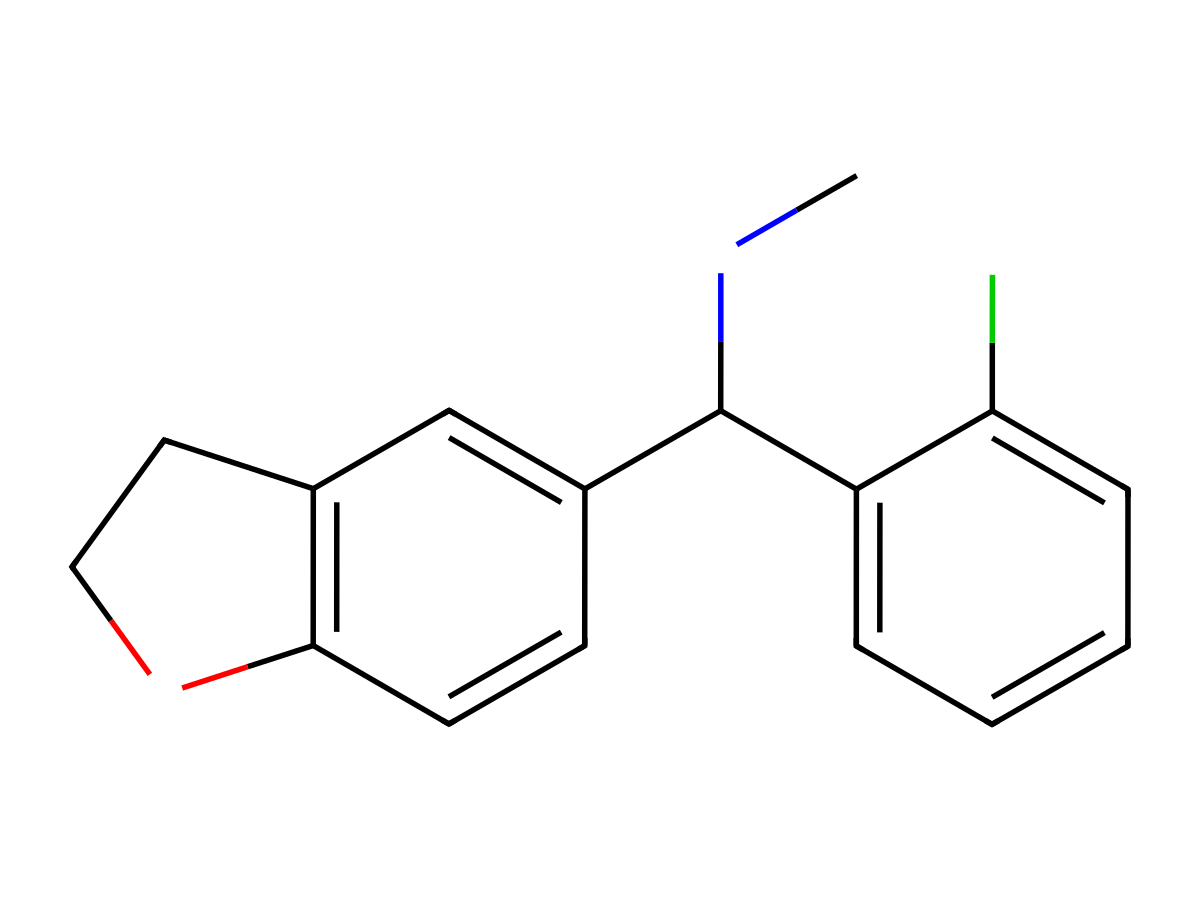
Systematic name1-(2-chlorophenyl)-1-(2,3-dihydro-1-benzofuran-5-yl)-N-methylmethanamine⁠3
Only synonym on recordAKOS006033267⁠3
Basis of the identification, and why it is an inference

Three things line up. That lone synonym is an AKos screening-library catalogue number, which is exactly what an in-silico screening hit looks like, and the Cell paper says AP503 came from in-silico screening.⁠1 A search of the indexed literature finds the string 43482503 in exactly one paper, the one that writes the name out.⁠4 And the molecule is chemically plausible for the job: a small secondary amine, nothing peptide-like.

Neither paper actually says "PubChem CID 43482503". So this page states it as a well-supported inference and not as a confirmed fact. What would settle it is the supplementary chemistry in either paper.

The structure shown was drawn from that record and reconciled independently. Building the molecule from its systematic name gives C16H16ClNO at 273.76 against the published 273.75, a difference of 0.01.⁠8

One detail that is not a footnote

The InChIKey ends UHFFFAOYSA, which is the marker for a record with no stereochemistry specified. The molecule has a stereocentre, at the carbon carrying the two rings and the methylamine.

Neither paper states which enantiomer was used, or whether the hit was tested as a racemate. For a receptor agonist that matters, because enantiomers routinely differ several-fold in potency and sometimes act in opposite directions.

Evidence

Two preclinical papers; one is about the receptor rather than the drug.

LabAnimalHuman, anyControlled efficacyApproved

Evidence found: lab; animal.

What was shownWhereIn what
GPR133 is a membrane androgen receptor; DHT activates it; cryo-EM structures; AP503 identifiedCell, Jan 2025⁠1Cells and animals
AP503 enhanced osteoblast function and significantly alleviated osteoporosisSignal Transduct Target Ther, 2025⁠2Mouse ovariectomy model
GPR133 knockout produces osteopenia; PTK7 is its endogenous ligandSame paper⁠2Mouse
Human trials of any kindNoneNone
For researchers

The bone result is the only in-vivo efficacy result for AP503 outside muscle. AP503 was given to animals with an induced disease and the disease improved.⁠2

Eighteen months of literature. The Cell paper was published on 29 January 2025 and has been cited 37 times.⁠1 Too little time has passed for the main findings to have been replicated.

GPR133 is expressed outside muscle: bone and bladder findings.

Everything above is about muscle. GPR133 is not only in muscle.

For researchers
Bone

Knocking the receptor out in mice produces reduced cortical bone mass and trabecularisation, which is what osteoporosis looks like. Activating it with AP503 went the other way.⁠2

So the same molecule that strengthened muscle also treated a bone disease in an animal. Two tissues, same direction, same compound.

Bladder

A 2026 paper reports that ADGRD1 drives bladder cancer progression and angiogenesis through PI3K/AKT/mTOR, with higher expression predicting worse survival. Shown in cell lines and in xenograft models.⁠5

What the study did. It manipulated how much receptor the tumour cells make. It did not test AP503, or any drug. A tumour overexpressing a receptor is not the same experiment as a drug switching that receptor on in a healthy person.

No experiment has tested whether this matters for a drug that activates the receptor, so the question remains unknown.

The receptor also appears in work on prostate cancer and in brain tissue.⁠6 This page does not summarise those, because the directions are mixed and reading across from expression studies to a drug is exactly the error the bladder note warns about.

Mechanism

A receptor on the surface does not wait for transcription.

The two routes differ in more than location.

For researchers
Classic route
Testosterone or DHT enters the cell, binds the androgen receptor, and changes which genes are read. Because it works through transcription, it is inherently slow⁠7
GPR133
Sits on the outside of the muscle cell. 5α-DHT activates it directly, without entering⁠1
cAMP ↑
Activation raises intracellular cAMP. This is second-messenger signalling, not gene regulation, and it does not depend on transcription⁠1
Muscle strength
Enhanced in the authors' experiments⁠1

The speed contrast is textbook pharmacology, not a finding of this paper. Genomic steroid action is slow because it requires transcription and translation; membrane-initiated signalling is fast. That distinction is long established and is included here as background.⁠7

They did not stop at showing it happens. The paper reports cryo-EM structures of GPR133 bound to 5α-DHT and, separately, to methenolone, an anabolic steroid.⁠1 Solving the structure turns "this hormone activates this receptor" into a target that can be designed against, and it is the basis for designing AP503.

The implication the authors raise themselves

The motifs that recognise the steroid core are common across adhesion GPCRs, which is a large family. The paper suggests other steroid hormones may have membrane receptors that have not been looked for.⁠1

If that holds, it implies a layer of steroid signalling that has not been examined.

Safety and standards

No human safety data exist.

No human has taken AP503. There is no toxicology to summarise, no adverse-effect profile, no interaction data, and no established human use.

For researchers
What "no side effects" would mean here

The appeal of this molecule is that it might deliver a muscle effect without the effects that come through the androgen receptor. Even taken at face value, that removes one source of side effects. It does not remove side effects.

The receptor it activates is expressed in several tissues, and systemic activation of any of them has never been characterised in a person. Absence of reported harm reflects absence of study, not evidence of safety.

Regulatory status

Status by country

Where regulators list this compound, country by country. A country with no line has not been checked yet.

No country or sport list has been checked yet

Not yet checked. North America: Canada, Mexico, United States. South America: Argentina, Brazil. Europe: European Union (central authorisation), Belgium, France, Germany, Italy, Netherlands, Russia, Spain, Switzerland, United Kingdom. Africa: Egypt, Nigeria, South Africa. Asia: China, India, Japan, South Korea, Thailand, United Arab Emirates. Oceania: Australia, New Zealand.

Sport (WADA) applies worldwide, not a country

WADA Prohibited List 2026Not yet checked

Information only, not legal advice. Not verified for any individual situation. Status changes; check the date and the source.

The same records as data: JSON and CSV, with a version and a change log.

Checked and missing

Three claims, against the record.

  • Claim: steroid results without side effects. The paper claims separation from androgen-receptor-mediated effects. That is one source of side effects removed, in animals, on a molecule no human has taken.⁠1
  • Claim: availability soon. There is no registered trial, no development programme announced, and no human safety work published.
  • Claim: behaves like a SARM. It acts on a different receptor with different signalling.

Limitations.

  • No human data: no volunteer and no safety study.⁠1
  • Eighteen months of literature. Too new for anything important to have been independently replicated.
  • The identity is inferred, not confirmed. The CID is well supported and neither paper states it outright.⁠3
  • The stereochemistry is unspecified, and for an agonist that is a real gap.⁠3
  • The bladder finding is an expression study, not a test of this drug, and must not be read as one.⁠5
  • The speed contrast in the mechanism section is textbook background, not a result from the paper.⁠7

Sources9

This page cites 9 sources, numbered to match the small numbers in the text above. Each one links to the paper or record. Where a source states its design, a tag says so (a human trial, an animal study, a cell study, a review); the tag names the design and is not a grade. Each source also links back to where it is cited above.

  1. 01
    Yang, Ping, Wang et al., "Identification, structure, and agonist design of an androgen membrane receptor", Cell, 29 January 2025, 188(6):1589-1604.e24. PMID 39884271, 37 citations as of 12 August 2026.PMID 39884271DOI 10.1016/j.cell.2025.01.006no read date recorded
    Full text
    Yang, Ping, Wang et al., "Identification, structure, and agonist design of an androgen membrane receptor", Cell, 29 January 2025, 188(6):1589-1604.e24. PMID 39884271, DOI 10.1016/j.cell.2025.01.006. 37 citations as of 12 August 2026. Abstract read in full at source. Source for: 5α-DHT activating membrane receptor GPR133 in muscle cells, the resulting rise in intracellular cAMP and enhancement of muscle strength; cryo-EM structural analysis of GPR133-Gs in complex with 5α-DHT and with methenolone; the observation that the steroid-recognition motifs are common across adhesion GPCRs and that other adhesion GPCRs may therefore recognise other steroid hormones; and the identification by in-silico screening of the small molecule AP503, described as activating GPR133 and separating the beneficial muscle-strengthening effects from side effects mediated by AR. The wording "separates the effects" is the authors' own and is quoted rather than paraphrased on this page, because the stronger claim is not established.
    Cited 19 times, back to the text12345678and 11 more
  2. 02
    Lehmann, Lin, Zhang et al., "The mechanosensitive adhesion G protein-coupled receptor 133 (GPR133/ADGRD1) enhances bone formation", Signal Transduction and Targeted Therapy, 2025. PMID 40583059 PMID 40583059DOI 10.1038/s41392-025-02291-yno read date recorded
    Full text
    Lehmann, Lin, Zhang et al., "The mechanosensitive adhesion G protein-coupled receptor 133 (GPR133/ADGRD1) enhances bone formation", Signal Transduction and Targeted Therapy, 2025. PMID 40583059, DOI 10.1038/s41392-025-02291-y. Source for the compound's full designation AP-970/43482503 (AP503); for constitutive and osteoblast-specific Gpr133/Adgrd1 knockout in mice producing reduced cortical bone mass and trabecularisation; for PTK7 as the endogenous ligand and the role of mechanical loading; and for the finding that activation of GPR133 with AP503 enhances osteoblast function and differentiation in vitro and in vivo, significantly alleviating osteoporosis in a mouse ovariectomy model.
    Cited 7 times, back to the text1234567
  3. 03
    PubChem compound record CID 43482503, retrieved 12 August 2026.read 12 Aug 2026
    Full text
    PubChem compound record CID 43482503, retrieved 12 August 2026. C16H16ClNO, molecular weight 273.75, InChIKey YIUZDOWDFPGYGK-UHFFFAOYSA-N, systematic name 1-(2-chlorophenyl)-1-(2,3-dihydro-1-benzofuran-5-yl)-N-methylmethanamine, sole registered synonym AKOS006033267. ⚠️ The link between this record and AP503 is an inference drawn from the compound's full designation at reference 2, not a statement made by either paper. The supporting reasoning, and what would confirm it, are set out in the Identity section. The InChIKey's second block is UHFFFAOYSA, indicating a record without defined stereochemistry.
    Cited 12 times, back to the text12345678and 4 more
  4. 04
    Full-text search of the indexed biomedical literature for the string 43482503, performed 12 August 2026, returning exactly one result: reference 2. Cited as supporting evidence for the identity inference at reference 3.no read date recordedBack to the text1
  5. 05
    Li, Yang, Zhang, Yan and Su, "ADGRD1 promotes bladder cancer progression and angiogenesis via the PI3K/AKT/mTOR-mediated pro-angiogenic secretome", Frontiers in Oncology, 2026. PMID 42294320In vitroPMID 42294320PMC13253281DOI 10.3389/fonc.2026.1817872no read date recorded
    Full text
    Li, Yang, Zhang, Yan and Su, "ADGRD1 promotes bladder cancer progression and angiogenesis via the PI3K/AKT/mTOR-mediated pro-angiogenic secretome", Frontiers in Oncology, 2026. PMID 42294320, PMC13253281, DOI 10.3389/fonc.2026.1817872. Stable ADGRD1-knockdown and overexpression bladder cancer cell lines, with xenograft models for in-vivo tumour growth. Higher ADGRD1 expression associated with advanced stage, higher grade and poorer overall survival. 🚨 This is a receptor-expression study. It does not test AP503 or any pharmacological agonist, and this page does not present it as evidence about the drug.
    Cited 2 times, back to the text12
  6. 06
    GPR133/ADGRD1 also appears in published work on prostate cancer and in central nervous system tissue. Deliberately not summarised on this page, because the reported directions are mixed and because reading across from expression studies to…no read date recorded
    Full text
    GPR133/ADGRD1 also appears in published work on prostate cancer and in central nervous system tissue. Deliberately not summarised on this page, because the reported directions are mixed and because reading across from expression studies to the effect of an agonist is the specific error flagged at reference 5.
    Back to the text1
  7. 07
    Genomic versus non-genomic steroid action. Steroid signalling through nuclear receptors requires transcription and translation and is therefore slow, on a scale of hours; membrane-initiated steroid signalling through second messengers is…no read date recorded
    Full text
    Genomic versus non-genomic steroid action. Steroid signalling through nuclear receptors requires transcription and translation and is therefore slow, on a scale of hours; membrane-initiated steroid signalling through second messengers is fast. This is long-established background pharmacology and is not a finding of the paper at reference 1. Included on this page to explain why a surface receptor behaves differently from the nuclear one, and labelled as background wherever it appears.
    Cited 3 times, back to the text123
  8. 08
    Structure verification performed for this page, 12 August 2026. The molecule was constructed from the systematic name at reference 3, its molecular formula asserted against the published C16H16ClNO, and its average mass computed at 273.76…no read date recorded
    Full text
    Structure verification performed for this page, 12 August 2026. The molecule was constructed from the systematic name at reference 3, its molecular formula asserted against the published C16H16ClNO, and its average mass computed at 273.76 against the published 273.75, a difference of 0.01 and inside this library's 0.1 tolerance. The skeletal structure displayed was generated from that verified structure rather than retrieved from a third party, and was checked at the size this page displays it. Working retained in the vault.
    Back to the text1
  9. 09
    World Anti-Doping Agency, Prohibited List, section S0, Non-Approved Substances, read at wada-ama.org on 12 August 2026. Verbatim: "Any pharmacological substance which is not addressed by any of the subsequent sections of the List and with…read 12 Aug 2026
    Full text
    World Anti-Doping Agency, Prohibited List, section S0, Non-Approved Substances, read at wada-ama.org on 12 August 2026. Verbatim: "Any pharmacological substance which is not addressed by any of the subsequent sections of the List and with no current approval by any governmental regulatory health authority for human therapeutic use (e.g. drugs under pre-clinical or clinical development or discontinued, designer drugs, substances approved only for veterinary use) is prohibited at all times." AP503 falls squarely within the parenthetical.
    Back to the text1

Where it sits

Primary sources

Don’t take our word for it. Read the study.

Read first: 01, 02, 05.