Coredex
Contents
Where to buyOverviewEvidenceMechanismStatusSourcesWhere it sitsStudies

CJC-1295 with DAC

CJC-1295, DAC:GRF, CJC-1295 DAC, CAS 446262-90-4; the version without DAC (Mod GRF 1-29) is a different molecule with its own page

Two different molecules are sold under the name CJC-1295. This page covers the version with a drug affinity complex (DAC), which lasted 5.8 to 8.1 days in healthy adults.⁠2 The 29-residue peptide without the DAC is a different molecule with its own page; no human study of it was found.

  • GHRH analogue
  • Filed under: Growth hormone
  • Subcutaneous
  • Development discontinued

Where to buy, code BENTheDhust, ships to the United States

  1. Compounds
  2. Growth hormone secretagogues
  3. GHRH analogues
  4. CJC-1295 with DAC

14 sources 1 registered trial named in the sources last source read 22 Nov 2026 page reviewed 22 Nov 2026

Where to buy

TheDhust

  • US shipping
  • Affiliate link
Use codeenter it at checkout

Affiliate link. Coredex earns a commission if you buy through it. It does not change what you pay or what this page reports, and listing a vendor is not a recommendation. Each vendor’s own listing says what an item is sold as (a supplement, a medicine or research material); read it before you order. Read the full disclosure. Full vendor table.

Overview

Published human data cover only the DAC version, and its development stopped at Phase II in 2006.

In its favour

It pushes a lever the body already has, and the growth hormone response is real

Recorded harm

A hormone signal that persists for about a week once given

Not settled

Two molecules share the name, and development stopped at Phase II in 2006

One name covers two molecules. This page covers the version with DAC.

The molecule without the DAC has its own page: CJC-1295 (no DAC / Mod GRF 1-29).

For researchers

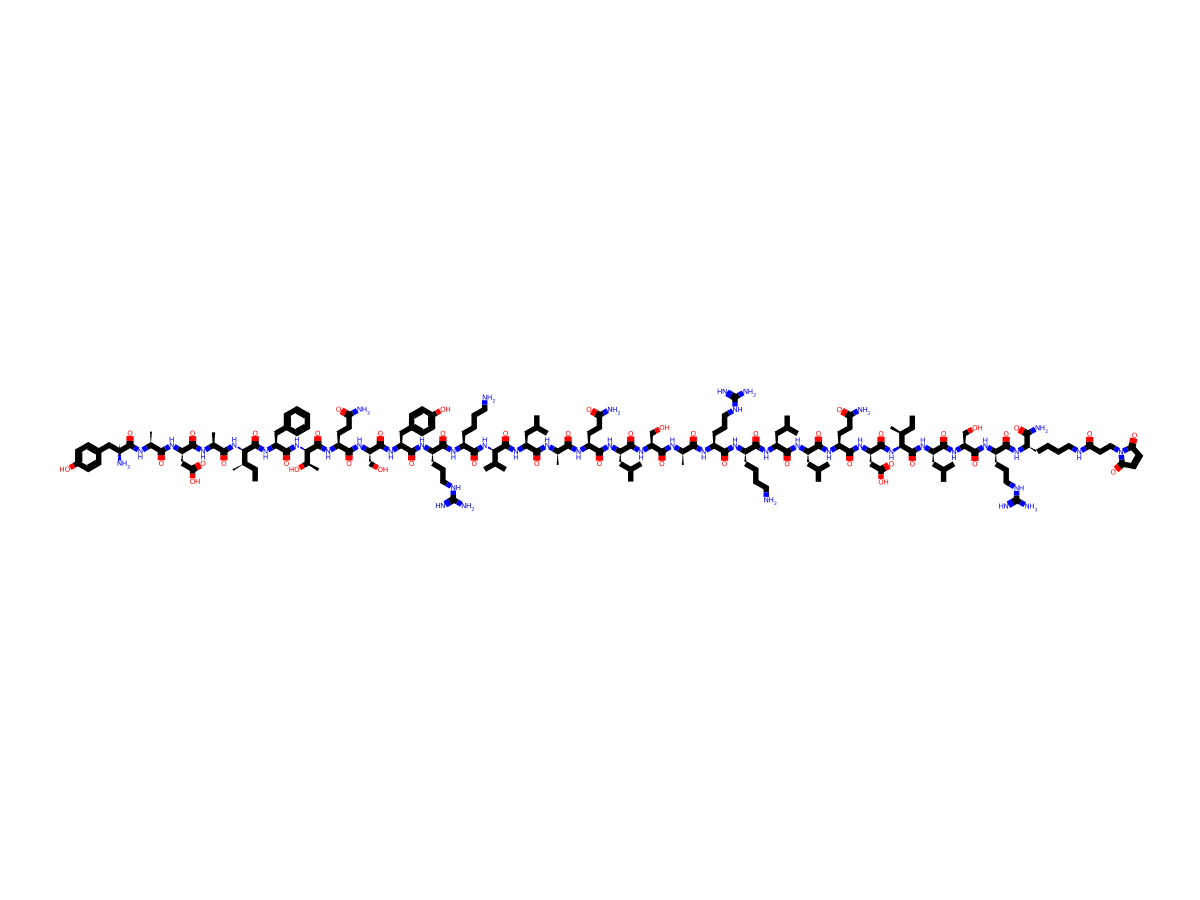
CJC-1295 means the version with DAC. DAC stands for Drug Affinity Complex, a chemical group that bonds the peptide to albumin in the blood and stretches its half-life into days.⁠12

"CJC-1295 no DAC" is not CJC-1295. It is Modified GRF (1-29), a separate 29-residue peptide. Same backbone, no albumin linker, and no half-life reported in people.⁠11

CJC-1295 (with DAC)"No DAC" = Modified GRF (1-29)
Residues3029
FormulaC165H269N47O46C152H252N44O42
Mass3647.2 g/mol3367.9 g/mol
PubChemCID 91971820CID 56841945
Half-life5.8 to 8.1 days2Not reported in people⁠11
Human dataPhase I published, Phase II haltedNone found⁠11

They differ by a single residue at the end of the chain: a lysine carrying the maleimidopropionyl linker. One extra position, and a half-life of days in one case and none reported in people in the other.

How deep this confusion runs

The Wikipedia entry for CJC-1295 warns, correctly, that the two compounds are falsely equated in published scientific papers, including in the analytical chemistry literature written to detect them.⁠3 Its own infobox then lists PubChem CID 56841945, which is the no-DAC molecule, alongside the CAS number and formula for the DAC version.

Verified independently: CID 56841945 returns C152H252N44O42 at 3367.9 g/mol, and its synonym list on 22 Nov 2026 carries both “CJC 1295 with DAC” and “CJC-1295-no DAC acetate”.⁠12 Building the 29-residue amidated sequence from residue masses gives C152H252N44O42 at 3368.0. The DAC version is CID 91971820, C165H269N47O46, 3647.2.⁠4

Because a widely used reference source has the wrong structure attached, the name "CJC-1295" alone does not identify the molecule. The molecular mass distinguishes them: 3647 and 3368 are far enough apart that any mass analysis separates them immediately.

Compound data

YTyr
AD-Ala
DAsp
AAla
IIle
FPhe
TThr
QGln
SSer
YTyr
RArg
KLys
VVal
LLeu
AAla
QGln
LLeu
SSer
AAla
RArg
KLys
LLeu
LLeu
QGln
DAsp
IIle
LLeu
SSer
RArg
KDAC
NonpolarAcidicBasic Amber = substituted Teal = the DAC
Primary sequence, N-terminus at left. The four amber positions are the substitutions that block enzymatic breakdown. Without the final teal residue it is a different product, sold under the same name.
ClassSynthetic GHRH analogue, growth hormone secretagogue
DeveloperConjuChem Biotechnologies
CAS446262-90-4
PubChemCID 91971820
FormulaC165H269N47O46
Mol. mass3647.2 g/mol
Residues30, C-terminally amidated
ParentGHRH (1-29), licensed as sermorelin
SubstitutionsD-Ala2, Gln8, Ala15, Leu27
DACNε-maleimidopropionyl-Lys30, binds serum albumin
ReceptorGHRH receptor, anterior pituitary somatotrophs
Half-life5.8 to 8.1 days in healthy adults⁠2
RouteSubcutaneous injection

Human data

GH response2 to 10 fold rise, ~6 days, single dose (four doses tested)⁠2
IGF-11.5 to 3 fold, 9 to 11 days⁠2
Repeat dosingIGF-1 elevated up to 28 days⁠2
PulsatilityPreserved during continuous stimulation⁠5
Phase IPublished, JCEM 2006⁠2
Phase II192 enrolled, halted 17 Jul 2006⁠6
Phase IIINever conducted
ApprovalNone, anywhere

Regulatory status

UKNot licensed as a medicine. Not licensed as a medicine
USNot FDA approved. Development discontinued at Phase II in 2006⁠3
SportThe WADA Prohibited List names CJC-1295 among growth hormone-releasing hormone analogues, without separating the two forms.⁠13 Detection of the DAC conjugate in horse plasma has been published.⁠7 A 2021 detection study lists CJC-1295 and CJC-1295 with DAC as separate analogues.⁠10 The peptide identified in a preparation seized in Norway had 29 residues, which is the length of the no-DAC molecule; see its page.
RelatedSermorelin, the unmodified parent fragment, was an FDA-approved medicine until the approvals were withdrawn in 2009 (its Drugs@FDA product is marked discontinued)
AgeNothing in this library is intended for anyone under 18

Related

CJC-1295 (no DAC / Mod GRF 1-29)The 29-residue peptide without the albumin linker, a different molecule that shares the name
CJC-1295 (no DAC) + IpamorelinThe no-DAC peptide paired with ipamorelin; no study of the pair was found
AP503The other molecule sold on a mechanism rather than an outcome
SemaxThe other page where a published registry identifier was wrong
ComparePut this next to the others on all five axes
TB-500The other page where one product name covers molecules of very different mass
MOTS-cThe other page built around one name covering more than one molecule
BPC-157Where the half-life and duration of effect disagree
GHK-CuA short copper peptide that is simple to synthesise
RetatrutideTrial data on the molecule itself
PT-141Another near-identical pair of molecules, separated by one functional group
TesamorelinThe same idea as a licensed medicine, with a full dossier behind it
IpamorelinA growth hormone secretagogue often combined with CJC-1295
TabimorelinThe oral compound in this class, and the trial in which the effect faded inside seven days
MK-677 (Ibutamoren)An oral, non-peptide compound acting on the same GH axis
GHRP-6A ghrelin-receptor compound that raises the same hormone by a different route
HexarelinThe other half of the shelf, working through a different receptor

A growth hormone-releasing hormone analogue.

Growth hormone-releasing hormone is made in the hypothalamus and tells the pituitary to release growth hormone. Its first 29 residues carry the full activity, and that fragment on its own is a licensed drug called sermorelin.

For researchers

CJC-1295 takes that fragment and makes four substitutions, at positions 2, 8, 15 and 27.⁠3 Each one removes a site where enzymes in the blood would otherwise cut the peptide apart. Position 2 in particular is the target of DPP-4, the same enzyme the diabetes drug class is named after blocking.

Then it adds the DAC on a thirtieth residue. The linker reacts with albumin, the most abundant protein in blood, and the peptide effectively goes everywhere albumin goes for as long as albumin lasts.⁠1 That is the whole invention: not a stronger signal, a signal that will not switch off.

Evidence

Human trials, and a programme that stopped.

LabAnimalHuman, safety and PKControlled efficacyApproved

Evidence found: lab; animal; human, safety and PK.

Unlike most compounds in this library, CJC-1295 has a peer-reviewed human dose-ranging study. Teichman and colleagues, Journal of Clinical Endocrinology and Metabolism, 2006: single subcutaneous doses across four levels in healthy adults, with the GH and IGF-1 figures quoted above.⁠2

For researchers

It went to Phase II. And then it stopped.

July 2006

ConjuChem halted its Phase II trial in HIV-associated lipodystrophy on 17 July 2006, after the death of a participant at a study site in Argentina. 192 people had been enrolled across North and South America.⁠6

The attending physician concluded the most likely cause was asymptomatic coronary artery disease with plaque rupture, and that it was unrelated to the study drug. Development was terminated anyway, as a precaution. There was no Phase III and no approval.⁠3

The investigating physician did not attribute the death to the compound, so it cannot be read as a finding of harm. It is also not a clean safety record, because the sponsor terminated development.

ConjuChem had already halted a different DAC-based drug the previous year over toxicity linked to the diluting agent.⁠6

The ClinicalTrials.gov record of that Phase II (NCT00267527) describes a 12-week randomised, double-blind, placebo-controlled study in HIV-associated visceral obesity, terminated, with an enrolment of 120 and no results posted; the press report above gives 192 enrolled, and the two figures were not reconciled.⁠14

What does not exist, twenty years later: any Phase III data, any long-term safety data, any approved product, and any human trial at all of the no-DAC version, which has its own page.⁠11

Another growth-axis compound is IGF-1 LR3, which has the opposite profile: CJC-1295 has human data, while IGF-1 LR3 has no published human study of any design.
Mechanism

It acts on the pituitary receptor for growth hormone-releasing hormone.

Unlike injected growth hormone, which bypasses the pituitary completely, this works one step upstream. That matters, because the pituitary keeps some of its own control.

For researchers
CJC-1295
Injected subcutaneously. The DAC linker bonds covalently to circulating albumin within minutes, creating a long-lived depot.⁠1
GHRH-R
Binds the GHRH receptor on somatotroph cells in the anterior pituitary. This is a real, named, well-characterised receptor, which is a meaningful difference from most compounds in this library.⁠1
cAMP
The receptor is G-protein coupled. Activation raises cyclic AMP inside the somatotroph, driving both release of stored growth hormone and transcription of more.
GH ↑
Growth hormone rises 2 to 10 fold after a single dose (across the four doses tested), and stays raised for about six days.2
IGF-1 ↑
The liver responds by producing IGF-1, up 1.5 to 3 fold for nine to eleven days. With repeat dosing, IGF-1 stayed elevated for up to 28 days.⁠2 IGF-1 is the tissue-level effector and the main marker. Follow-up work found the raised axis shifts the broader serum protein profile in healthy adults, so the effect is not confined to one marker.⁠9

The axis works as described in animals too. Daily CJC-1295 restored normal growth in mice engineered to lack GHRH entirely, which is about as direct a test of the mechanism as exists.⁠8

Two things follow. First, the effect is objectively measurable, which almost nothing else in this library can claim. Second, the negative feedback loops that normally restrain growth hormone are still connected, so the pituitary is not fully overridden.

Pulsatile secretion persisted during continuous stimulation.

The standard case against the DAC version goes like this: growth hormone is naturally released in pulses, mostly overnight, and a compound that raises it continuously flattens those pulses and therefore ruins the signal.

For researchers

This was tested, and the finding did not support it.

Ionescu and Frohman, 2006

The paper is titled "Pulsatile secretion of growth hormone persists during continuous stimulation by CJC-1295, a long-acting GH-releasing hormone analog." Published in the Journal of Clinical Endocrinology and Metabolism.⁠5

Pulsatility was preserved. Mean levels rose, and the pulses continued on top of the raised baseline.

Sustained IGF-1 elevation over weeks is a separate question, and a raised baseline is not the same as a normal one. The specific claim that it abolishes the natural pulse is contradicted by the study that tested it.

Prolonged exposure after a single injection.

BPC-157 disappears too fast to explain its reported effects. CJC-1295 with DAC has the opposite pharmacology.

For researchers

A single injection raises IGF-1 for nine to eleven days. Repeated administration kept it elevated for up to 28 days.⁠2

With DAC, IGF-1 elevated9 to 28 days
07 d14 d21 d28 d

A dose cannot be withdrawn once given: the compound is bound to albumin and persists for the week. The version without the DAC has no half-life reported in people, so the two cannot be compared by measurement; they differ by the linker that binds albumin, and confusing them matters. Repeated administration of the DAC version stacked exposure for weeks.⁠2

Regulatory status

Status by country

Where regulators list this compound, country by country. A country with no line has not been checked yet.

No country or sport list has been checked yet

Not yet checked. North America: Canada, Mexico, United States. South America: Argentina, Brazil. Europe: European Union (central authorisation), Belgium, France, Germany, Italy, Netherlands, Russia, Spain, Switzerland, United Kingdom. Africa: Egypt, Nigeria, South Africa. Asia: China, India, Japan, South Korea, Thailand, United Arab Emirates. Oceania: Australia, New Zealand.

Sport (WADA) applies worldwide, not a country

WADA Prohibited List 2026Not yet checked

Information only, not legal advice. Not verified for any individual situation. Status changes; check the date and the source.

The same records as data: JSON and CSV, with a version and a change log.

Sources14

This page cites 14 sources, numbered to match the small numbers in the text above. Each one links to the paper or record. Where a source states its design, a tag says so (a human trial, an animal study, a cell study, a review); the tag names the design and is not a grade. Each source also links back to where it is cited above.

  1. 01
    Jetté L, Léger R, Thibaudeau K, et al. Human growth hormone-releasing factor (hGRF)1-29-albumin bioconjugates activate the GRF receptor on the anterior pituitary in rats: identification of CJC-1295 as a long-lasting GRF analog.…PMID 15817669no read date recorded
    Full text
    Jetté L, Léger R, Thibaudeau K, et al. Human growth hormone-releasing factor (hGRF)1-29-albumin bioconjugates activate the GRF receptor on the anterior pituitary in rats: identification of CJC-1295 as a long-lasting GRF analog. Endocrinology 2005;146(7):3052-8. PMID 15817669. Source for the albumin bioconjugation mechanism and GHRH receptor activation.
    Cited 4 times, back to the text1234
  2. 02
    Teichman SL, Neale A, Lawrence B, Gagnon C, Castaigne JP, Frohman LA. Prolonged stimulation of growth hormone (GH) and insulin-like growth factor I secretion by CJC-1295, a long-acting analog of GH-releasing hormone, in healthy adults. J…Human RCTPMID 16352683no read date recorded
    Full text
    Teichman SL, Neale A, Lawrence B, Gagnon C, Castaigne JP, Frohman LA. Prolonged stimulation of growth hormone (GH) and insulin-like growth factor I secretion by CJC-1295, a long-acting analog of GH-releasing hormone, in healthy adults. J Clin Endocrinol Metab 2006;91(3):799-805. PMID 16352683. The Phase I dose-ranging study. Source for all GH, IGF-1 and half-life figures.
    Cited 13 times, back to the text12345678and 5 more
  3. 03
    CJC-1295, Wikipedia, accessed 28 Jul 2026. Source for the substitution positions, the IUPAC modification nomenclature, and the statement that CJC-1295 and Modified GRF (1-29) are falsely equated in published papers. Its infobox carries the CID error described on this page.en.wikipedia.orgread 28 Jul 2026Cited 4 times, back to the text1234
  4. 04
    Structure verification, this library, 28 Jul 2026. PubChem PUG-REST returns C152H252N44O42 / 3367.9 for CID 56841945 and C165H269N47O46 / 3647.2 for CID 91971820 (CAS 446262-90-4).no read date recorded
    Full text
    Structure verification, this library, 28 Jul 2026. PubChem PUG-REST returns C152H252N44O42 / 3367.9 for CID 56841945 and C165H269N47O46 / 3647.2 for CID 91971820 (CAS 446262-90-4). Building the 29-residue amidated sequence from residue masses independently gives C152H252N44O42 / 3368.0, confirming CID 56841945 as Modified GRF (1-29).
    Back to the text1
  5. 05
    Ionescu M, Frohman LA. Pulsatile secretion of growth hormone (GH) persists during continuous stimulation by CJC-1295, a long-acting GH-releasing hormone analog. J Clin Endocrinol Metab 2006;91(12):4792-7. PMID 17018654.PMID 17018654no read date recordedCited 2 times, back to the text12
  6. 06
    Bernard EJ. Lipodystrophy study halted after patient death. aidsmap, 31 July 2006. Contemporaneous report of the Phase II halt, enrolment numbers, dosing schedule, and the earlier DAC:GLP-1 discontinuation.aidsmap.comno read date recordedCited 3 times, back to the text123
  7. 07
    Timms M, Ganio K, Steel R, et al. A method for confirming CJC-1295 abuse in equine plasma samples by LC-MS/MS. Drug Test Anal 2019. PMID 30938069.AnimalPMID 30938069no read date recorded
    Full text
    Timms M, Ganio K, Steel R, et al. A method for confirming CJC-1295 abuse in equine plasma samples by LC-MS/MS. Drug Test Anal 2019. PMID 30938069. Abstract read. Detection of the maleimido-conjugated CJC-1295, the albumin-binding version, in horse plasma after immuno-affinity capture, down to 180 pg/mL. This replaces an earlier reference here to confiscated preparations: Henninge J et al., Drug Test Anal 2010, PMID 21204297, identified a 29-residue amide peptide in a preparation submitted by Norwegian police, which is the length of the no-DAC molecule and not the 30-residue DAC version; see the CJC-1295 (no DAC / Mod GRF 1-29) page.
    Back to the text1
  8. 08
    Alba M, Fintini D, Sagazio A, et al. Once-daily administration of CJC-1295, a long-acting growth hormone-releasing hormone (GHRH) analog, normalizes growth in the GHRH knockout mouse. Am J Physiol Endocrinol Metab 2006;291(6):E1290-4. PMID 16822960.AnimalPMID 16822960no read date recordedBack to the text1
  9. 09
    Sackmann-Sala L, Ding J, Frohman LA, Kopchick JJ. Activation of the GH/IGF-1 axis by CJC-1295, a long-acting GHRH analog, results in serum protein profile changes in normal adult subjects. Growth Horm IGF Res 2009;19(6):471-7. PMID 19386527.PMID 19386527no read date recordedBack to the text1
  10. 10
    Memdouh S, Gavrilović I, Ng K, Cowan D, Abbate V. Advances in the detection of growth hormone releasing hormone synthetic analogs. Drug Test Anal 2021;13(11-12):1871-1887.In vitroPMID 34665524no read date recorded
    Full text
    Memdouh S, Gavrilović I, Ng K, Cowan D, Abbate V. Advances in the detection of growth hormone releasing hormone synthetic analogs. Drug Test Anal 2021;13(11-12):1871-1887. PMID 34665524. Abstract read: it lists CJC-1295 and CJC-1295 with drug affinity complex as separate analogues. Earlier text here called it a paper in which the two compounds are conflated; the abstract does not support that, so the claim was dropped.
    Back to the text1
  11. 11
    Dominikowski A, et al. The emerging landscape of performance-enhancing peptides modulating GH-IGF1 axis: bridging the gap between clinical evidence and patient self-administration. Front Endocrinol (Lausanne) 2026. PMID 42395176PMID 42395176PMC13322892no read date recorded
    Full text
    Dominikowski A, et al. The emerging landscape of performance-enhancing peptides modulating GH-IGF1 axis: bridging the gap between clinical evidence and patient self-administration. Front Endocrinol (Lausanne) 2026. PMID 42395176, PMC13322892. Open-access text read in part. States that CJC-1295 without DAC is essentially uncharacterised in the peer-reviewed human literature and lists its half-life as not reported in human studies; CJC-1295 with DAC rests on the 2006 Phase I trials.
    Cited 4 times, back to the text1234
  12. 12
    PubChem PUG-REST: CID 56841945, C152H252N44O42, 3367.9, 29 residues; the CID carries 14 synonyms including "CJC 1295 with DAC", "DAC:GRF acetate" and "CJC-1295-no DAC acetate", so the record itself conflates the two names.read 22 Nov 2026
    Full text
    PubChem PUG-REST, read 22 Nov 2026: CID 56841945, C152H252N44O42, 3367.9, 29 residues; the CID carries 14 synonyms including "CJC 1295 with DAC", "DAC:GRF acetate" and "CJC-1295-no DAC acetate", so the record itself conflates the two names. CID 91971820, C165H269N47O46, 3647.2 (the DAC version).
    Back to the text1
  13. 13
    World Anti-Doping Agency, The Prohibited List page (wada-ama.org/en/prohibited-list): growth hormone-releasing hormone analogues "e.g. CJC-1293, CJC-1295, sermorelin and tesamorelin" in section S2.2; no distinction between CJC-1295 with…read 22 Nov 2026
    Full text
    World Anti-Doping Agency, The Prohibited List page (wada-ama.org/en/prohibited-list), read 22 Nov 2026: growth hormone-releasing hormone analogues "e.g. CJC-1293, CJC-1295, sermorelin and tesamorelin" in section S2.2; no distinction between CJC-1295 with and without DAC. The 2026 PDF was not downloaded in full.
    Back to the text1
  14. 14
    ClinicalTrials.gov v2 API, NCT00267527: ConjuChem, "A Multicenter, Randomized, Placebo-Controlled, Double-Blind, Phase 2 Study to Evaluate the Efficacy and Safety of CJC 1295 Administered for 12 Weeks in HIV Infected Patients With HIV…NCT00267527read 22 Nov 2026
    Full text
    ClinicalTrials.gov v2 API, NCT00267527, read 22 Nov 2026: ConjuChem, "A Multicenter, Randomized, Placebo-Controlled, Double-Blind, Phase 2 Study to Evaluate the Efficacy and Safety of CJC 1295 Administered for 12 Weeks in HIV Infected Patients With HIV Associated Visceral Obesity"; terminated; enrolment 120 (type not stated); start Dec 2005, completion Sep 2006; last update Oct 2006; no results posted.
    Back to the text1

Where it sits

Primary studies

Don’t take our word for it. Read the study.

Read first: 02, 09, 05.

Where this compound is sold

Affiliate links. Coredex earns a commission if a reader buys through the links in this table. The commission has no influence on what the page above reports. The publisher also has a partner relationship with TheDhust. Read the full disclosure.

One vendor, TheDhust, is listed.

VendorProduct and sizePublic lab report
TheDhustCJC-1295 with DAC, 5 mgNot published