Coredex
Contents
Where to buyOverviewEvidenceMechanismStatusCheckedSourcesWhere it sitsStudies

DSIP

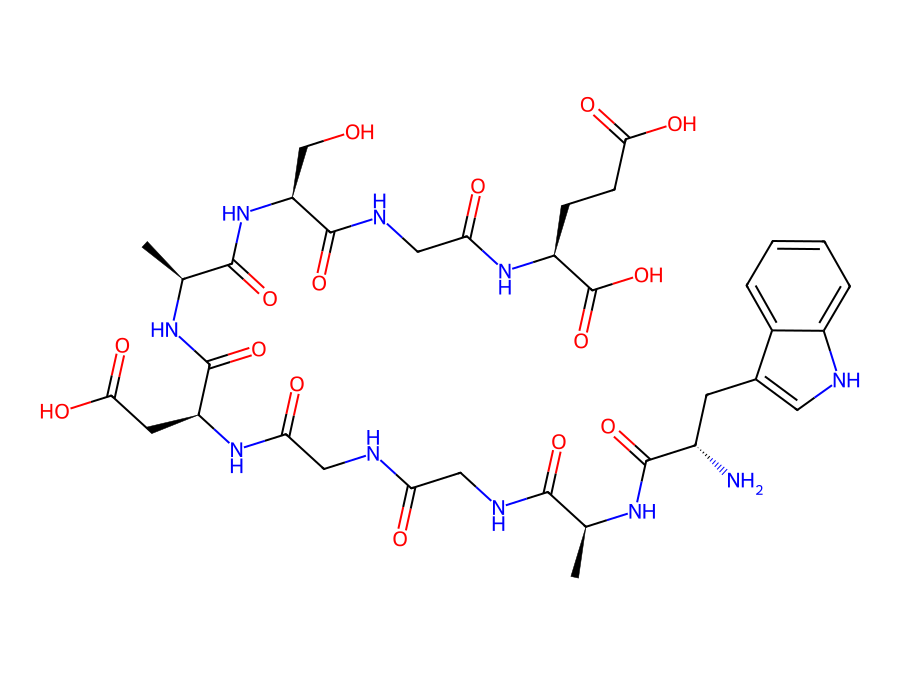
Delta sleep-inducing peptide, emideltide, deltalicin, Trp-Ala-Gly-Gly-Asp-Ala-Ser-Gly-Glu

Positive sleep results for DSIP trace to the group that discovered it; independent groups that tested it found no effect or the opposite. In the most recent controlled Western trial, given to twenty-four anaesthetised patients, it reduced delta rhythm, the rhythm the compound is named after.

  • 9-residue peptide
  • Sleep
  • No subcutaneous human study
  • No known receptor

Where to buy, code BENTheDhust, ships to the United States

  1. Compounds
  2. Sleep and circadian
  3. Sleep-related neuropeptides
  4. DSIP

16 sources last source read 22 Aug 2026 page reviewed 22 Nov 2026

Where to buy

TheDhust

  • US shipping
  • Affiliate link
Use codeenter it at checkout

Affiliate link. Coredex earns a commission if you buy through it. It does not change what you pay or what this page reports, and listing a vendor is not a recommendation. Each vendor’s own listing says what an item is sold as (a supplement, a medicine or research material); read it before you order. Read the full disclosure. Full vendor table.

Overview

This entry was revised on 22 August 2026

DSIP was previously described as “mixed evidence, some people find it useful”. A full inventory of the human literature found twenty-six human records where two had been counted, and the picture that emerged is not mixed. It is split by authorship, and the independent half is negative.

This is a compound that was properly tested and did not deliver. Describing it as unstudied would hide a real finding.

In its favour

A real peptide, cleanly characterised, with twenty-six human records behind the name

Recorded harm

Nothing serious recorded

Not settled

Every positive sleep result comes from the group that discovered it; independent groups found nothing, and no human study has used the subcutaneous route

A nine-residue peptide isolated from the blood of sleeping rabbits.

DSIP is a nine-residue peptide isolated in the 1970s from the cerebral venous blood of rabbits in induced slow-wave sleep, at the University of Bern. The premise was that a substance circulating during deep sleep might cause it.14

For researchers

Fifty years later the premise has not been confirmed. The most basic biological questions about DSIP have not been answered.

Four questions with no answer

Is there a receptor? No DSIP receptor has ever been identified.⁠4

Is there a gene? No DSIP gene has ever been isolated.⁠4

Is there a precursor protein? None has ever been found. There is no DSIP precursor in the human protein databases.⁠4

Is there a pathway? No named mechanistic chain has been demonstrated for it.

The clearest statement of this comes from a 2006 review by two researchers who worked on it, which describes “the lack of isolation of the DSIP gene, protein and possible related receptor.”4

DSIP has been through controlled human trials, which are described below.

Compound data

WTrp
AAla
GGly
GGly
DAsp
AAla
SSer
GGly
EGlu
AcidicNonpolarPolar
No basic residues at all. Two acidic side chains and no counterbalancing lysine or arginine, so the peptide carries a net negative charge at physiological pH⁠3

Three of nine residues are glycine. An unusually flexible, unstructured backbone with nothing protecting either terminus, which is consistent with how quickly it disappears in plasma⁠11
ClassLinear nonapeptide, all natural L-residues⁠3
SequenceTrp-Ala-Gly-Gly-Asp-Ala-Ser-Gly-Glu⁠1
FormulaC35H48N10O15⁠1
Mass848.8, 848.330 monoisotopic⁠3
CAS62568-57-41
InChIKeyZRZROXNBKJAOKB-GFVHOAGBSA-N⁠3
FDA nameEmideltide1
Also sold asDeltalicin, Deltaran: intranasal preparations⁠13
DisulfidesNone. No cysteine⁠3
ReceptorNone identified, ever4
GeneNone isolated. TSC22D3 is not it: see Identity5
Precursor proteinNone found4
Half-lifeNo in vivo human study. Both quoted figures come from reviews⁠11
Human routes usedIntravenous and intranasal only. Never subcutaneous12
AppearanceWhite lyophilised powder

Evidence at a glance

Medicine authorisationNone found
Human records26, 1977–2014⁠14
Combined subjects~167, a floor⁠14
Double-blind trials6, combined n = 6014
Independent double-blind2, both null78
Latest sleep study19928
Latest verified full paper2009, and it went the wrong way⁠6
Registered trialsNone, anywhere16
Retrievable p-valuesNone14
Independent testingNone. 0 tests15

Regulatory status

Marketing authorisationNone anywhere. Never approved as a medicine in any Western jurisdiction
USConsidered by the FDA's Pharmacy Compounding Advisory Committee, 23–24 July 2026, as emideltide. FDA staff's own briefing concluded “the evaluation criteria weigh against” listing it, and the committee is reported to have voted against: the only one of seven peptides refused. Advisory only; no FDA minutes have been published12
AuthorisationBy country, with sources
Trial registriesNo record on ClinicalTrials.gov, the EU register or the WHO platform⁠16
WADANo determination made on this page: the primary document could not be read at source
AgeNothing in this library is intended for anyone under 18

Related

SelankNo controlled trials, in contrast with DSIP's negative controlled trials
SemaxAnother compound whose evidence base is largely one country's literature
AdipotideA peptide with an organ-toxicity finding
IpamorelinAnother page where a completed trial changed the reading of a compound
MOTS-cAnother page where a non-drug intervention has the better trials
CompareSide-by-side comparison
DermorphinAnother peptide whose efficacy case rests on one unreplicated trial from the 1980s

Sequence, mass and a gene-database alias.

The molecule is straightforward: C35H48N10O15, 848.8, sequence WAGGDASGE, all natural L-amino acids, no cysteine, no unusual residues. Rebuilt from the sequence for this page and reconciled two ways to 848.824, with the InChIKey matching the published key character for character.⁠3

For researchers

The FDA holds it under the name emideltide.⁠1

TSC22D3 is not the DSIP gene

The human gene TSC22D3 carries a legacy alias: DSIPI, short for delta sleep-inducing peptide immunoreactor. Searching for a DSIP gene lands on it.

It is not one. TSC22D3 encodes GILZ, a glucocorticoid-induced leucine-zipper transcription factor. It does not contain the sequence WAGGDASGE. It is not a precursor, it is not a receptor, and its biology has nothing to do with sleep.⁠5

The alias was assigned decades ago on an immunoreactivity result. TSC22D3 is therefore not evidence that DSIP has a gene.

One further naming point, resolved for this page: “deltalicin” is DSIP. It is a delta-sleep-peptide-plus-glycine intranasal preparation, the Ukrainian counterpart of the Russian product Deltaran, and its studies belong in the DSIP evidence base rather than beside it.⁠13

Evidence

Twenty-six human records, six double-blind trials, and about sixty subjects between them.

LabAnimalHumanMeta

Evidence found: lab; animal; human.

DSIP has more controlled human data than many compounds in this library, but the numbers are small.⁠14

For researchers
Human records located26, 1977–2014
Combined subjects~167 where an n is stated: a floor, with probable overlap between studies
Double-blind trials6
Combined n across those six60. The largest is sixteen people
Most recent study, for sleep1992
Most recent, any indication2014, in diabetic retinopathy, unblinded and unreplicated⁠14
Registered on any trial registryNone found anywhere: not ClinicalTrials.gov, not the EU register, not the WHO platform⁠16
Any retrievable p-valueNone
Any between-group effect size with an intervalNone
What numbers do exist

The strongest figures anywhere in the DSIP literature are within-group before-and-after means: sleep-onset latency falling from 58.4 to 27.6 minutes; a withdrawal score falling from 34.4 to 17.8.⁠14

A before-and-after number in an insomnia study is close to uninterpretable on its own, because people enrol when their sleep is at its worst and it improves from there under any treatment. The informative comparison is against the control arm, and that number was not published.

Pinealon is another peptide discussed for sleep. Where DSIP has a real if elderly human record and no identifiable receptor, Pinealon has one human study that gave it alongside a second peptide, and no pharmacokinetic data in any species.

Human studies sorted by the group that ran them.

Sorted by who ran them, the human studies are not mixed.⁠14

For researchers
GroupFinding
Basel lineage
Schneider-Helmert 1981, 1986, 1987
Positive. Improved sleep onset and continuity. No p-values reported. Never replicated9
Montevideo
Monti 1987, n=6
Null. “Differences versus placebo lacked statistical significance”7
Amsterdam
Bes 1992, n=16
Null. Effects “weak”; the authors concluded DSIP is “not likely to be of major therapeutic benefit”8
Genoa
Giusti 1993
No endocrine effect⁠10
Parma
Chiodera 1994, n=8
No endocrine effect⁠10
Lübeck
Späth-Schwalbe 1995
No endocrine effect⁠10
Manchester
Pomfrett 2009, n=24
Opposite of predicted. See below⁠6

Every clearly positive sleep result comes from the discoverers' lineage. Every independent group has come back negative or equivocal.

The three endocrine studies do not appear in the FDA's own review of this compound, because that review is organised by indication and they were not sleep studies. They are independent and negative.⁠10

Given to twenty-four anaesthetised patients, it reduced the brain rhythm it is named after.

The only modern controlled Western study of DSIP was run at Manchester Royal Infirmary and published in 2009. No author has any connection to the compound's discoverers.6

For researchers
DesignRandomised, saline-controlled. Intravenous bolus during isoflurane anaesthesia. The record does not say double-blind, so this page does not either⁠6
Size24: 12 saline and 12 DSIP, the DSIP group split across three dose arms of 4
HypothesisThat DSIP is a natural hypnotic and would deepen anaesthesia
ResultDSIP “paradoxically, significantly reduced delta rhythm”, reduced burst suppression and raised the bispectral index, and “decreased (lightened) the depth of anaesthesia”6
AlsoSignificantly increased heart rate, decreased heart-rate variability, and altered EEG symmetry
Significance of the 2009 trial

Delta rhythm is the thing this compound is named after. Delta sleep-inducing peptide, given intravenously, made delta rhythm go down.

A trial with four participants in each DSIP arm is very small and can miss an effect. But this trial did not find nothing. It found a significant effect in the wrong direction, alongside a coherent set of autonomic changes pointing the same way: heart rate up, variability down, anaesthesia lighter. That is a harder result to attribute to noise than a null would be.

It is also, at the time of writing, the most recent verified full-paper human study of DSIP in existence, and it is seventeen years old.

Mechanism

No pathway has been demonstrated.

A mechanism is a chain such as receptor → effector → outcome; “promotes sleep” describes an outcome, not a mechanism.

For researchers

For DSIP no such chain exists. After fifty years there is no identified receptor, no identified gene, no identified precursor, and no demonstrated pathway from the peptide to any measured outcome. What exists is a set of observed correlations and a set of administration experiments, some of which found effects and some of which did not.

And the endogenous-occurrence claim, separated out

Two different statements are often merged:

One: a peptide with this sequence was detected in the blood of sleeping animals. That is an observation about occurrence.

Two: giving that peptide to someone makes them sleep. That is a pharmacological claim, and it is the one the trials below tested.

The first does not imply the second, and in this case the first is also weaker than it sounds: without a gene, a precursor or a receptor, the label “endogenous” is not supported by that evidence.

Both quoted half-lives come from review articles.

Two numbers get quoted for DSIP: 7 to 8 minutes, and 15 minutes. Both were traced for this page.⁠11

For researchers
FigureSource
7–8 minutesA 1986 narrative review. No n, no subjects, no method. Describes degradation in plasma, not in vivo pharmacokinetics⁠11
15 minutesA 1984 narrative review by the co-discoverer. Same problem⁠11
Any in vivo human PK studyDoes not exist. The FDA's own review of this compound reports no pharmacokinetic data at all⁠1

Neither figure is an in vivo half-life. Survival in a tube of plasma is not the same as duration in a person, and the second has not been measured.

A compound cleared within minutes that produced a change lasting eight hours would need a mechanism to explain it, and none has been demonstrated.

No human study has used the subcutaneous route.

Every human administration of DSIP on record has been intravenous or intranasal.⁠12

For researchers
IntravenousAll nine studies in the FDA's review, plus Larbig 1984, Chiodera 1994 and Pomfrett 2009⁠12
IntranasalHruz 2001, and the deltalicin and Deltaran preparations⁠12
SubcutaneousNever, in a human. The only subcutaneous DSIP study located anywhere is in cats, from 1987⁠12

The FDA reached the same conclusion in its own review, and stated: “There was no study evaluating effectiveness to support use of emideltide (free base) or emideltide acetate via the nominated SC route of administration.”1

The subcutaneous route has never been tested in a person for any indication; the human studies above used the intravenous and intranasal routes.

The FDA Pharmacy Compounding Advisory Committee, July 2026.

In July 2026 the FDA's Pharmacy Compounding Advisory Committee considered seven peptides for the 503A bulk drug substances list: the list that governs which substances may be used in compounding. Emideltide was the only one the committee voted against.2

For researchers
Sourcing of the vote

FDA's briefing document for that meeting is the best single source on DSIP in existence. It is where much of the identity and study-list detail on this page comes from.⁠1 It is dated 11 May 2026, written for a meeting on 23–24 July, and it reports no vote. It cannot: it predates the meeting.

What it does contain is FDA staff's own assessment that “the evaluation criteria weigh against” listing emideltide, which is a different thing from a committee tally, and is the part that is primary-sourced.

The vote itself is reported consistently across several independent trade outlets and FDA has published no summary minutes. This page therefore attributes the outcome to the trade press rather than to a primary record, and notes that a committee vote is advisory: it recommends, it does not itself change the regulatory status of any substance.⁠2

FDA staff reviewed the DSIP file and concluded that the criteria weighed against listing it.

Regulatory status

Status by country

Where regulators list this compound, country by country. A country with no line has not been checked yet.

No country or sport list has been checked yet

Not yet checked. North America: Canada, Mexico, United States. South America: Argentina, Brazil. Europe: European Union (central authorisation), Belgium, France, Germany, Italy, Netherlands, Russia, Spain, Switzerland, United Kingdom. Africa: Egypt, Nigeria, South Africa. Asia: China, India, Japan, South Korea, Thailand, United Arab Emirates. Oceania: Australia, New Zealand.

Sport (WADA) applies worldwide, not a country

WADA Prohibited List 2026Not yet checked

Information only, not legal advice. Not verified for any individual situation. Status changes; check the date and the source.

The same records as data: JSON and CSV, with a version and a change log.

Checked and missing

Limitations of the evidence and of this page.

  • At least eight of the twenty-six human records have no retrievable n, so the total of ~167 subjects is a floor and there is probable overlap between studies from the same group⁠14
  • Several papers could not be opened at all, including both 2014 Ukrainian retinopathy studies, which is why this page states the most recent verified full paper separately from the most recent record⁠14
  • Much of the literature is 1977–1995 and German- or French-language, and some of it is indexed only in databases this page could not reach. The count is a floor
  • The Pomfrett trial is small: four subjects per arm. A significant finding in the wrong direction from n=4 per arm is striking, and it is still n=4 per arm⁠6
  • The 6–7–1 committee tally is not primary-sourced. FDA has published no summary minutes; the figure is consistent across several trade outlets and the briefing paper predates the meeting⁠2
  • The Kovalzon quote on the missing gene, protein and receptor is single-sourced, and the PMID for it could not be independently confirmed from this environment⁠4
  • No WADA determination is made on this page. The primary document is closed to automated retrieval and no verified status was obtained
  • No independent purity testing exists, so nothing here speaks to the contents of any particular vial⁠15
  • The counterweight: six double-blind trials totalling sixty subjects is a small evidence base in either direction. The negative reading rests on the consistency of the split by authorship, not the size of any single trial

Sources16

This page cites 16 sources, numbered to match the small numbers in the text above. Each one links to the paper or record. Where a source states its design, a tag says so (a human trial, an animal study, a cell study, a review); the tag names the design and is not a grade. Each source also links back to where it is cited above.

  1. 01
    US Food and Drug Administration, briefing document on emideltide for the Pharmacy Compounding Advisory Committee, FDA evaluation dated 11 May 2026, prepared for the meeting of 23–24 July 2026. Read at source 21–22 August 2026. The single…read 22 Aug 2026
    Full text
    US Food and Drug Administration, briefing document on emideltide for the Pharmacy Compounding Advisory Committee, FDA evaluation dated 11 May 2026, prepared for the meeting of 23–24 July 2026. Read at source 21–22 August 2026. The single best source on this compound in existence, and the origin of much of the identity and study-list detail on this page: molecular formula C35H48N10O15, molecular weight 848.8, CAS 62568-57-4, the name emideltide, and FDA's own inventory of the human literature. Also the source for the verbatim statement that “there was no study evaluating effectiveness to support use of emideltide (free base) or emideltide acetate via the nominated SC route of administration”, and for FDA staff's conclusion that “the evaluation criteria weigh against” listing the substance. ⚠ This document predates the committee meeting and reports no vote. It also states that FDA will not issue a final determination until the advisory committee process has been considered. Its own reference list truncates at page 41. Three independent human endocrine studies are absent from it, because it is organised by indication — see reference 10.
    Cited 9 times, back to the text12345678and 1 more
  2. 02
    The July 2026 Pharmacy Compounding Advisory Committee outcome. The committee is reported to have voted against including emideltide on the 503A bulk drug substances list, the only one of seven peptides considered to be refused. ⚠ This is…no read date recorded
    Full text
    The July 2026 Pharmacy Compounding Advisory Committee outcome. The committee is reported to have voted against including emideltide on the 503A bulk drug substances list, the only one of seven peptides considered to be refused. ⚠ This is not primary-sourced. The tally is reported consistently across several independent regulatory-affairs and law-firm trade outlets, and FDA has published no summary minutes, so no primary record of the vote exists at the time of writing. A committee vote is advisory: it is a recommendation to the agency and does not itself change the legal status of a substance, which would require notice-and-comment rulemaking. This page attributes the tally to the trade press and the staff assessment to reference 1, and keeps the two apart deliberately.
    Cited 4 times, back to the text1234
  3. 03
    Structure and mass reconciliation performed for this page, 22 August 2026. The molecule was rebuilt from the sequence Trp-Ala-Gly-Gly-Asp-Ala-Ser-Gly-Glu, giving C35H48N10O15. Average mass computed two independent ways — sum of atomic…no read date recorded
    Full text
    Structure and mass reconciliation performed for this page, 22 August 2026. The molecule was rebuilt from the sequence Trp-Ala-Gly-Gly-Asp-Ala-Ser-Gly-Glu, giving C35H48N10O15. Average mass computed two independent ways — sum of atomic masses from the formula and sum of average residue masses plus one water — both giving 848.824, against the 848.8 published by FDA. Monoisotopic mass 848.3301. InChIKey ZRZROXNBKJAOKB-GFVHOAGBSA-N, verified character for character against an independently published key for CAS 62568-57-4. The skeletal structure in the infobox was rendered from that reconstructed molecule rather than retrieved from a third party. Composition observations also derive from it: no cysteine and therefore no disulfides; no basic residues, with two acidic side chains giving a net negative charge at physiological pH; and three glycines of nine, giving an unusually flexible backbone with both termini unprotected. Note that N-acetyl emideltide carries a different CAS, 69431-45-4, and is a different substance.
    Cited 6 times, back to the text123456
  4. 04
    Kovalzon VM, Strekalova TV, review of delta sleep-inducing peptide, Journal of Neurochemistry 2006. Source for the statement, in the authors' own words, of “the lack of isolation of the DSIP gene, protein and possible related receptor.”…no read date recorded
    Full text
    Kovalzon VM, Strekalova TV, review of delta sleep-inducing peptide, Journal of Neurochemistry 2006. Source for the statement, in the authors' own words, of “the lack of isolation of the DSIP gene, protein and possible related receptor.” Cited as the basis for this page's central factual claim that no DSIP receptor, gene or precursor protein has ever been identified — a claim separately checked against the human protein databases, which hold no DSIP precursor entry. ⚠ Single-sourced, and the PMID given for it in secondary literature (16539679) could not be independently confirmed from this environment. The underlying claim was tested by searching specifically for any post-2006 identification of a DSIP receptor, gene or precursor; none was found.
    Cited 7 times, back to the text1234567
  5. 05
    Human gene TSC22D3, checked against the standard gene and protein databases 21–22 August 2026. The gene carries the legacy alias DSIPI, standing for “delta sleep-inducing peptide immunoreactor”, and it encodes GILZ, a…read 22 Aug 2026
    Full text
    Human gene TSC22D3, checked against the standard gene and protein databases 21–22 August 2026. The gene carries the legacy alias DSIPI, standing for “delta sleep-inducing peptide immunoreactor”, and it encodes GILZ, a glucocorticoid-induced leucine-zipper transcription factor. Its protein product does not contain the sequence WAGGDASGE, it is not a DSIP precursor, and it is not a receptor. Recorded here because the alias makes it the first result for anyone searching for a DSIP gene, and because it is cited in that role in places where it should not be.
    Cited 2 times, back to the text12
  6. 06
    Pomfrett CJD, Dolling S, Anders NRK, Glover DG, Bryan A, Pollard BJ. Delta sleep-inducing peptide alters bispectral index, the electroencephalogram and heart rate variability when used as an adjunct to isoflurane anaesthesia. European…Human RCTPMID 19142086DOI 10.1097/EJA.0b013e32831c8644no read date recorded
    Full text
    Pomfrett CJD, Dolling S, Anders NRK, Glover DG, Bryan A, Pollard BJ. Delta sleep-inducing peptide alters bispectral index, the electroencephalogram and heart rate variability when used as an adjunct to isoflurane anaesthesia. European Journal of Anaesthesiology 2009;26(2):128–134. DOI 10.1097/EJA.0b013e32831c8644, PMID 19142086. University of Manchester and Manchester Royal Infirmary — no author connected to the compound's discoverers. 24 patients: 12 randomly assigned to saline, 12 randomly allocated across three intravenous bolus doses of DSIP at 25, 50 and 100 nmol/kg, so four subjects per dose level. Verbatim from the abstract: DSIP “significantly increased heart rate, decreased HRV and, paradoxically, significantly reduced delta rhythm along with reducing burst suppression and increasing BIS at 25 nmol/kg during isoflurane anaesthesia”, and “DSIP probably reduced parasympathetic tone and decreased (lightened) the depth of anaesthesia measured using BIS.” The stated hypothesis was that DSIP is a natural hypnotic that would increase anaesthetic depth. ⚠ The record states randomised and saline-controlled; it does not state double-blind, and this page does not describe it as such. The most recent verified full-paper human study of DSIP located.
    Cited 6 times, back to the text123456
  7. 07
    Monti JM et al., double-blind study of delta sleep-inducing peptide, 1987. n = 6. Montevideo — independent of the discoverers. Source for the finding, in the paper's own terms, that differences versus placebo lacked statistical significance.no read date recordedCited 2 times, back to the text12
  8. 08
    Bes F et al., double-blind study of delta sleep-inducing peptide in insomnia, 1992. n = 16, eight per arm, parallel groups. Amsterdam — independent of the discoverers. The authors describe the effects as weak and conclude that DSIP is “not…no read date recorded
    Full text
    Bes F et al., double-blind study of delta sleep-inducing peptide in insomnia, 1992. n = 16, eight per arm, parallel groups. Amsterdam — independent of the discoverers. The authors describe the effects as weak and conclude that DSIP is “not likely to be of major therapeutic benefit”. The most recent human study of DSIP for sleep, of any design, anywhere.
    Cited 3 times, back to the text123
  9. 09
    The Basel-lineage sleep studies: Schneider-Helmert D & Schoenenberger GA 1981 ( n = 6, randomised double-blind crossover); Schneider-Helmert D 1986 ( n = 18 ); Schneider-Helmert D 1987 ( n = 14 ); together with a 1983 case series and a…no read date recorded
    Full text
    The Basel-lineage sleep studies: Schneider-Helmert D & Schoenenberger GA 1981 (n = 6, randomised double-blind crossover); Schneider-Helmert D 1986 (n = 18); Schneider-Helmert D 1987 (n = 14); together with a 1983 case series and a 1984 insomnia study. These are the positive results in the DSIP literature. ⚠ All share authorship lineage with the peptide's co-discoverer, none reports a p-value that could be retrieved, and none has been independently replicated. The 1981, 1986 and 1987 studies are three of the six double-blind trials counted on this page; the other three are references 6, 7 and 8, plus a 2001 intranasal letter whose n could not be retrieved.
    Back to the text1
  10. 10
    Independent healthy-volunteer endocrine studies of DSIP, all reporting no effect: Giusti M et al. 1993 (Genoa); Chiodera P et al. 1994 ( n = 8 men, Parma); Späth-Schwalbe E et al. 1995 (Lübeck). All three are independent of the…no read date recorded
    Full text
    Independent healthy-volunteer endocrine studies of DSIP, all reporting no effect: Giusti M et al. 1993 (Genoa); Chiodera P et al. 1994 (n = 8 men, Parma); Späth-Schwalbe E et al. 1995 (Lübeck). All three are independent of the discoverers, and all three are absent from FDA's own review of the compound, because that review is organised by indication and these were endocrine rather than sleep studies. Cited as part of the authorship split described on this page: three further independent groups testing DSIP and finding nothing.
    Cited 4 times, back to the text1234
  11. 11
    Provenance of the two half-life figures quoted for DSIP, traced 21–22 August 2026. The 7–8 minute figure traces through an editorial to Graf & Kastin 1986, a narrative review; the competing 15 minute figure traces to Schoenenberger 1984…Review or meta-analysisno read date recorded
    Full text
    Provenance of the two half-life figures quoted for DSIP, traced 21–22 August 2026. The 7–8 minute figure traces through an editorial to Graf & Kastin 1986, a narrative review; the competing 15 minute figure traces to Schoenenberger 1984, also a narrative review and by the compound's co-discoverer. Neither reports an n, a method or a subject group, and both describe degradation of the peptide in plasma rather than in vivo pharmacokinetics. No in vivo human pharmacokinetic study of DSIP exists; FDA's review reports no pharmacokinetic data at all (reference 1). This page therefore states no half-life.
    Cited 5 times, back to the text12345
  12. 12
    Route inventory compiled for this page from the full human record set. Intravenous: all nine studies in FDA's review, plus Larbig 1984 (n = 7, chronic pain), Chiodera 1994 and Pomfrett 2009. Intranasal: Hruz 2001 (PMID 11763019), and the…PMID 11763019DOI 10.1016/0031-9384(87)90098-9no read date recorded
    Full text
    Route inventory compiled for this page from the full human record set. Intravenous: all nine studies in FDA's review, plus Larbig 1984 (n = 7, chronic pain), Chiodera 1994 and Pomfrett 2009. Intranasal: Hruz 2001 (PMID 11763019), and the deltalicin and Deltaran preparations including the 2014 Ukrainian retinopathy work and a paediatric Deltaran abstract. Subcutaneous: no human study, ever. The only subcutaneous administration of DSIP located anywhere in the literature is Šušić V, “The effect of subcutaneous administration of delta sleep-inducing peptide (DSIP) on some parameters of sleep in the cat”, Physiology & Behavior 1987;40:569–572, DOI 10.1016/0031-9384(87)90098-9. FDA reached the same conclusion independently — see reference 1.
    Cited 5 times, back to the text12345
  13. 13
    Identification of deltalicin as DSIP, resolved for this page 21–22 August 2026. Deltalicin is a 300 µg delta-sleep-peptide-plus-glycine intranasal preparation, the Ukrainian counterpart of the Russian product Deltaran. An earlier research…no read date recorded
    Full text
    Identification of deltalicin as DSIP, resolved for this page 21–22 August 2026. Deltalicin is a 300 µg delta-sleep-peptide-plus-glycine intranasal preparation, the Ukrainian counterpart of the Russian product Deltaran. An earlier research pass could not determine whether the two names referred to the same substance; they do, which means the 2014 Ukrainian retinopathy studies belong inside the DSIP human-evidence count rather than beside it.
    Cited 2 times, back to the text12
  14. 14
    Human-evidence inventory compiled for this page, 21–22 August 2026, and retained in the vault as [C] Research - DSIP Human Evidence (Rebuilt). Built from FDA's own study list (reference 1) as a spine, then extended by Crossref and Europe…no read date recorded
    Full text
    Human-evidence inventory compiled for this page, 21–22 August 2026, and retained in the vault as [C] Research - DSIP Human Evidence (Rebuilt). Built from FDA's own study list (reference 1) as a spine, then extended by Crossref and Europe PMC searching under DSIP, delta sleep-inducing peptide, emideltide, deltalicin and the sequence WAGGDASGE, and by author search on Schoenenberger, Monnier, Schneider-Helmert, Monti and Bes. Source for the count of 26 human records, the combined figure of ~167 subjects where an n is stated, the six double-blind trials totalling 60 subjects, and the finding that no p-value or between-group effect size with an interval is retrievable from any human DSIP study. The strongest numbers located anywhere are within-group before-and-after means, including sleep-onset latency falling from 58.4 to 27.6 minutes and a withdrawal score falling from 34.4 to 17.8. Also the source for the dates given on this page: the most recent human study for sleep is 1992; the most recent for any indication is 2014; the most recent verified full paper is 2009. ⚠ At least eight records have no retrievable n, several papers could not be opened at all, and much of the older literature is German- or French-language and incompletely indexed. The count is a floor.
    Cited 11 times, back to the text12345678and 3 more
  15. 15
    Independent peptide-testing platform, dated public dataset snapshot of 5 August 2026, read at source 22 August 2026 by the route the platform publishes for automated readers. DSIP does not appear in the tested-product list, under that name…read 22 Aug 2026
    Full text
    Independent peptide-testing platform, dated public dataset snapshot of 5 August 2026, read at source 22 August 2026 by the route the platform publishes for automated readers. DSIP does not appear in the tested-product list, under that name or as emideltide. Reported here as 0 tests and 0 vendors. No other published third-party purity or identity dataset for DSIP — academic, regulatory or consumer-laboratory — was located. ⚠ When figures do appear for a compound, the platform's headline number is a recency-weighted pass rate against a published standard, not a purity percentage. This library published that error on three pages before it was caught on 5 August 2026.
    Cited 2 times, back to the text12
  16. 16
    Trial-registry searches conducted 21–22 August 2026 across ClinicalTrials.gov, the EU Clinical Trials Register and the WHO International Clinical Trials Registry Platform, under DSIP, delta sleep-inducing peptide, emideltide and…no read date recorded
    Full text
    Trial-registry searches conducted 21–22 August 2026 across ClinicalTrials.gov, the EU Clinical Trials Register and the WHO International Clinical Trials Registry Platform, under DSIP, delta sleep-inducing peptide, emideltide and deltalicin. No registration of any kind was found for this compound, for any indication, in any jurisdiction. Every human study described on this page predates or sits outside the trial-registration system.
    Cited 3 times, back to the text123

Where it sits

Primary studies

Don’t take our word for it. Read the study.

Read first: 06.

Where this compound is sold

Affiliate links. Coredex earns a commission if a reader buys through the links in this table. The commission has no influence on what the page above reports. The publisher also has a partner relationship with TheDhust. Read the full disclosure.

One vendor, TheDhust, is listed.

VendorProduct and sizePublic lab report
TheDhustDSIP, 10 mgNot published