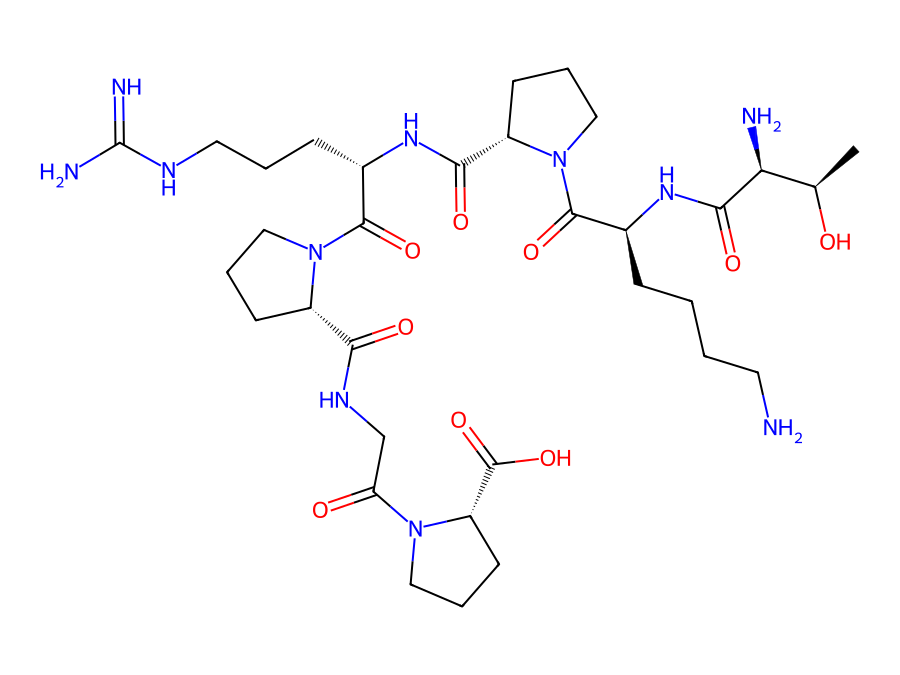
Selank
TP-7, Селанк, Thr-Lys-Pro-Arg-Pro-Gly-Pro, selank diacetate, heptapeptide
Selank is a synthetic seven-residue analogue of the immune peptide tuftsin, registered as a nasal-drop medicine in Russia. Seventeen human studies are known, none of them double-blind, and almost all come from one Moscow consortium.
- 7-residue tuftsin analogue
- Anxiety, asthenia
- Intranasal
- Registered medicine in Russia
Where to buy, code BENTheDhust, ships to the United States
- Compounds
- Cognition and neuroactive
- Neuropeptides
- Tuftsin-derived heptapeptide
- Selank
Where to buy
TheDhust
- Selank, 10 mgView at TheDhust
- Selank + Spray Kit, size per product labelView at TheDhust
Affiliate link. Coredex earns a commission if you buy through it. It does not change what you pay or what this page reports, and listing a vendor is not a recommendation. Each vendor’s own listing says what an item is sold as (a supplement, a medicine or research material); read it before you order. Read the full disclosure. Full vendor table.
Overview
About thirty years of clinical use in Russia, where it is registered as a medicine
No serious harm recorded; no dependence-liability study exists
Seventeen human studies and none is double-blind, no half-life exists in any species, and the paper cited for benzodiazepine-like action reports the opposite
A tuftsin-derived heptapeptide.
Selank is a seven-residue peptide built from tuftsin (Thr-Lys-Pro-Arg, a four-residue fragment of the antibody heavy chain that the immune system releases to activate phagocytes) with three extra residues added to the C-terminus.1
For researchers
Those three residues are Pro-Gly-Pro. The same tail is used on Semax, from the same institute: bare peptide fragments survive minutes in plasma, and prolines are poor substrates for the enzymes that degrade them.
Three of seven residues in this molecule are proline. The backbone is rigid by design.
The tail does not prevent degradation. Tracing tritium-labelled Selank in rats found the parent peptide cleaved to TKPRP, TKP, and the dipeptides RP and GP, and some of those fragments are themselves reported active.6
The literature therefore gives no duration of action, because what is circulating after the first few minutes is not entirely Selank.
It has been a registered prescription medicine in Russia for roughly thirty years, supplied as 0.15% nasal drops, indicated for anxiety and asthenic disorders.16 The registration is not equivalent to the evidence base that a regulator such as the FDA or EMA would require.
Compound data
| Class | Linear heptapeptide, tuftsin analogue1 |
| Sequence | Thr-Lys-Pro-Arg-Pro-Gly-Pro3 |
| Formula | C33H57N11O93 |
| Mass | 751.9 free base, 751.434 monoisotopic4 |
| UNII | TS9JR8EP1G3 |
| CAS | 129954-34-3, the registry holds it on the diacetate, see Identity3 |
| InChIKey | JTDTXGMXNXBGBZ-YVHUGQOKSA-N4 |
| Composition | Three prolines of seven4 |
| Disulfides | None. No cysteine4 |
| Salt form | Diacetate, 871.98. About 86% peptide by mass34 |
| Related identifier | 793.9 is N-acetyl selank, a different molecule3 |
| Route | Intranasal, 0.15% drops, clinically and in every human study2 |
| Half-life | Not published for any species or route8 |
| Metabolites | TKPRP, TKP, RP, GP: some reported active6 |
| Appearance | White lyophilised powder, or a nasal solution |
Evidence at a glance
| Approved | Yes, in Russia. Not approved by the FDA, EMA or MHRA16 |
| In clinical use | Approximately 30 years16 |
| Human records | 17, 2002–20258 |
| Double-blind | 0 |
| Placebo-controlled | 1, and its endpoint is an fMRI scan7 |
| Registered trials | 0 on ClinicalTrials.gov or the EU register8 |
| Independent groups | 4, from 2018 onward8 |
| Human PK | None |
| Retractions | None8 |
| Independent testing | None. 0 tests13 |
Regulatory status
| Russia | Registered medicine: 0.15% nasal drops, developed at the Institute of Molecular Genetics with the Zakusov Institute of Pharmacology, in clinical use approximately 30 years for anxiety and asthenic disorders16 |
| United States | No FDA approval or label. No adverse-event reports are on file under that name16 |
| United Kingdom | Not authorised by the MHRA. Not listed in Schedule 2 of the Misuse of Drugs Act 197116 |
| EU | Not authorised by the EMA. Not an authorised novel food or supplement ingredient16 |
| WADA | Not named on the Prohibited List. Whether the S0 catch-all reaches it is unadjudicated: see Limitations16 |
Related
| Selank + Semax | The two-peptide blend; the two have been studied side by side, not together |
| Semax | ACTH-derived heptapeptide from the same institute |
| Ipamorelin | Growth hormone secretagogue peptide |
| BPC-157 | Peptide studied for tissue repair |
| AP503 | Peptide |
| DSIP | Neuropeptide studied for sleep |
| MOTS-c | Mitochondrial-derived peptide |
| Compare | Side-by-side comparison |
| Noopept | Nootropic compound developed at the same institute |
| Bromantane | Adamantane-derivative stimulant |
| Davunetide | Neuroprotective peptide |
| Phenibut | GABA-derivative anxiolytic |
| Propranolol | Beta blocker |
The commonly listed CAS number belongs to the salt.
The molecule itself is not in dispute. C33H57N11O9, 751.9, sequence TKPRPGP, and the structure was rebuilt from that sequence for this page and reconciled two ways.4 Commercial material is a salt, which changes the figures.
For researchers
| Substance | Formula | Mass | UNII |
|---|---|---|---|
| Selank (free base) | C33H57N11O9 | 751.9 | TS9JR8EP1G3 |
| Selank diacetate | C33H57N11O9.2C2H4O2 | 871.98 | Q94Z9E92UU3 |
| N-acetyl selank | C35H59N11O10 | 793.91 | J3PM702O933 |
Two identifier mix-ups
One: 793.9 is not Selank. That figure sits directly adjacent to the Selank record in the FDA's substance registry and is sometimes copied across as though it belonged to the parent peptide. It cannot: C33H57N11O9 sums to 751.89 by both routes. 793.9 is the acetylated analogue, which is Selank plus exactly C2H2O: a different molecule with different biology and no human data of its own.34
Two: the CAS number is the salt's. Product listings and chemical catalogues give CAS 129954-34-3 for Selank. In the FDA's registry that number sits on the diacetate record, and the free-base record carries no CAS at all.3
The diacetate weighs 871.98 against the peptide's 751.9. Commercial material is therefore about 86% peptide by mass.4
The weighed mass of a sample overstates the peptide it contains by about 14%. A purity percentage from HPLC and the peptide content are different measurements.
Evidence
Seventeen human studies, none double-blind or placebo-controlled on a symptom.
Evidence found: lab; animal; human.
An initial search through one literature database found two human studies. That database under-indexes Russian-language clinical work. A second database, and the alternative transliteration Selanc, which surfaces papers that Selank does not, took the count to seventeen.8
For researchers
The reading did not change. Seventeen studies were found. Their designs are as follows:
| Of the 17 human records | |
|---|---|
| Double-blind | 0 |
| Placebo-controlled on a symptom endpoint | 0 |
| Described as randomised in the primary record | 0 |
| Conference abstracts rather than papers | 2 |
| Full papers not retrievable at all | 2 |
| Full papers whose design and numbers could not be retrieved | 4 |
| Reporting any p-value | 3 |
| Registered on ClinicalTrials.gov or the EU register | 0 |
| Placebo-controlled at all | 1, and its endpoint is brain imaging in healthy volunteers, not symptoms7 |
Largest psychiatric sample: 70, in a study its own authors call “open naturalistic”.10 Largest sample of any kind: 124, in dermatology, non-randomised.11
Open-label anxiety studies are among the most placebo-prone designs. Anxiety improves on its own, improves further with attention from clinicians, and improves further again when patients know they are being treated. All seventeen studies are exposed to these three effects without a control.
After thirty years and seventeen studies, the share of the reported improvement attributable to the compound is not known.
The 2008 trial does not describe itself as randomised.
Most efficacy claims for Selank trace to Zozulya 2008: 62 patients with generalised anxiety disorder and neurasthenia, Selank in 30 and the benzodiazepine medazepam in 32.2
For researchers
| Design as stated | Active-comparator, parallel-group. The primary record does not state randomisation. It does not state blinding. There is no placebo arm2 |
| Primary endpoint | None declared. No endpoint can be scored as met or missed |
| Result | “Comparable anxiolytic effects” to medazepam, plus antiasthenic and psychostimulant properties |
| Statistics | No effect sizes, no confidence intervals, no p-values in any retrievable record |
| Replication | None, in eighteen years |
The bibliographic database that indexes this paper tags it with the publication type “Randomized Controlled Trial”. That tag is assigned by an indexer, not stated by the authors, and it is what secondary sources have been reading and repeating.8
The Russian full text would need to state randomisation for the label to apply; no retrievable record does.
One structural point holds whatever the full text says. A trial with no placebo arm cannot show that either drug beat placebo. “As good as a benzodiazepine” from a two-arm open study is equally consistent with “both did about as well as doing nothing would have”, and placebo response in anxiety is large.
Four groups outside the originators have published.
Until 2018 every human study came from the Institute of Molecular Genetics and the Zakusov Institute: the groups that developed it. Since then, four independent groups have published.8
For researchers
| Group | What they did | Limits |
|---|---|---|
| Kharkiv 2018 | Adjustment disorder, 30 patients, Selank against an untreated wait-list. Somatic, nutrition and alcohol-misuse subscales all p<0.059 | First non-originator human data. Wait-list, not placebo, which measures attention as much as drug |
| Voronezh 2020 | Atopic dermatitis, 124 patients across four arms, plus a companion study of 65 with cognitive-affective symptoms11 | Largest sample here. Not randomised, no p-values reported, and the two papers share a dataset: not a replication of each other |
| Krasnodar 2024 | Post-COVID asthenia, 64 patients, Selank added to a neuroprotective regimen for 30 days12 | Recent and independent. No numbers and no p-values in any retrievable record, and the instruments are not named |
| Yaroslavl 2025 | Surgical stress response after radical nephrectomy: the only human study outside psychiatry and dermatology8 | “Significantly better”, with no p-values and no stated n |
The study with the strongest statistic is not independent. Medvedev 2015 added Selank to phenazepam in 70 patients and reported a day-21 responder rate of 75% against 30%, p = 0.0018.10 This is the strongest statistic in the Selank literature. The study is self-described as “open naturalistic”, unrandomised and unblinded, and three of its authors are among the originators.
Mechanism
Receptor-binding work does not support a benzodiazepine-like action.
For researchers
BDNF
Selank is often described as boosting BDNF. The underlying study is an alcohol model, and it found that Selank prevented an ethanol-induced rise in hippocampal and prefrontal BDNF while protecting memory.5
The finding is that Selank modulates BDNF in rodents, in a direction that depends on the model.
One further claim, that Selank works through HGF/c-Met, traces to a single sentence in a 2026 orthopaedics review. No primary study demonstrating c-Met engagement by Selank exists.8
No half-life has been published in any species.
Half-life figures for Selank are quoted in secondary sources, but none traces to a primary measurement.
For researchers
| Human half-life | No published figure found |
| Animal half-life | No published figure found. One 2005 rat PK study exists: as a paywalled conference abstract, with the abstract text itself elided8 |
| Bioavailability | No figure, any route, any species |
| Human PK study | None |
| Clinical route | Intranasal. The Russian product is a 0.15% nasal-drop solution and every human study used that route216 |
| Metabolism | Cleaved to TKPRP, TKP, and the dipeptides RP and GP. Rat, tritium-labelled, in vivo and in vitro6 |
Every half-life figure quoted for Selank that this page could trace ended at a secondary source citing another secondary source.
The degradation data also complicate the question: if the parent is cleaved into fragments and some fragments are active, a single half-life does not describe the duration of effect. Duration of effect has not been measured in a human, by any route.
Regulatory status
Status by country
Where regulators list this compound, country by country. A country with no line has not been checked yet.
No country or sport list has been checked yet
Not yet checked. North America: Canada, Mexico, United States. South America: Argentina, Brazil. Europe: European Union (central authorisation), Belgium, France, Germany, Italy, Netherlands, Russia, Spain, Switzerland, United Kingdom. Africa: Egypt, Nigeria, South Africa. Asia: China, India, Japan, South Korea, Thailand, United Arab Emirates. Oceania: Australia, New Zealand.
Sport (WADA) applies worldwide, not a country
| WADA Prohibited List 2026 | Not yet checked |
|---|
Information only, not legal advice. Not verified for any individual situation. Status changes; check the date and the source.
The same records as data: JSON and CSV, with a version and a change log.
Checked and missing
Five commonly made claims and the evidence behind them.
- Benzodiazepine-like action. The paper cited for this found Selank blocking diazepam's effect in the same receptor preparation1
- BDNF increase. The study underneath the claim shows Selank preventing a rise in an alcohol model5
- Cognitive improvement. No human cognitive endpoint has been tested. The only human brain study measured resting connectivity in 52 healthy volunteers with roughly 17 per arm7
- Non-addictive profile. The withdrawal studies report Selank relieving withdrawal from morphine and alcohol in rodents. That is evidence about other drugs' withdrawal syndromes, not about Selank's own dependence liability. No study of Selank's own tolerance or withdrawal profile exists in any species15
- Safety established by Russian registration. Registration in one jurisdiction is not FDA, EMA or MHRA review, and the adverse-event databases of those regulators contain no Selank reports, because it is not marketed as a medicine there1416
Limits of the evidence and of this page's search.
- Six of the seventeen human records could not be read. Two are Russian full papers that could not be retrieved at all; four more are papers whose design and numbers were behind a paywall. They are counted here and not characterised8
- Almost the entire literature is Russian-language, and much of it is indexed only in Russian databases this page could not reach. The count is a floor, not a ceiling. The search limits that hid fifteen studies at first could be hiding others
- No half-life, no bioavailability, no human PK. Not thin data: no data8
- The mechanism is rodent and in-vitro, with one human-plasma biomarker exception12
- No independent testing dataset covers this compound13
- The Russian registration is confirmed only indirectly, through the clinical literature and the existence of the nasal-drop product. The Russian state drug register was not read at source16
- WADA status is not adjudicated. Selank is not named on the Prohibited List, but the S0 catch-all covers substances with no approval by any governmental health authority, and Selank has one, in Russia. Whether that is an exit from S0 has not been publicly adjudicated. The primary document was not read at source16
- Nothing here has been replicated in the sense that word is normally used. Similar findings from different unblinded groups are not replication
Sources16
This page cites 16 sources, numbered to match the small numbers in the text above. Each one links to the paper or record. Where a source states its design, a tag says so (a human trial, an animal study, a cell study, a review); the tag names the design and is not a grade. Each source also links back to where it is cited above.
- 01Vyunova TV, Andreeva L, Shevchenko K, Myasoedov N. Peptide-based anxiolytics: the molecular aspects of heptapeptide Selank biological activity. Protein and Peptide Letters 2018. PMID 30255741 AnimalPMID 30255741DOI 10.2174/0929866525666180925144642no read date recordedCited 7 times, back to the text1234567Vyunova TV, Andreeva L, Shevchenko K, Myasoedov N. Peptide-based anxiolytics: the molecular aspects of heptapeptide Selank biological activity. Protein and Peptide Letters 2018. PMID 30255741, DOI 10.2174/0929866525666180925144642. Source for the tuftsin-analogue description, the sequence rationale, and the receptor work. ⚠ Read carefully before quoting. The study is a radioligand-competition experiment on rat brain membranes, not electrophysiology. It describes Selank as a positive allosteric modulator in the benzodiazepine-site region and separately reports that Selank blocked the modulatory activity of diazepam, which the authors interpret as distinct binding sites with at most partial overlap. The widely repeated claim that Selank “works like a benzodiazepine” is contradicted by its own primary source.
- 02Zozulia AA, Neznamov GG, Siuniakov TS, Kost NV, Gabaeva MV, Sokolov OIu, Serebriakova EV, Siranchieva OA, Andriushenko AV, Telesheva ES, Siuniakov SA, Smulevich AB, Miasoedov NF, Seredenin SB. [Efficacy and possible mechanisms of action of…Human RCTPMID 18454096no read date recordedCited 6 times, back to the text123456
Full text
Zozulia AA, Neznamov GG, Siuniakov TS, Kost NV, Gabaeva MV, Sokolov OIu, Serebriakova EV, Siranchieva OA, Andriushenko AV, Telesheva ES, Siuniakov SA, Smulevich AB, Miasoedov NF, Seredenin SB. [Efficacy and possible mechanisms of action of a new peptide anxiolytic selank in the therapy of generalized anxiety disorders and neurasthenia.] Zhurnal nevrologii i psikhiatrii imeni S.S. Korsakova 2008;108(4):38–48. PMID 18454096. Russian language, no DOI, full text not open access. 62 patients, Selank 30 against medazepam 32. Source for the “comparable anxiolytic effects” claim, the antiasthenic and psychostimulant observations, and the Leu-enkephalin degradation finding in patient plasma. ⚠ The abstract does not state randomisation, does not state blinding, declares no primary endpoint, and reports no effect sizes, confidence intervals or p-values. There is no placebo arm. This page therefore describes it as an open comparative study. See reference 8 for the provenance of the “randomised controlled trial” label. - 03FDA Global Substance Registration System, three substance records read at source 21–22 August 2026: Selank, UNII TS9JR8EP1G, C33H57N11O9; Selank diacetate, UNII Q94Z9E92UU, C33H57N11O9.2C2H4O2, MW 871.98; N-acetyl selank, UNII J3PM702O93…read 22 Aug 2026Cited 11 times, back to the text12345678and 3 more
Full text
FDA Global Substance Registration System, three substance records read at source 21–22 August 2026: Selank, UNII TS9JR8EP1G, C33H57N11O9; Selank diacetate, UNII Q94Z9E92UU, C33H57N11O9.2C2H4O2, MW 871.98; N-acetyl selank, UNII J3PM702O93, C35H59N11O10, MW 793.91. Source for two findings this page carries. First, CAS 129954-34-3 — the number published for Selank on essentially every vendor page and chemical catalogue — sits in this registry on the diacetate record; the free-base record carries no CAS. Second, the figure 793.912 appears adjacent to the Selank entry and belongs to the acetylated analogue, not to Selank; it is arithmetically impossible for C33H57N11O9 to weigh 793.9. Acetylation adds exactly C2H2O, a difference of 42.04. - 04Structure and mass reconciliation performed for this page, 22 August 2026. The molecule was rebuilt from the sequence Thr-Lys-Pro-Arg-Pro-Gly-Pro, giving C33H57N11O9. Average mass computed two independent ways: sum of atomic masses from…no read date recordedCited 8 times, back to the text12345678
Full text
Structure and mass reconciliation performed for this page, 22 August 2026. The molecule was rebuilt from the sequence Thr-Lys-Pro-Arg-Pro-Gly-Pro, giving C33H57N11O9. Average mass computed two independent ways: sum of atomic masses from the formula, 751.887; sum of average residue masses plus one water, 751.882 — agreeing to 0.005, well inside this library's 0.1 tolerance. Monoisotopic mass 751.4341, which is what a mass spectrometer on a certificate should show as [M+H]+ 752.44. InChIKey JTDTXGMXNXBGBZ-YVHUGQOKSA-N, verified character for character against an independently published key for this compound. The skeletal structure in the infobox was rendered from that reconstructed molecule rather than retrieved from a third party. - 05Kolik LG et al., Selank and BDNF expression under ethanol, PMID 31625062. Source for the finding that Selank prevented an ethanol-induced increase in BDNF in rat hippocampus and prefrontal cortex while protecting memory.AnimalPMID 31625062no read date recordedCited 3 times, back to the text123
Full text
Kolik LG et al., Selank and BDNF expression under ethanol, PMID 31625062. Source for the finding that Selank prevented an ethanol-induced increase in BDNF in rat hippocampus and prefrontal cortex while protecting memory. Cited specifically as the basis for removing the vendor claim “boosts BDNF” from this page: the direction of the reported effect is the opposite of the claim, and the honest description is modulation rather than elevation. - 06Zolotarev YuA, Dadayan AK, Dolotov OV et al. [Degradation of the peptide Selank.] Bioorganicheskaya Khimiya 2006. PMID 16637290. Evenly tritium-labelled Selank, rat, in vivo and in vitro.AnimalPMID 16637290no read date recordedCited 4 times, back to the text1234
- 07Panikratova YaR, Lebedeva IS, Sokolov OYu, Rumshiskaya AD, Kupriyanov DA, Kost NV, Myasoedov NF. Functional connectomic approach to studying Selank and Semax effects. Doklady Biological Sciences 2020;490:22–25.PMID 32342318DOI 10.1134/S001249662001007Xno read date recordedCited 3 times, back to the text123
Full text
Panikratova YaR, Lebedeva IS, Sokolov OYu, Rumshiskaya AD, Kupriyanov DA, Kost NV, Myasoedov NF. Functional connectomic approach to studying Selank and Semax effects. Doklady Biological Sciences 2020;490:22–25. PMID 32342318, DOI 10.1134/S001249662001007X. 52 healthy volunteers, three conditions — Selank, Semax, placebo — with resting-state fMRI at baseline, 5 minutes and 20 minutes. The only placebo-controlled human study of Selank in existence. ⚠ Its endpoint is functional connectivity between the right amygdala and a right temporal region: a brain-imaging measure, not a symptom. Roughly 17 subjects per arm across four seed regions and three timepoints; randomisation and blinding are not stated; no p-values appear in the abstract; the authors describe the finding as made “for the first time”, which is to say unreplicated. - 08Human-evidence inventory compiled for this page, 21–22 August 2026, and retained in the vault as [C] Research - Selank Human Evidence (Rebuilt). Search led with the Crossref REST API and cross-checked against Europe PMC, DOAJ, the EU…no read date recordedCited 13 times, back to the text12345678and 5 more
Full text
Human-evidence inventory compiled for this page, 21–22 August 2026, and retained in the vault as [C] Research - Selank Human Evidence (Rebuilt). Search led with the Crossref REST API and cross-checked against Europe PMC, DOAJ, the EU Clinical Trials Register and ClinicalTrials.gov, under the names Selank, Selanc, Selang, TP-7, Селанк and the sequence TKPRPGP, and by direct search of the Russian journals Vrach, Zh Nevrol Psikhiatr im SS Korsakova, Eksp Klin Farmakol, Psikhiatriya and Sotsial'naya i Klinicheskaya Psikhiatriya. Source for the count of seventeen human records and for every tally in the evidence table. Also the source for three findings this page reports about its own method: that an earlier pass returned only two studies because it queried a single database that under-indexes Russian-language clinical work; that the “Selanc” spelling surfaces papers the standard spelling does not; and that the “Randomized Controlled Trial” tag on the 2008 study is an indexer-assigned MEDLINE publication type rather than an author statement. Records included: Neznamov 2002; Kozlovskaya 2003; Neznamov 2005 (ECNP conference abstract P.3.036, 21 patients, open, placebo non-responders, never published in full); Zozulya 2008; Uchakina 2008; Teleshova 2010; Syunyakov 2012 (EPA conference abstract P-1114, 20 patients, open responder analysis, HARS p<0.01); Medvedev 2015; Verbenko 2018; Verbenko 2019; Starikov 2019; Dontsova 2020; Kruglova 2020; Dontsova 2020 (cytokine); Panikratova 2020; Pogodina 2024; Shormanov 2025. Also records the absence of any published half-life, bioavailability or human pharmacokinetic study, and the absence of any primary study supporting an HGF/c-Met mechanism for Selank — that claim traces to one sentence in a 2026 orthopaedics review. - 09Verbenko G, Verbenko V. Psychosomatic Medicine and General Practice 2018;3(1).DOI 10.26766/pmgp.v3i1.86no read date recordedBack to the text1
Full text
Verbenko G, Verbenko V. Psychosomatic Medicine and General Practice 2018;3(1). DOI 10.26766/pmgp.v3i1.86. Open access, English. Adjustment disorder, 30 patients, Selank 15 against an untreated wait-list of 15, two weeks of treatment plus two weeks of follow-up. Source for the somatic (1.2 vs 3.6), nutrition (0.1 vs 3.4) and alcohol-misuse (0.3 vs 1.5) subscale differences, each p<0.05. The first human data on Selank from a group with no connection to the originators, from the Ukrainian SRI of Neurology and Psychiatry, Kharkiv. ⚠ Not randomised, not blinded; the control arm received no treatment at all rather than placebo, so the comparison includes the effect of being treated. - 10Medvedev VE, Tereshchenko OM, Kost NV, Ter-Israelyan AYu, Gushanskaya EV, Chobanu IK, Sokolov OYu, Myasoedov NF. Zh Nevrol Psikhiatr im SS Korsakova 2015;115(6):33–40.PMID 26356395DOI 10.17116/jnevro20151156133-40no read date recordedCited 2 times, back to the text12
Full text
Medvedev VE, Tereshchenko OM, Kost NV, Ter-Israelyan AYu, Gushanskaya EV, Chobanu IK, Sokolov OYu, Myasoedov NF. Zh Nevrol Psikhiatr im SS Korsakova 2015;115(6):33–40. PMID 26356395, DOI 10.17116/jnevro20151156133-40. 70 patients on phenazepam, of whom 40 also received Selank 2.7 mg/day. Source for the day-21 responder rate of 75% against 30%, χ2 = 9.7, p = 0.0018, the strongest statistic in the Selank literature, and for the reported reduction in adverse events. ⚠ Self-described by its authors as “open naturalistic prospective”: not randomised, not blinded, no placebo. Three authors are originators of the compound. - 11Voronezh dermatology series: Dontsova EV, Novikova LA, Borzunova AA, Bakhmetyev BA, Voronkova MV, Vrach 2020;(11):32–37, — atopic dermatitis, 124 patients across four arms, source for the reported 78% relative reduction in one-year…DOI 10.29296/25877305-2020-11-06no read date recordedCited 2 times, back to the text12
Full text
Voronezh dermatology series: Dontsova EV, Novikova LA, Borzunova AA, Bakhmetyev BA, Voronkova MV, Vrach 2020;(11):32–37, DOI 10.29296/25877305-2020-11-06 — atopic dermatitis, 124 patients across four arms, source for the reported 78% relative reduction in one-year recurrence; and Kruglova LS, Novikova LA, Dontsova EV et al., Kursk Scientific and Practical Bulletin 2020;(3):84–89, DOI 10.21626/vestnik/2020-3/10 — 65 patients plus 30 healthy controls, cognitive-affective symptoms in atopic dermatitis. The second of these was found only under the alternative spelling “selanc”. ⚠ Neither is randomised, blinded or placebo-controlled; neither reports p-values in any retrievable record; and the two draw on the same Voronezh dataset family, so they do not replicate one another. - 12Pogodina MG, Nikiforova EM. Vrach 2024;(5):65–72. Post-COVID asthenic disorder, 64 patients in two groups of 32, Selank nasal drops 1.5 mg four times daily for 30 days added to a neuroprotective regimen.DOI 10.29296/25877305-2024-05-12no read date recordedBack to the text1
Full text
Pogodina MG, Nikiforova EM. Vrach 2024;(5):65–72. DOI 10.29296/25877305-2024-05-12. Post-COVID asthenic disorder, 64 patients in two groups of 32, Selank nasal drops 1.5 mg four times daily for 30 days added to a neuroprotective regimen. Kuban State Medical University, Krasnodar — independent of the originators. Cited as the most recent independent human study. ⚠ No randomisation, blinding or placebo is stated; the assessment instruments are not named; and no numbers or p-values appear in any retrievable record. - 13Independent peptide-testing platform, dated public dataset snapshot of 5 August 2026, read at source 22 August 2026 by the route the platform publishes for automated readers. Selank does not appear in the tested-product list, under that…read 22 Aug 2026Cited 2 times, back to the text12
Full text
Independent peptide-testing platform, dated public dataset snapshot of 5 August 2026, read at source 22 August 2026 by the route the platform publishes for automated readers. Selank does not appear in the tested-product list, under that name or as TP-7. The snapshot's list runs to 24 products and includes compounds with a single test on file, so the absence is not a coverage threshold effect. The platform separately serves a page soliciting Selank samples for testing, which is what it shows for compounds it holds none of. Reported here as 0 tests and 0 vendors. No other published third-party purity or identity dataset for Selank — academic, regulatory or consumer-laboratory — was located. ⚠ When figures do appear, the platform's headline number is a recency-weighted pass rate against a published standard, not a purity percentage. This library published that error on three pages before it was caught on 5 August 2026. - 14Two independent Western pharmacology reviews of consumer nootropic use: Doyno CR, White CM, Journal of Clinical Pharmacology 2021, PMID 34396551; and Bonnet U et al., Deutsches Ärzteblatt International 2024, PMID 38377332. Both describe…PMID 34396551no read date recordedBack to the text1
Full text
Two independent Western pharmacology reviews of consumer nootropic use: Doyno CR, White CM, Journal of Clinical Pharmacology 2021, PMID 34396551; and Bonnet U et al., Deutsches Ärzteblatt International 2024, PMID 38377332. Both describe Selank as a poorly studied compound with a GABAergic mechanism sold to consumers outside any medicines framework, and both specifically call for evaluation of its abuse potential. Cited as the basis for this page holding Safety to 3 rather than 4: there is no safety signal, and there is also no dependence-liability study of any kind. Also the basis for the statement that the absence of Selank reports in Western adverse-event databases reflects that it is not sold there as a medicine. - 15Rodent withdrawal literature, cited only to distinguish it from a claim it is used to support: Kolik LG et al., PMID 36322304, and the alcohol-withdrawal work at report that Selank relieves withdrawal from morphine and from ethanol in rodents.AnimalPMID 36322304DOI 10.1007/s10517-014-2490-4no read date recordedBack to the text1
Full text
Rodent withdrawal literature, cited only to distinguish it from a claim it is used to support: Kolik LG et al., PMID 36322304, and the alcohol-withdrawal work at DOI 10.1007/s10517-014-2490-4, report that Selank relieves withdrawal from morphine and from ethanol in rodents. That is evidence about other drugs' withdrawal syndromes, not about Selank's own dependence liability, and the two are routinely conflated on pages selling it. No study of Selank's own withdrawal or tolerance profile, in any species, was located. - 16Regulatory position, compiled 21–22 August 2026. Russia: Selank is a registered medicine supplied as 0.15% nasal drops, developed at the Institute of Molecular Genetics of the Russian Academy of Sciences with the Zakusov Institute of…no read date recordedCited 12 times, back to the text12345678and 4 more
Full text
Regulatory position, compiled 21–22 August 2026. Russia: Selank is a registered medicine supplied as 0.15% nasal drops, developed at the Institute of Molecular Genetics of the Russian Academy of Sciences with the Zakusov Institute of Pharmacology, in clinical use for approximately thirty years for anxiety and asthenic disorders. ⚠ Verified indirectly, through the clinical literature and the existence of the product; the Russian state drug register was not read at source. United States: no FDA-approved label exists for selank, and the adverse-event database returns no reports under that name — which reflects its absence from the US medicines market rather than an absence of harm. United Kingdom: no MHRA licence; not a controlled drug, having been checked against Schedule 2 of the Misuse of Drugs Act 1971. Supply for human consumption would engage the Psychoactive Substances Act 2016, whose Schedule 1 exempts controlled drugs, medicinal products as defined in the Human Medicines Regulations 2012, alcohol, nicotine, tobacco, caffeine and food; possession of a non-controlled psychoactive substance is not itself an offence under that Act. This is a reading of the statute and not legal advice, and no MHRA determination specific to Selank was located. European Union: no EMA marketing authorisation and no permitted novel-food or supplement status. WADA: Selank is not named on the Prohibited List. The S0 Non-Approved Substances category prohibits at all times any pharmacological substance with no current approval by any governmental regulatory health authority for human therapeutic use — and Selank holds such an approval in Russia, which on the clause's own wording is arguably an exit from S0. That question has not been publicly adjudicated, and the primary WADA document could not be read at source because the site is closed to automated retrieval. This page therefore makes no WADA determination.
Where it sits
Where this compound is sold
Affiliate links. Coredex earns a commission if a reader buys through the links in this table. The commission has no influence on what the page above reports. The publisher also has a partner relationship with TheDhust. Read the full disclosure.
One vendor, TheDhust, is listed.