Coredex
Contents
Where to buyOverviewEvidenceMechanismStatusSourcesWhere it sitsStudies

BPC-157

Body Protection Compound 157, PL 14736, Bepecin, Pentadecapeptide BPC 157

A synthetic peptide with about thirty years of animal research, most of it from one laboratory, and fewer than thirty humans studied in uncontrolled pilots.

  • Synthetic pentadecapeptide
  • Filed under: Recovery & repair
  • Subcutaneous

Where to buy, code BENTheDhust, ships to the United States

  1. Compounds
  2. Repair and tissue peptides
  3. Gastric-derived repair peptides
  4. BPC-157

11 sources page reviewed 22 Nov 2026

Where to buy

TheDhust

  • US shipping
  • Affiliate link
Use codeenter it at checkout

Affiliate link. Coredex earns a commission if you buy through it. It does not change what you pay or what this page reports, and listing a vendor is not a recommendation. Each vendor’s own listing says what an item is sold as (a supplement, a medicine or research material); read it before you order. Read the full disclosure. Full vendor table.

Overview

In its favour

The best preclinical case in the library, across a large and consistent animal literature

Recorded harm

Injection-site irritation is about the only thing reported

Not settled

One laboratory wrote most of it, and it is still preclinical: no controlled human trial establishes the effect

A fragment of a protein found in stomach acid.

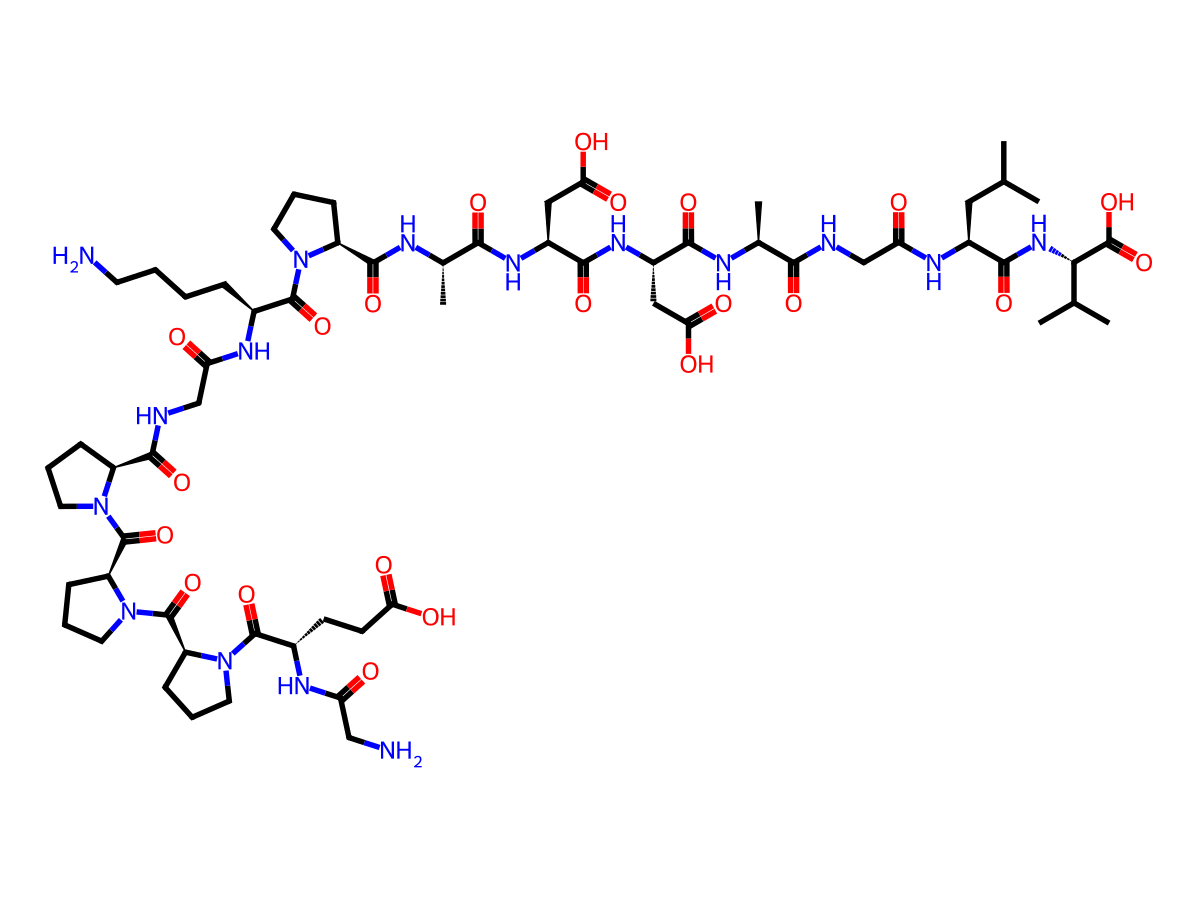
BPC-157 is a synthetic chain of fifteen amino acids corresponding to a partial sequence of body protection compound, a protein isolated from human gastric juice. It does not exist as a free peptide in the body. It is a laboratory construct built from a stretch of a larger natural protein, which is why it is described as derived from gastric juice rather than found in it.

For researchers

The composition is unusual in a way that matters. Four of the fifteen residues are proline. Proline-rich runs resist enzymatic cleavage, and this is the accepted structural explanation for the peptide's reported stability in gastric juice, a property that almost no other peptide of this size shares.⁠4 It also has no cysteine, so there are no disulfide bonds to reduce or scramble, which simplifies handling but removes a structural feature that stabilises many peptides.

Compound data

GGly
EGlu
PPro
PPro
PPro
GGly
KLys
PPro
AAla
DAsp
DAsp
AAla
GGly
LLeu
VVal
NonpolarAcidicBasic Teal letter = proline
Primary sequence, N-terminus at left. Shown as a residue chain rather than a skeletal structure because at fifteen residues the sequence carries the useful information. Four of the fifteen positions are proline, which is unusually high and is the structural reason the molecule survives conditions that destroy most peptides.⁠4
SequenceGEPPPGKPADDAGLV
FormulaC62H98N16O22
Mol. mass1419.5 g/mol
CAS137525-51-0
PubChemCID 9941957
Composition4× Pro, 3× Gly, 2× Ala, 2× Asp, 1× Glu, 1× Lys, 1× Leu, 1× Val
Net charge−2 at physiological pH (3 acidic, 1 basic side chain)
DisulfidesNone. No cysteine in the sequence
Counter-ionMinimal. With three acidic side chains and only one basic, this is an acidic peptide, so it carries far less trifluoroacetate than a basic one. Net peptide content is correspondingly higher than for basic peptides
OriginPartial sequence of a protein found in human gastric juice
AppearanceWhite lyophilised powder
SolubilityWater soluble. No acidic buffer required
Plasma t½Under 30 minutes⁠1
IM bioavail.14 to 51%, species dependent⁠1

Pharmacology

Plasma t½Under 30 min, two species plus a two-subject human pilot⁠1
KineticsLinear, dose proportional⁠1
IM bioavail.14 to 51%, species dependent⁠1
Effect durationReported hours to days, unexplained⁠1
Known receptorNone identified
Key pathwaysVEGFR2 → Akt → eNOS, Src → Cav-1 → eNOS, FAK → paxillin
Routes studiedOral, parenteral, topical⁠1
FormulationNone validated. No BCS classification⁠1

Evidence at a glance

PubMed hits, 10 Nov 2026228 articles⁠7
Single group76% list Sikirić or Seiwerth (66% first or last author)⁠7
Human subjectsFewer than 30, across 3 uncontrolled pilots⁠1
Controlled trialsNone
Phase IINone completed⁠1

Regulatory status

UKNot licensed as a medicine
USStill not FDA approved, and the position moved twice in 2026. Placed in Category 2 of the 503A bulk substances list on 29 Sep 2023, citing immunogenicity risk, peptide impurity complexity and limited safety data.⁠8 Removed from Category 2 on 15 April 2026, because the nomination was withdrawn rather than because anything was resolved.⁠10 On 23 July 2026 the Pharmacy Compounding Advisory Committee recommended adding it to the 503A list, in a close vote, against the recommendation of the FDA's own scientific reviewers, who advised against all seven peptides on the agenda.⁠11 No regulatory status has changed. The committee only advises, the FDA has not decided, and none of this is approval⁠11
SportWADA S0, named outright. Prohibited at all times, in and out of competition⁠9
AgeNothing in this library is intended for anyone under 18

Related

BPC-157 + TB-500The two-peptide blend, tested together in one rat tendon study
BPC-157 + TB-500 + GHK-CuThe three-peptide blend; no study of the three together was found
BPC-157 + TB-500 + KPV + GHK-CuThe four-peptide blend; no study of the four together was found
SemaxThe other page where one institute dominates the evidence, and the manufacturing contrast
ComparePut this next to the others on all five axes
TB-500The compound this is stacked with most often, and a much weaker evidence base than this one
GHK-CuThe same single-source evidence problem, with the researcher owning the company
MOTS-cAlso caught by the April 2026 503A withdrawal and the July committee vote
RetatrutideThe opposite evidence position, and the strongest in the library
CJC-1295The worst manufacturing quality in the library
IpamorelinA far better manufacturing record, for contrast
PT-141The other page built on a channel gap, and an approved medicine
NAD+ / NMNThe cheapest and lowest-risk entry point in the library
EnlicitideA licensed oral peptide, and the benchmark for oral peptide claims

Evidence

One laboratory wrote most of what we know.

LabAnimalHuman, this moleculeControlled efficacyIndependent replication

Evidence found: lab; animal.

A PubMed search on 10 November 2026 returns 228 articles on BPC-157. 174 of them (76 percent) list P. Sikirić or S. Seiwerth among the authors, and 151 (66 percent) as first or last author, working at the University of Zagreb.⁠7

For researchers

That is not evidence of misconduct. The group discovered the compound and has pursued it seriously for three decades. But independent replication across different laboratories is how science corrects itself, and for BPC-157 that has barely happened. Some independent work exists from Chinese and Korean groups, and there is independent in vitro work on fibroblast migration and corneal injury, but the volume is small against the single-group body.⁠7

Human evidence, stated exactly

Available clinical data derive from fewer than 30 subjects across three uncontrolled pilot studies, none of which used standardised pharmaceutical preparations. There is no completed Phase II trial, no approved formulation, and no validated dosing regimen.⁠1

Three uncontrolled pilots totalling under thirty people is not a basis for knowing whether something works. The review they come from concludes only that the peptide merits proper study.⁠1

Regulatory note. On 23 July 2026 the United States Pharmacy Compounding Advisory Committee voted 8 to 6, with one abstention, to recommend adding BPC-157 to the 503A bulks list in a grouped vote alongside TB-500 and KPV. That vote went against the written recommendation of the agency’s own reviewers, and it is not an approval. KPV’s page sets out what the reviewers actually found.

What it will not do

  • Fix a tendon problem caused by training that has not changed
  • Work faster than the tissue it acts on can remodel, which is weeks to months
  • Replace load management, sleep or protein intake, all of which have better human evidence for tissue repair
  • Appear on any routine biomarker, so any effect can only be judged by symptoms
  • Behave predictably from a dosing schedule, because no schedule is derived from its pharmacokinetics
For researchers

Two mistakes follow from that last point. Online dosing protocols are conventions, not findings.1 And running it alongside three other things at once makes the whole exercise unfalsifiable, because nothing that changes can be attributed to anything.

Try this first

Cheaper, simpler, better evidenced

The interventions with actual human trial evidence for tendon and soft-tissue recovery are unglamorous and mostly free.

  • Progressive loading of the affected tissue. The best-evidenced intervention for tendinopathy by a wide margin.
  • Sleep duration. Below seven hours, soft-tissue injury rates rise measurably in athlete populations.
  • Protein intake and total energy. Repair is expensive. Under-eating slows it.
  • Time. Most soft-tissue complaints resolve on a timescale that makes any intervention look effective.

What to track

There is no biomarker for this, so any assessment has to be behavioural and fixed before a study begins.

For researchers
  • One named complaint, scored 0 to 10, daily. Chosen before the first dose, not after.
  • One loaded movement with a number attached. Range, tolerated load, or time to onset.
  • A stop date. Decide the review point in advance. Open-ended use is how people spend a year on something that never worked.

Mechanism

Most reported effects trace back to new blood vessel growth.

The most consistent finding in the preclinical literature is not that BPC-157 repairs tissue directly. It drives angiogenesis, the formation of new blood vessels, and most of its reported effects on tendon, gut and muscle follow from getting blood supply into damaged tissue.⁠5 Everything below is downstream of that idea.

For researchers

The primary axis: VEGFR2 to Akt to eNOS

BPC-157
Binds at the endothelial cell surface. No dedicated high-affinity receptor for BPC-157 has been identified, which remains one of the significant open questions about this compound.⁠5
VEGFR2 ↑
Vascular endothelial growth factor receptor 2 is upregulated and internalised. This is the entry point into the angiogenic programme, and notably it happens without a corresponding rise in VEGF itself, meaning the peptide appears to sensitise the receptor rather than supply the ligand.⁠6
Akt-P
Phosphorylation of Akt, the central survival and growth kinase downstream of VEGFR2.
eNOS ↑
Endothelial nitric oxide synthase activation, raising local nitric oxide. Nitric oxide drives vasodilation, endothelial survival and vessel sprouting. This is the effector end of the axis.⁠6
Vessels
New capillary formation into hypoxic or damaged tissue. In tendon and ligament, which are poorly vascularised at baseline, this is the plausible route to any repair benefit.

The second route into nitric oxide: Src and caveolin-1

Separately from the VEGFR2 axis, BPC-157 has been shown to act through a Src to caveolin-1 to eNOS pathway. Caveolin-1 normally binds eNOS and holds it inactive. The peptide reduces that protein-to-protein interaction, releasing eNOS and increasing nitric oxide availability without needing to raise eNOS expression at all.⁠2 Two independent routes to the same effector is the reason the nitric oxide system is treated as central to this compound rather than incidental.

Nitric oxide: raised or counter-regulated

BPC-157 does not simply increase nitric oxide. The published position from the primary research group is that it counter-regulates the system, blunting nitric oxide's damaging actions while preserving its protective ones, which is why it has been reported to oppose both NO-blocking and NO-donating agents in the same models.⁠3 Whether one molecule can act in both directions on a single system is one of the more contested claims in this literature.

Cell migration: FAK and paxillin

Angiogenesis needs endothelial cells to physically move. BPC-157 activates the focal adhesion kinase to paxillin pathway, the machinery cells use to grip the extracellular matrix and pull themselves forward. In cultured human endothelial cells, phosphorylation of FAK at Tyr-397 and of paxillin both rise measurably at picomolar to nanomolar concentrations.⁠6 This is the mechanistic bridge between a signalling change and cells actually building a vessel.

Tendon specifically: growth hormone receptor upregulation

In isolated tendon fibroblasts, BPC-157 has been reported to increase expression of the growth hormone receptor, making those cells more responsive to growth hormone already present rather than adding any hormone itself. This is the most tendon-specific mechanism proposed for the compound and it is the usual explanation offered for why tendon shows up so often in the animal literature.⁠5

Other systems reported

  • Prostaglandin pathways. This is the gastroprotective route, and it is where the whole research programme started.
  • Dopaminergic and serotonergic systems. Reported in rodent behavioural models. Far less replicated than the gastroprotective findings.
  • Gut-brain axis effects. This is the frame the primary research group now uses to tie its findings together.
It leaves the blood in half an hour and acts for days.

A formal preclinical ADME study across two species, supported by a preliminary two-subject human pilot, puts the plasma half-life at under thirty minutes, with linear dose-proportional kinetics and intramuscular bioavailability between 14 and 51 percent depending on species.⁠1

For researchers

Yet the biological effects reported in those same models persist for hours to days. That gap has a name, the PK/PD disconnect, and it is the most interesting thing about this compound.

Measurable in plasma< 30 min
Reported biological effectHours to days
0 h6 h12 h24 h48 h+

There are two readings. Either the peptide triggers a signalling cascade that continues long after the molecule is gone, which is entirely plausible for something acting on gene expression and receptor density. Or the effects being measured are not as attributable to the peptide as the studies assume. The question is unresolved.

The practical consequence is that no dosing schedule for this compound is derived from its pharmacokinetics. Protocols in circulation are conventions, not findings. A sub-30-minute half-life gives no support at all to any particular frequency, and the review that established this states that there is no validated dosing regimen.⁠1

Regulatory status

Status by country

Where regulators list this compound, country by country. Each line names who listed it, the date it was read and the source. A country with no line has not been checked yet.

Not yet checked. North America: Canada, Mexico, United States. South America: Argentina, Brazil. Europe: European Union (central authorisation), Belgium, France, Germany, Italy, Netherlands, Russia, Spain, Switzerland, United Kingdom. Africa: Egypt, Nigeria, South Africa. Asia: China, India, Japan, South Korea, Thailand, United Arab Emirates. Oceania: Australia, New Zealand.

Sport (WADA) applies worldwide, not a country

WADA Prohibited List 2026Reported status: prohibited at all times by WADA, as of 6 Nov 2026. Source: WADA Prohibited List 2026, as verified for this page (see its sources) source dated 1 Jan 2026S0, substances with no approval for human therapeutic use: prohibited at all times

Information only, not legal advice. Not verified for any individual situation. Status changes; check the date and the source.

The same records as data: JSON and CSV, with a version and a change log.

Sources11

This page cites 11 sources, numbered to match the small numbers in the text above. Each one links to the paper or record. Where a source states its design, a tag says so (a human trial, an animal study, a cell study, a review); the tag names the design and is not a grade. Each source also links back to where it is cited above.

  1. 01
    Enache A, et al. BPC-157 as an Investigational Peptide Therapeutic: Biopharmaceutical Challenges, Formulation Strategies, and Translational Development Barriers. Pharmaceutics 2026;18(5):625.Review or meta-analysisdoi.orgno read date recorded
    Full text
    Enache A, et al. BPC-157 as an Investigational Peptide Therapeutic: Biopharmaceutical Challenges, Formulation Strategies, and Translational Development Barriers. Pharmaceutics 2026;18(5):625. Narrative review. Source for half-life, bioavailability, human subject counts and formulation status.
    Cited 15 times, back to the text12345678and 7 more
  2. 02
  3. 03
    Sikirić P, et al. BPC 157 Therapy: Targeting Angiogenesis and Nitric Oxide's Cytotoxic and Damaging Actions, but Maintaining Their Essential Protective Functions. Pharmaceuticals 2025. Commentary from the primary research group.ncbi.nlm.nih.govno read date recordedBack to the text1
  4. 04
    Sequence and composition derived from CAS 137525-51-0 / PubChem CID 9941957.no read date recorded
    Full text
    Sequence and composition derived from CAS 137525-51-0 / PubChem CID 9941957. Proline fraction and net charge calculated from GEPPPGKPADDAGLV; molecular mass independently reconciled from C62H98N16O22 and from residue masses, both giving 1419.55 g/mol.
    Cited 2 times, back to the text12
  5. 05
    Józwiak M, et al. Multifunctionality and Possible Medical Application of the BPC 157 Peptide: Literature and Patent Review. Pharmaceuticals 2025;18:185.doi.orgno read date recordedCited 3 times, back to the text123
  6. 06
    Hsieh MJ, et al. Reported VEGFR2 upregulation and internalisation with downstream VEGFR2-Akt-eNOS activation, and FAK Tyr-397 and paxillin phosphorylation in human endothelial culture. See also the 2025 reply exchange in Pharmaceuticals…ncbi.nlm.nih.govno read date recorded
    Full text
    Hsieh MJ, et al. Reported VEGFR2 upregulation and internalisation with downstream VEGFR2-Akt-eNOS activation, and FAK Tyr-397 and paxillin phosphorylation in human endothelial culture. See also the 2025 reply exchange in Pharmaceuticals for the current dispute over interpretation.
    Cited 3 times, back to the text123
  7. 07
    Authorship concentration analysis, reported in the biopharmaceutical review at reference 1 and corroborated by STAT News, 3 Feb 2026. Library recount, 10 Nov 2026: PubMed query ("BPC-157"[tiab] OR "BPC 157"[tiab] OR "body protection…statnews.comno read date recorded
    Full text
    Authorship concentration analysis, reported in the biopharmaceutical review at reference 1 and corroborated by STAT News, 3 Feb 2026. Library recount, 10 Nov 2026: PubMed query ("BPC-157"[tiab] OR "BPC 157"[tiab] OR "body protection compound"[tiab]) returned 228 articles; author lists read from the PubMed records: 174 (76%) include Sikirić or Seiwerth, 151 (66%) as first or last author. This replaces the earlier figure of over 190 articles and more than 80% as first or senior author, which the recount does not support. A second search of “BPC-157”[tiab] alone gave 224 articles, and the count moves as PubMed is updated.
    Cited 4 times, back to the text1234
  8. 08
    US FDA. Certain Bulk Drug Substances for Use in Compounding That May Present Significant Safety Risks (Category 2), updated 29 September 2023.fda.govno read date recordedBack to the text1
  9. 09
    World Anti-Doping Agency 2026 Prohibited List, class S0, non-approved substances, checked against the list text as reproduced in the Austrian Federal Law Gazette, BGBl. III Nr. 219/2025. BPC-157 is named outright, not merely caught by the…no read date recorded
    Full text
    World Anti-Doping Agency 2026 Prohibited List, class S0, non-approved substances, checked against the list text as reproduced in the Austrian Federal Law Gazette, BGBl. III Nr. 219/2025. BPC-157 is named outright, not merely caught by the class definition: the text reads “This class covers many different substances including but not limited to BPC-157, 2,4-dinitrophenol (DNP)…”. Prohibited at all times, in and out of competition. Verified against the text rather than inferred, 23 August 2026.
    Back to the text1
  10. 10
    US FDA, Bulk Drug Substances Nominated for Use in Compounding Under Section 503A, action of 15 April 2026, effective after seven days. Twelve peptide bulk drug substances were removed from Category 2 because the nominations were withdrawn…orrick.comno read date recorded
    Full text
    US FDA, Bulk Drug Substances Nominated for Use in Compounding Under Section 503A, action of 15 April 2026, effective after seven days. Twelve peptide bulk drug substances were removed from Category 2 because the nominations were withdrawn by the nominators. Summarised in Orrick, Herrington & Sutcliffe, FDA Announces Removal of 12 Peptides from Category 2, 16 April 2026. Removal from Category 2 does not place a substance on the 503A list and is not authorisation.
    Back to the text1
  11. 11
    Hawana JS, FDA's Advisory Committee Votes on Peptides, What It Does and Doesn't Do, Mintz, 29 July 2026. Source for the 23 and 24 July 2026 Pharmacy Compounding Advisory Committee meeting, the recommendation of six of the seven peptides…mintz.comno read date recorded
    Full text
    Hawana JS, FDA's Advisory Committee Votes on Peptides, What It Does and Doesn't Do, Mintz, 29 July 2026. Source for the 23 and 24 July 2026 Pharmacy Compounding Advisory Committee meeting, the recommendation of six of the seven peptides considered, the FDA scientific reviewers having recommended against all seven, and the fact that an advisory committee vote is not an agency action. Also the source for the second meeting on five further peptides expected February 2027.
    Cited 2 times, back to the text12

Where it sits

Primary studies

Don’t take our word for it. Read the study.

Read first: 01.

Where this compound is sold

Affiliate links. Coredex earns a commission if a reader buys through the links in this table. The commission has no influence on what the page above reports. The publisher also has a partner relationship with TheDhust. Read the full disclosure.

One vendor, TheDhust, is listed.

VendorProduct and sizePublic lab report
TheDhustBPC-157, 10 mgNot published
TheDhustBPC-157 Capsules, size per product labelNot published