Coredex
Contents
OverviewSafetyStatusCheckedSourcesWhere it sitsStudies

Dihexa

PNB-0408, N-hexanoyl-Tyr-Ile-Ahx-NH2, hexanoyl-Tyr-Ile-(6)-aminohexanoic amide

Three papers from the laboratory that created Dihexa were retracted in 2025, including both papers that established the HGF/c-Met mechanism proposed for it. Dihexa itself has not been given to a human in a published study. A 554-patient trial of fosgonimeton, a phosphate prodrug of the same molecule, did not show a significant benefit.

  • Angiotensin IV analogue
  • Cognition
  • Studied orally in animals
  • No human studies
  1. Compounds
  2. Cognition and neuroactive
  3. Angiotensin IV analogues
  4. Dihexa

17 sources 1 registered trial named in the sources last source read 22 Aug 2026 page reviewed 22 Nov 2026

Overview

The paper that characterised Dihexa is not retracted; it carries an expression of concern. Three other papers from the same laboratory are retracted. The journal notices say possible image manipulation; the word “misconduct” comes from a US Department of Justice settlement, not from the journal. The status of each paper is set out in the retractions section, and it does not change the picture.
In its favour

One independent positive animal result, from a group with no stake in it

Recorded harm

No toxicology package of any kind has been located, for a compound proposed to act through a proto-oncogene pathway

Not settled

Both papers that established the proposed mechanism were retracted in 2025, and Dihexa has not been given to a human in a published study

A fragment of a blood-pressure hormone, engineered to cross the blood-brain barrier.

Dihexa comes from angiotensin IV, a short fragment of the peptide system that regulates blood pressure. Angiotensin IV had been reported to improve learning in rodents, and a small peptide is destroyed in minutes and does not cross the blood-brain barrier.⁠1

For researchers

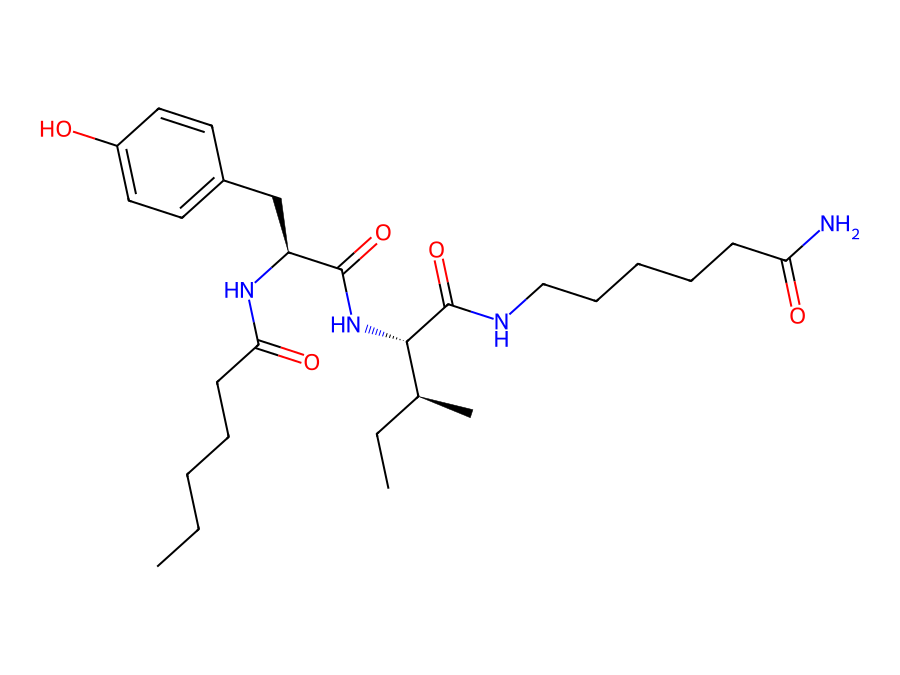
Dihexa addresses this by chemical modification. The molecule is a two-residue core (tyrosine and isoleucine) wrapped at both ends in fatty carbon chains: a six-carbon hexanoyl cap at the front, and a six-carbon aminohexanoic tail terminating in an amide at the back.⁠5

The structural fact that explains a pharmacological one

Those two hexanoyl chains do two jobs at once. They make the molecule lipophilic enough to cross the blood-brain barrier, and they put a non-natural, non-peptide group at each terminus, which is where peptidases attack.

The result is orally active in rodents and long-lasting, and, by construction, not a peptide the body can dispose of by its normal routes. This is relevant to the absence of a toxicology package.

It was developed at Washington State University, licensed to a company that became Athira Pharma, and has since been sold as a nootropic.

Compound data

Hexcap
YTyr
IIle
Ahxtail
Amino acidNon-natural cap or tail
Only two of the four units are amino acids. A six-carbon hexanoyl cap at the N-terminus and a six-carbon aminohexanoic tail ending in an amide at the C-terminus⁠5

Both additions exist to stop peptidases and to cross the blood-brain barrier. This is a peptidomimetic engineered against clearance, not a fragment of anything the body makes⁠6
ClassAngiotensin IV analogue, capped dipeptide amide⁠5
ShorthandHexanoyl-Tyr-Ile-Ahx-NH25
FormulaC27H44N4O5⁠5
Mass504.66, 504.331 monoisotopic⁠6
CAS1401708-83-55
UNII9WYX65A5C2⁠5
InChIKeyXEUVNVNAVKZSPT-JTJYXVOQSA-N⁠6
StereocentresThree, all S⁠6
Prodrug of itFosgonimeton, C27H45N4O8P, 584.64: + HPO37
Route studied in animalsOral⁠10
Oral bioavailabilityNo figure exists, any species⁠16
Human exposureNone ever studied15

Evidence at a glance

Human studies015
Registered trials of Dihexa015
Retracted papers, originating lab3, all 2025⁠2
Expressions of concern4, Sept 2021, incl. the characterisation paper⁠13
Independent animal studies2: one positive, one negative⁠1011
Mechanism independently shownNo10
Clinical test of the mechanismFailed. 554 patients, prodrug of the same molecule⁠89
Toxicology packageNone
Adverse-event reports0, reflecting the absence of a regulated product⁠14

Regulatory status

AuthorisationNone found. No approval or submission located
USNo FDA label exists, and no adverse-event reports are on file under this name, which reflects the absence of a regulated product⁠14
MHRA, EMANo MHRA or EMA authorisation found
Related programmeFosgonimeton reached Phase 2/3 and the programme was discontinued after LIFT-AD⁠9
WADANo determination made on this page. The primary document is closed to automated retrieval⁠17

Related

AdipotideThe other page written to explain a red flag rather than thin evidence
SemaxAnother page with an identifier discrepancy
CJC-1295Another page with an identifier discrepancy
DSIPTested and failed to deliver, for contrast with tested and retracted
SelankAnother cognition entry, with a different kind of evidence
CompareView beside other compounds on the same axes
CerebrolysinSeven retracted mechanism papers and thirty years of human trials
TGN1412A reference case for the limits of animal evidence
ObestatinA case where a supporting paper was retracted and the original stands

A published catalogue structure differs from the systematic name.

Dihexa is C27H44N4O5, 504.66, CAS 1401708-83-5, and the FDA holds it under UNII 9WYX65A5C2.⁠5 The connectivity is a straight chain, which the peptide shorthand states unambiguously: Hexanoyl-Tyr-Ile-Ahx-NH2.⁠5

For researchers
Structure check

The structure was rebuilt from the sequence and compared against published identifiers. Rebuilt from the linear chain, Dihexa gives C27H44N4O5, average mass 504.672, monoisotopic 504.331, and InChIKey XEUVNVNAVKZSPT-JTJYXVOQSA-N: matching the identifier set published with the full systematic name, character for character.⁠6

One chemical catalogue publishes a different structure under the same CAS number. Its version attaches the aminohexanoic tail to the backbone nitrogen of isoleucine rather than to its carboxyl, producing a branched molecule with the same formula and a different InChIKey. The systematic name and the peptide shorthand both rule that out.6

The same formula, mass and CAS number therefore describe a different molecule. Similar identifier errors are described for CJC-1295 and Semax.

The structure shown in the panel on this page was drawn from the reconstructed linear molecule, not copied from a catalogue.⁠6

Safety and standards

No toxicology package has been located.

Human safety dataNone. No human has taken Dihexa in a study⁠15
Repeat-dose toxicologyNone located
Carcinogenicity studyNone located
Genotoxicity studyNone located
Adverse-event reports on fileZero, which reflects the absence of a regulated product, not the absence of harm⁠14
Oral bioavailability figureNone exists in any accessible source, for any species⁠16
For researchers
Proto-oncogene pathway

c-Met is a proto-oncogene. It is one of the receptors that cancers use to grow and spread, and many oncology drugs inhibit it.

Dihexa is proposed to activate that system, in a molecule engineered for a long duration of action, and no carcinogenicity study or human data have been located.

No study has shown that Dihexa causes cancer, and no study has looked.

Regulatory status

Status by country

Where regulators list this compound, country by country. A country with no line has not been checked yet.

No country or sport list has been checked yet

Not yet checked. North America: Canada, Mexico, United States. South America: Argentina, Brazil. Europe: European Union (central authorisation), Belgium, France, Germany, Italy, Netherlands, Russia, Spain, Switzerland, United Kingdom. Africa: Egypt, Nigeria, South Africa. Asia: China, India, Japan, South Korea, Thailand, United Arab Emirates. Oceania: Australia, New Zealand.

Sport (WADA) applies worldwide, not a country

WADA Prohibited List 2026Not yet checked

Information only, not legal advice. Not verified for any individual situation. Status changes; check the date and the source.

The same records as data: JSON and CSV, with a version and a change log.

Checked and missing

Four papers with expressions of concern; three were retracted.

In September 2021 the Journal of Pharmacology and Experimental Therapeutics issued expressions of concern on four papers from the Washington State University group behind Dihexa, printed on consecutive pages. The stated reason was “possible image manipulation after reviewing information received from several sources.”3

For researchers

In 2025, three of those four were retracted.2

PaperStatus now
JPET 339:509 (2011)
“Mimics of the dimerization domain of HGF exhibit anti-Met and anticancer activity”
RETRACTED 20252
JPET 340:539 (2012)
“Development of angiotensin IV analogs as HGF/Met modifiers”
RETRACTED 20252
JPET 351:390 (2014)
“The procognitive and synaptogenic effects of angiotensin IV-derived peptides are dependent on activation of the HGF/c-Met system”
RETRACTED 20252
JPET 344:141 (2013)
“Evaluation of metabolically stabilized angiotensin IV analogs as procognitive/antidementia agents”: the paper that characterised Dihexa
NOT retracted. Expression of concern only, JPET 378:313⁠1
Which findings were retracted

The retractions do not cover all Dihexa research.

The paper that introduced and characterised Dihexa as a procognitive agent still stands, under a cloud. What was retracted is the work that established how it supposedly works: the HGF/c-Met mechanism, in both of the papers that built it.

The proposed mechanism lost its primary sources; the original characterisation did not.

On the word “misconduct”

The journal notices say possible image manipulation. They do not say misconduct.⁠3

“Misconduct” entered the conversation through a separate track: in January 2025 the US Department of Justice announced a $4 million False Claims Act settlement concerning federally funded research associated with the same figure, Athira's then-chief executive, whose doctoral dissertation supplied figures for the papers in question.⁠4

The journal notices and the settlement come from different institutions and are reported separately here.

Without the retracted papers, the proposed mechanism has no primary source.

The claim made for Dihexa is that it activates the hepatocyte growth factor / c-Met system to drive synaptogenesis. The status of that chain is shown below.

For researchers
HGF/c-Met
Both papers establishing this chain are retracted: the 2012 development paper and the 2014 procognitive/synaptogenic paper⁠2
Procognitive
Rests on the 2013 characterisation paper, which is not retracted but carries an expression of concern1
Independent
One positive independent animal study exists, and it never measured HGF or c-Met. See below⁠10

The HGF/c-Met pathway has no unretracted primary source, and no independent group has demonstrated c-Met engagement by this compound.

The mechanism is not shown to be wrong; it is currently unsupported, and no published experiments are testing it.

Dihexa has not been given to a human in a published study. A phosphate prodrug has been, in 554 people.

The claim that Dihexa went into human trials is not correct as stated; the trial concerned a different substance.

For researchers

Athira's clinical candidate was fosgonimeton (ATH-1017), a separately registered substance. Its relationship to Dihexa is not vague:⁠7

DihexaFosgonimeton
FormulaC27H44N4O5C27H45N4O8P
Mass504.66584.64
CAS1401708-83-52091773-96-3
DifferenceExactly HPO3 (79.98) on an identical C27/N4 backbone. The FDA's substance registry records an explicit prodrug-to-active-metabolite relationship between them, and the structures place the phosphate on the tyrosine hydroxyl7

And that trial failed

TrialLIFT-AD, NCT04488419. Phase 2/3, randomised, placebo-controlled, double-blind, mild-to-moderate Alzheimer's disease⁠8
Size554 randomised to subcutaneous placebo or one of two fosgonimeton dose levels for 26 weeks. Prespecified primary analysis population: 287: those on placebo or the lower dose who were not taking acetylcholinesterase inhibitors⁠8
OutcomeFosgonimeton did not show a significant benefit on the primary Global Statistical Test, nor on the key secondaries ADAS-Cog11 and ADCS-ADL239
Posted numbersGST change at week 26: −0.126 ± 0.0683 placebo against −0.208 ± 0.0707 active. A lower GST score indicates improvement, so the small posted difference numerically favoured the drug. The registry posts no p-values and no confidence intervals8
Direction of the score

The registry states that for this endpoint a lower score means improvement, so −0.208 is the better number.

The differences were small, the trial did not demonstrate benefit, and the company's own announcement is the source for “missed”: the registry alone cannot support a significance claim because it posts no statistics.⁠9 Athira discontinued the programme.

Relevance to Dihexa: this is the closest clinical test of the proposed mechanism, run by a funded company on a phosphate prodrug of the same scaffold in 554 patients with Alzheimer's disease, and it did not show benefit.

Two independent studies: one positive, one negative; neither tests the mechanism.

Strip out everything from the originating laboratory and two independent animal studies remain.⁠1011

For researchers
StudyFinding
Sun et al. 2021
Brain Sciences 11:1487, Nanjing
APP/PS1 Alzheimer's model mice, oral, three months
Positive. An independent replication of a behavioural benefit, with no author from the originating group⁠10
Wells et al. 2024
Journal of Huntington's Disease 13:55–66
Rat 3-nitropropionic acid model
Negative. In the authors' own words, “PNB-0408 did not protect rats from the deficits induced by 3-NP neurotoxicity”11
The positive study

Sun 2021 is the one independent positive study. It measured the following.

It measured synaptophysin, GFAP, Iba-1 and the PI3K/AKT axis by western blot, and angiotensin IV, TNF-α, IL-10 and IL-1β by ELISA. The words “HGF”, “c-Met” and even “growth factor” do not appear anywhere in the paper.10

The independent positive result does not test the mechanism the retracted papers described. It is evidence of an effect in a mouse model, not of the mechanism.

Four claims made for Dihexa and what the record shows.

  • “It went into human trials.” Dihexa has not. The trial was of fosgonimeton, a different registered substance, and it did not show benefit⁠89
  • “It works through HGF/c-Met.” Both papers establishing that are retracted, and the one independent positive study never measured either protein⁠210
  • “Orally bioavailable.” Orally active in rodents, yes, independently. No measured oral bioavailability figure exists for any species, and oral activity in a mouse is not bioavailability in a person⁠16
  • “Independently analysed.” Dihexa is absent from the independent testing dataset and was not detected in a twelve-laboratory market survey⁠1213

Terminology. Dihexa is a synthetic, protease-resistant peptidomimetic with a non-natural cap at one end and a non-natural tail at the other, engineered to resist clearance. It is not body-identical.

Gaps in the sources and verification.

  • The verbatim text of the three 2025 retraction notices could not be read. The publisher's full-text pages are closed to automated retrieval. Their existence, dates and targets are confirmed from the registry of publication records; the “possible image manipulation” wording is quoted at one remove, from a single specialist outlet⁠23
  • The retraction count is scoped to one journal. Three of their papers in that journal are retracted; no exhaustive cross-journal sweep was possible, so the count is stated as three JPET papers⁠2
  • The DOJ settlement is verified; a parallel SEC action is not. Only the DOJ action was confirmed⁠4
  • The full text of the 2013 characterisation paper could not be read, so this page describes its status rather than its contents⁠1
  • The prodrug relationship is registry-stated, not read from a primary pharmacology paper. The formula difference and the phosphate position are solid; the metabolic conversion is taken from the substance registry's own relation field⁠7
  • The absence from independent testing is inferred from absence, not from a published zero. Reported as “does not appear” rather than as a count⁠12
  • No anti-doping status is stated on this page. The primary document is closed to automated retrieval, and a reasoned inference is not a citation⁠17
  • Counterweight: an expression of concern is not a finding of fraud, and the 2013 paper has not been retracted in five years of scrutiny. If it is ever cleared, the characterisation of Dihexa survives. The mechanism papers, the failed clinical trial and the missing toxicology would all still stand exactly where they are

Sources17

This page cites 17 sources, numbered to match the small numbers in the text above. Each one links to the paper or record. Where a source states its design, a tag says so (a human trial, an animal study, a cell study, a review); the tag names the design and is not a grade. Each source also links back to where it is cited above.

  1. 01
    McCoy AT, Benoist CC, Wright JW, Kawas LH, Bule-Ghogare JM, Zhu M, Appleyard SM, Wayman GA, Harding JW. Evaluation of metabolically stabilized angiotensin IV analogs as procognitive/antidementia agents. Journal of Pharmacology and…DOI 10.1124/jpet.112.199497no read date recorded
    Full text
    McCoy AT, Benoist CC, Wright JW, Kawas LH, Bule-Ghogare JM, Zhu M, Appleyard SM, Wayman GA, Harding JW. Evaluation of metabolically stabilized angiotensin IV analogs as procognitive/antidementia agents. Journal of Pharmacology and Experimental Therapeutics 2013;344(1):141–154. DOI 10.1124/jpet.112.199497. The paper that introduced and characterised Dihexa as a procognitive agent. Its status was verified independently through the registry of publication records on 21 and 22 August 2026: the record carries no retraction relation and no “RETRACTED” prefix, and is linked to an expression of concern only, published 22 September 2021 as JPET 378:313 with its own DOI 10.1124/jpet.112.199497concern. ⚠ As of 22 August 2026 this paper is not retracted. Its full text could not be read from this environment, so this page describes its status rather than its contents.
    Cited 5 times, back to the text12345
  2. 02
    The three 2025 retractions, verified through the registry of publication records 21–22 August 2026. Retraction notices 10.1016/j.jpet.2025.103566,.103567 and.103568, published in JPET volume 392, retract respectively: “Development of…In vitroDOI 10.1124/jpet.111.188136no read date recorded
    Full text
    The three 2025 retractions, verified through the registry of publication records 21–22 August 2026. Retraction notices 10.1016/j.jpet.2025.103566, .103567 and .103568, published in JPET volume 392, retract respectively: “Development of angiotensin IV analogs as hepatocyte growth factor/Met modifiers”, JPET 340:539–548 (2012), DOI 10.1124/jpet.111.188136; “The procognitive and synaptogenic effects of angiotensin IV-derived peptides are dependent on activation of the hepatocyte growth factor/c-Met system”, JPET 351:390–402 (2014), DOI 10.1124/jpet.114.218735; and “Mimics of the dimerization domain of hepatocyte growth factor exhibit anti-Met and anticancer activity”, JPET 339:509 (2011). All three now carry the “RETRACTED” prefix in the publication record. The two papers establishing the HGF/c-Met mechanism for angiotensin IV analogues are among them. ⚠ The verbatim text of the notices could not be read; the publisher's full-text pages are closed to automated retrieval. Scope: this is three papers in this journal. No exhaustive cross-journal retraction sweep was possible.
    Cited 9 times, back to the text12345678and 1 more
  3. 03
    Specialist research-integrity reporting on the September 2021 expressions of concern, 24 September 2021. Source for the count of four expressions of concern issued simultaneously on papers from this group, printed on consecutive pages as…no read date recorded
    Full text
    Specialist research-integrity reporting on the September 2021 expressions of concern, 24 September 2021. Source for the count of four expressions of concern issued simultaneously on papers from this group, printed on consecutive pages as JPET 378:311–314; for the four titles, which are the three retracted papers at reference 2 plus the characterisation paper at reference 1; and for the journal's stated reason, quoted verbatim as concern regarding “possible image manipulation after reviewing information received from several sources.” Also the source for the background that the figures in question came from a doctoral dissertation completed at Washington State University under the supervision of the compound's originating investigators, and that the dissertation's author went on to lead Athira Pharma. ⚠ Single-sourced. The journal notices themselves could not be read at source, so the “possible image manipulation” wording is quoted at one remove.
    Cited 4 times, back to the text1234
  4. 04
    United States Department of Justice, False Claims Act settlement announced January 2025 concerning federally funded research associated with the former chief executive of Athira Pharma, in the amount of $4 million. Cited on this page for…no read date recorded
    Full text
    United States Department of Justice, False Claims Act settlement announced January 2025 concerning federally funded research associated with the former chief executive of Athira Pharma, in the amount of $4 million. Cited on this page for one narrow purpose: to identify where the word “misconduct” comes from, and to distinguish it from what the journal notices actually say. ⚠ A parallel Securities and Exchange Commission action is sometimes cited alongside this; the DOJ settlement was verified and the SEC element was not, and this page therefore does not assert it.
    Cited 2 times, back to the text12
  5. 05
    Chemical identity of Dihexa, cross-checked across independent identifier sources 22 August 2026. C27H44N4O5, molecular weight 504.66, CAS 1401708-83-5, FDA UNII 9WYX65A5C2. Peptide shorthand Hexanoyl-Tyr-Ile-Ahx-NH 2, where Ahx is…read 22 Aug 2026
    Full text
    Chemical identity of Dihexa, cross-checked across independent identifier sources 22 August 2026. C27H44N4O5, molecular weight 504.66, CAS 1401708-83-5, FDA UNII 9WYX65A5C2. Peptide shorthand Hexanoyl-Tyr-Ile-Ahx-NH2, where Ahx is 6-aminohexanoic acid; equivalently the systematic name (2S,3S)-N-(6-amino-6-oxohexyl)-2-[[(2S)-2-(hexanoylamino)-3-(4-hydroxyphenyl)propanoyl]amino]-3-methylpentanamide. Both the shorthand and the systematic name describe a linear chain and independently fix the connectivity. Also known as PNB-0408.
    Cited 9 times, back to the text12345678and 1 more
  6. 06
    Structure and mass reconciliation performed for this page, 22 August 2026. The molecule was rebuilt from the linear shorthand Hexanoyl-Tyr-Ile-Ahx-NH 2, giving C27H44N4O5, average mass 504.672 against the published 504.66, monoisotopic…no read date recorded
    Full text
    Structure and mass reconciliation performed for this page, 22 August 2026. The molecule was rebuilt from the linear shorthand Hexanoyl-Tyr-Ile-Ahx-NH2, giving C27H44N4O5, average mass 504.672 against the published 504.66, monoisotopic mass 504.331, and three stereocentres, all S. The resulting InChIKey XEUVNVNAVKZSPT-JTJYXVOQSA-N matches, character for character, the identifier set published alongside the full systematic name at reference 5. The skeletal structure in the infobox was rendered from that reconstructed molecule rather than retrieved from a third party. ⚠ A large and widely syndicated chemical catalogue publishes a different structure under the same CAS number, attaching the aminohexanoic chain to the backbone nitrogen of isoleucine rather than to its carboxyl. That produces a branched molecule with the same molecular formula and a different InChIKey (ADWKPLXLPNPJTR-JTJYXVOQSA-N). The systematic name and the peptide shorthand both exclude it, and two independent identifier sources agree with the linear structure. Recorded here because this is the third widely republished identifier this library has found to be wrong, after CJC-1295 and Semax.
    Cited 7 times, back to the text1234567
  7. 07
    FDA Global Substance Registration System record for fosgonimeton, read at source 21–22 August 2026: UNII H91OA9858J (free base) and VX9KPJ1576 (sodium), CAS 2091773-96-3 and 2093305-05-4, formula C27H45N4O8P, molecular weight 584.64. Set…read 22 Aug 2026
    Full text
    FDA Global Substance Registration System record for fosgonimeton, read at source 21–22 August 2026: UNII H91OA9858J (free base) and VX9KPJ1576 (sodium), CAS 2091773-96-3 and 2093305-05-4, formula C27H45N4O8P, molecular weight 584.64. Set against Dihexa's C27H44N4O5 at 504.66, the difference is exactly HPO3, 79.98, on an identical C27/N4 backbone; recomputed independently for this page from the registry structures as 584.651 minus 504.672 equals 79.979. The formula is correctly balanced — the odd hydrogen count follows from pentavalent phosphorus. The registry additionally records an explicit prodrug-to-active-metabolite relationship linking fosgonimeton to dihexa, and the deposited structures place the phosphate on the tyrosine phenolic hydroxyl. ⚠ The prodrug relationship is stated by the substance registry; no primary pharmacology paper describing the conversion was read for this page.
    Cited 4 times, back to the text1234
  8. 08
    ClinicalTrials.gov record NCT04488419, LIFT-AD — “A randomized, placebo-controlled, double-blind study of ATH-1017 treatment in subjects with mild to moderate Alzheimer's disease”, sponsored by Athira Pharma. Phase 2/3. 554 participants…NCT04488419no read date recorded
    Full text
    ClinicalTrials.gov record NCT04488419, LIFT-AD — “A randomized, placebo-controlled, double-blind study of ATH-1017 treatment in subjects with mild to moderate Alzheimer's disease”, sponsored by Athira Pharma. Phase 2/3. 554 participants randomised to daily subcutaneous placebo, 40 mg or 70 mg fosgonimeton for 26 weeks; primary completion 15 July 2024; results posted 4 April 2025. The prespecified primary analysis population was the 287 participants on placebo or 40 mg who were not taking acetylcholinesterase inhibitors. Source for the posted Global Statistical Test change at week 26 of −0.126 ± 0.0683 on placebo against −0.208 ± 0.0707 on 40 mg, and for the registry's own statement that a lower score indicates improvement and a higher score indicates worsening — so the small posted difference numerically favoured the active arm. ⚠ The registry posts no p-values, no between-group differences and no confidence intervals for any of the three endpoints, and therefore cannot on its own support a claim that the trial “missed”. That claim is sourced to reference 9. An earlier draft of this page stated the direction of this result backwards; it was corrected on 22 August 2026 before publication.
    Cited 5 times, back to the text12345
  9. 09
    Athira Pharma topline announcement, “Athira Pharma announces topline results from Phase 2/3 LIFT-AD clinical trial of fosgonimeton”, 3 September 2024. The company's own statement that the trial did not meet its primary endpoint of the…no read date recorded
    Full text
    Athira Pharma topline announcement, “Athira Pharma announces topline results from Phase 2/3 LIFT-AD clinical trial of fosgonimeton”, 3 September 2024. The company's own statement that the trial did not meet its primary endpoint of the Global Statistical Test, nor the key secondary endpoints of cognition (ADAS-Cog11) and function (ADCS-ADL23). This, rather than the registry, is the source for the word “missed” on this page. Athira described fosgonimeton as a hepatocyte growth factor positive modulator — the same mechanistic claim made for Dihexa — and subsequently discontinued the programme.
    Cited 5 times, back to the text12345
  10. 10
    Sun Y et al. Brain Sciences 2021;11:1487.Animalno read date recorded
    Full text
    Sun Y et al. Brain Sciences 2021;11:1487. APP/PS1 transgenic Alzheimer's-model mice, oral Dihexa for three months, conducted at Nanjing. Independent: no author from the originating Washington State University group. A positive behavioural result, and the strongest independent evidence that exists for this compound. ⚠ The paper's own methods are the reason it cannot be used to rebuild the mechanism. Western blotting measured synaptophysin, GFAP, Iba-1, PI3K, AKT and phospho-AKT; ELISA measured angiotensin IV, TNF-α, IL-10 and IL-1β. The full text was read twice for this page: the terms “HGF”, “c-Met” and “growth factor” do not appear anywhere in it.
    Cited 8 times, back to the text12345678
  11. 11
    Wells CI et al. Journal of Huntington's Disease 2024;13:55–66.AnimalDOI 10.3233/JHD-231507no read date recorded
    Full text
    Wells CI et al. Journal of Huntington's Disease 2024;13:55–66. DOI 10.3233/JHD-231507. Rat 3-nitropropionic acid model of Huntington's disease, conducted at Whitworth University and Oregon Health & Science University — independent of the originating group. Source for the finding, in the authors' own words, that “PNB-0408 did not protect rats from the deficits induced by 3-NP neurotoxicity.” Confirmed against two independent records of the paper.
    Cited 3 times, back to the text123
  12. 12
    Independent peptide-testing platform, checked at source 22 August 2026 by the routes the platform publishes for automated readers. Dihexa does not appear in the dataset. There is no product page for it — the expected URL returns a 404 — it…read 22 Aug 2026
    Full text
    Independent peptide-testing platform, checked at source 22 August 2026 by the routes the platform publishes for automated readers. Dihexa does not appear in the dataset. There is no product page for it — the expected URL returns a 404 — it is absent from the site's index of roughly 400 URLs, and it does not appear in the dated public snapshot of tested products. Reported here as “does not appear” rather than as a count of zero, because the platform's own interface could not be queried directly and absence is being inferred from the published index rather than read from a figure.
    Cited 2 times, back to the text12
  13. 13
    Twelve-laboratory Official Medicines Control Laboratory market-surveillance study of nootropic products across Europe and Australia, published 2025, which identified 34 distinct molecules across 159 sampled products. Dihexa was not among…no read date recorded
    Full text
    Twelve-laboratory Official Medicines Control Laboratory market-surveillance study of nootropic products across Europe and Australia, published 2025, which identified 34 distinct molecules across 159 sampled products. Dihexa was not among the molecules detected. Cited as a second, independent line of evidence that no analytical body has characterised what is being sold under this name.
    Back to the text1
  14. 14
    openFDA drug label and adverse-event databases, queried 21–22 August 2026. No FDA-approved label exists for Dihexa, and the adverse-event database returns zero reports under that name. A control query was run against the same endpoints to…no read date recorded
    Full text
    openFDA drug label and adverse-event databases, queried 21–22 August 2026. No FDA-approved label exists for Dihexa, and the adverse-event database returns zero reports under that name. A control query was run against the same endpoints to confirm they were live and responding. ⚠ Zero adverse-event reports for an unregulated research chemical reflects the absence of a reporting pathway, not the absence of harm, and this page states it only in those terms.
    Cited 3 times, back to the text123
  15. 15
    Searches for human data on Dihexa, conducted 21–22 August 2026 across the bibliographic and trial registries. No human study of Dihexa of any kind was located, and no trial of Dihexa is registered on ClinicalTrials.gov. Every clinical…no read date recorded
    Full text
    Searches for human data on Dihexa, conducted 21–22 August 2026 across the bibliographic and trial registries. No human study of Dihexa of any kind was located, and no trial of Dihexa is registered on ClinicalTrials.gov. Every clinical record found under the associated development programme concerns fosgonimeton, a separately registered substance — see references 7, 8 and 9. This page's statement that Dihexa has never been given to a human in a study rests on these searches.
    Cited 4 times, back to the text1234
  16. 16
    Oral bioavailability. Dihexa is described as orally active in rodents, and that has been shown independently in mice — see reference 10. No measured absolute oral bioavailability figure for Dihexa was located in any accessible source, for…Animalno read date recorded
    Full text
    Oral bioavailability. Dihexa is described as orally active in rodents, and that has been shown independently in mice — see reference 10. No measured absolute oral bioavailability figure for Dihexa was located in any accessible source, for any species. The rat oral data most often cited sit within the paper carrying the expression of concern at reference 1. Oral activity in a rodent and oral bioavailability in a human are different claims, and only the first has support.
    Cited 3 times, back to the text123
  17. 17
    Anti-doping status. Dihexa's position under the World Anti-Doping Code was not established for this page. The relevant catch-all would be S0, covering substances with no current approval by any governmental regulatory health authority for…no read date recorded
    Full text
    Anti-doping status. Dihexa's position under the World Anti-Doping Code was not established for this page. The relevant catch-all would be S0, covering substances with no current approval by any governmental regulatory health authority for human therapeutic use, and Dihexa plainly has no such approval — but that is a reasoned inference and not a citation, the primary document is closed to automated retrieval, and no permitted mirror naming Dihexa individually was located. This page therefore states no anti-doping determination. Any competing athlete should consult their anti-doping authority.
    Cited 2 times, back to the text12

Where it sits

Primary studies

Don’t take our word for it. Read the study.

Read first: 08.